Hanoi Secondary Apartment Market Stagnates as Primary Prices Continue to Surge Amid Financial Pressures


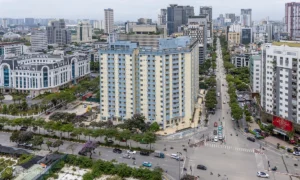
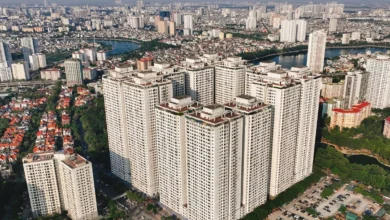
The real estate landscape in Hanoi is currently witnessing a stark divergence between the primary and secondary apartment markets, creating a complex environment for both investors and genuine home seekers. While newly launched projects continue to set record-high price ceilings, the secondary market—where individual owners resell their properties—is experiencing a significant cooling trend. This stagnation is largely driven by a combination of high interest rates and the expiration of interest rate grace periods, forcing many property owners to lower their asking prices to maintain liquidity. According to recent market observations, the phenomenon of "cutting losses" has emerged in several suburban projects, signaling a shift in the power dynamics of the capital’s housing sector.
The Cooling Secondary Market and the "Cut Loss" Phenomenon
In the secondary market, the rapid price appreciation seen in previous years has come to a definitive halt. Data from market trackers indicates that secondary apartment prices in Hanoi began to plateau toward the end of last year. In some peripheral areas, owners are now offering discounts of several hundred million VND to attract buyers. For instance, at a major high-rise development in Northern Hanoi, a 58-square-meter unit that was previously valued at a high premium is now being advertised at approximately 104 million VND per square meter. The owner noted that this price represents a decrease of about 7 million VND per square meter compared to the original purchase contract, effectively reducing the total value of the apartment by more than 400 million VND.
A similar trend is visible in the eastern districts of the city. During the market peak, many buyers were willing to pay "premiums" or "difference fees" ranging from 200 million to 400 million VND above the developer’s price just to secure a unit from primary agents. Today, those same units are being listed at par with the original contract price, with the additional premiums completely erased. Larger apartments are facing even steeper price corrections, with some owners slashing 300 million to 500 million VND off their initial expectations. Despite these significant reductions, real estate brokers in these areas report that liquidity remains extremely low. Units can remain on the market for several months without receiving a single serious inquiry.
The Primary Market Paradox: Prices Continue to Climb
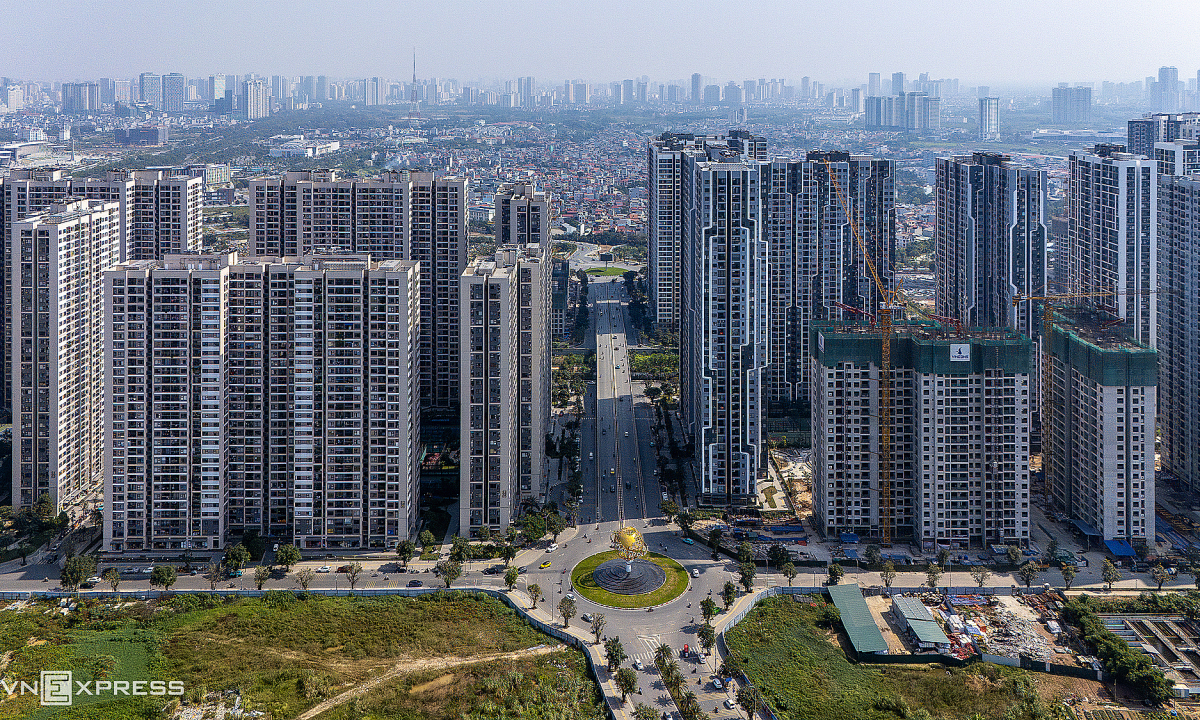
Contrasting sharply with the secondary market’s struggles, the primary market—comprising new projects launched directly by developers—continues to see prices escalate. CBRE’s latest report for the first quarter of the year highlights that the average primary selling price in Hanoi has reached 102 million VND per square meter. This represents a staggering 29% increase compared to the same period last year. Notably, this average price has now surpassed that of Ho Chi Minh City, which stood at approximately 91 million VND per square meter during the same timeframe.
This marks the third consecutive quarter where primary apartment prices in the capital have maintained a threshold above 100 million VND per square meter. This upward trajectory is no longer confined to the central business districts but has expanded into suburban areas such as Gia Lam and Dong Anh. These regions, traditionally known for affordable and mid-range housing, are now seeing new projects launched at prices exceeding 100 million VND per square meter, with some luxury segments approaching 150 million VND per square meter.
The persistence of high primary prices is attributed to several structural factors. Developers are facing significantly higher input costs, including increased land use fees, more expensive land compensation processes, and rising costs for construction materials and financing. As these "input" costs are baked into the project’s financial model from the outset, developers are reluctant or unable to lower prices without compromising their profit margins or project viability.
The End of Interest Rate Grace Periods: A Catalyst for Selling Pressure
One of the most critical factors driving the current sell-off in the secondary market is the expiration of interest rate grace periods. In Vietnam, it is common practice for developers to partner with banks to offer "0% interest" or "grace periods on principal" for the first 12 to 24 months of a mortgage. This incentive allowed many speculative investors to enter the market with minimal initial capital—often only 10% to 30% of the property value—hoping to "flip" the unit for a profit before the interest payments kicked in.
As these grace periods expire, owners are suddenly confronted with floating interest rates, which currently range between 11% and 14% per annum at many commercial banks. For an investor holding multiple properties, the sudden jump in monthly debt obligations creates immense financial pressure. In a market where liquidity is tightening and buyers are becoming more selective, these owners are often forced to lower their asking prices to exit their positions and avoid default.
Nguyen Hoai An, Senior Director of CBRE Hanoi, suggests that this is a necessary market adjustment. After a long period of continuous price hikes that outpaced the income growth of the average citizen, the market is reaching a point where affordability is a major hurdle. The "forced" price reductions by leveraged owners are a direct result of this financial reality.
Shifts in Buyer Sentiment and Market Liquidity
The Vietnam Association of Realtors (VARS) has noted a significant change in the psychology of homebuyers. The era of "frenzied" buying, where investors rushed into projects regardless of price, has ended. Today’s buyers are characterized by extreme caution. Instead of broad-based demand, the market has shifted toward a "selective" state. Cash-rich buyers are no longer in a hurry, preferring to wait for further price corrections or searching for "distressed" assets sold by over-leveraged investors.
VARS research indicates that the volume of inventory needing to be liquidated is increasing, particularly among the group of investors who utilized high financial leverage. In many projects, including both high-rise apartments and low-rise townhouses, "cut loss" amounts of 100 million to 300 million VND have become common. This has created a psychological burden on the wider investor community, as those who once expected to make easy profits through "wave-riding" (short-term flipping) are now struggling to break even.
Broader Economic Implications and Analysis
The current divergence in the Hanoi market reflects broader systemic issues within the Vietnamese real estate sector. The concentration of supply in the high-end and luxury segments has led to a mismatch between what is being built and what the majority of the population can afford. When primary prices are pushed too high by developers, it creates a "price floor" that the secondary market eventually struggles to support if the underlying economic conditions—such as interest rates and rental yields—do not justify the valuation.
Furthermore, the tightening of credit for real estate by the State Bank of Vietnam has made it more difficult for new buyers to enter the market. While the government has introduced several measures to support the industry, such as Decree 08 on corporate bonds and various interest rate support packages, the impact on the ground has been gradual. The market is currently in a "wait and see" mode, awaiting the full implementation of the new Land Law, Housing Law, and Real Estate Business Law, which are expected to bring more transparency but also potentially higher compliance costs for developers.
Future Outlook: Competition and Product Restructuring
Looking ahead, CBRE forecasts that the apartment market will become increasingly competitive. Total supply for the year is expected to reach approximately 36,000 units, similar to the previous year. However, with buyers taking longer to make decisions and demanding higher quality, developers will be forced to enhance their sales policies and support packages.
Pham Duc Toan, CEO of EZ Property, emphasizes that developers must restructure their product offerings to align more closely with "real" housing needs. This means focusing on the mid-range segment where demand remains high. Toan warns that if the primary and secondary markets continue to move in opposite directions, the risk of high-end inventory becoming "frozen" will increase.
"This is a critical time for developers to bring housing prices back to a reasonable level and diversify their funding sources," Toan stated. "Clearing the flow of capital and tapping into genuine demand is the only way to ensure long-term stability in a climate where real estate credit remains tight."
As the market continues to recalibrate, the advantage is shifting toward projects with transparent legal status, high construction quality, and realistic pricing. For the secondary market, the "cleansing" of speculative investors may lead to a healthier foundation in the long run, though the short-term pain for leveraged owners is likely to persist until interest rates stabilize and liquidity returns to the capital’s real estate sector.