Critically injured victim of Phu Quoc canoe accident recovers and returns to India

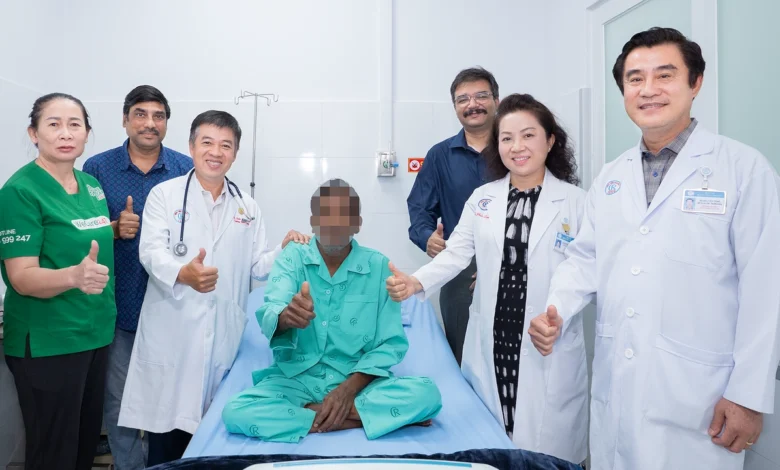
The medical community and the public are witnessing what many are calling a clinical miracle following the successful recovery of the most critically injured victim of the tragic canoe capsizing incident in Phu Quoc. After 12 days of intensive, specialized treatment at Cho Ray Hospital in Ho Chi Minh City, the patient, an Indian national who had been on the brink of death, has been cleared for discharge. In a move that underscores the complexity of the case and the commitment to patient safety, Cho Ray Hospital has arranged for a specialized physician to escort the survivor back to India, ensuring a seamless transition of care during the long-haul international flight.
On July 25, Dr. Tran Thanh Linh, Head of the Intensive Care and Emergency Department at Cho Ray Hospital, officially announced that the patient had achieved a near-total recovery. The clinical progress reported is significant; the individual is now capable of walking short distances unassisted, performing basic personal hygiene, and eating independently. Vital signs, including heart rate and blood pressure, have stabilized within normal parameters, marking a stark contrast to the life-threatening condition in which the patient was first received.
The July 11 Maritime Tragedy: Context and Initial Response
The patient was among the victims of a devastating maritime accident that occurred on July 11 off the coast of Phu Quoc, a popular island destination in southern Vietnam. A canoe carrying a group of international tourists, primarily from India, encountered severe conditions and capsized. The incident resulted in 15 fatalities, sending shockwaves through the local tourism industry and prompting an immediate large-scale search and rescue operation. While 21 individuals were successfully rescued, the survivor currently being discharged was identified as the most severely injured among the group.
Upon initial admission to a local medical facility in Phu Quoc, the patient’s prognosis was exceptionally grim. Medical records indicate a complex "polytrauma" profile: severe respiratory failure due to near-drowning, traumatic shock, a brain hemorrhage, and an acute myocardial infarction (heart attack) triggered by the total obstruction of a coronary artery. The combination of these conditions presented a survival probability that was statistically minute, requiring a level of intervention that exceeded the capabilities of local island infrastructure.
A High-Stakes Medical Intervention: The "Red Alert" Mobilization
Recognizing the critical nature of the case, Cho Ray Hospital—Vietnam’s leading multi-disciplinary medical center—activated an emergency response protocol. Under the "inter-hospital red alert" system, the hospital dispatched an elite "Mobile ECMO" and cardiology intervention team from Ho Chi Minh City to Phu Quoc. This rapid deployment was essential to stabilize the patient before any attempt at transport could be made.
The specialized team performed an emergency coronary intervention directly at the local facility in Phu Quoc to reperfuse the heart muscle. Additionally, they placed a temporary pacemaker to manage life-threatening arrhythmias. Once the patient was marginally stabilized, a high-risk air medical evacuation was coordinated. The patient was transported by plane to Ho Chi Minh City, maintained on life-support systems throughout the flight, to receive definitive care at Cho Ray’s Intensive Care Unit (ICU).
Twelve Days of Intensive Care at Cho Ray Hospital
The recovery process over the subsequent 12 days involved a multi-disciplinary approach involving cardiologists, neurologists, respiratory therapists, and rehabilitation specialists. The primary challenge was managing the neurological impact of the brain hemorrhage alongside the cardiac recovery.
Dr. Tran Thanh Linh noted that the patient’s resilience, combined with the precision of the medical interventions, led to an unexpectedly rapid improvement. "The patient has met all clinical milestones required for international travel," Dr. Linh stated. "However, given the history of acute myocardial infarction and the recent trauma, we are not taking any risks. A doctor will accompany him on the commercial flight to monitor his condition and intervene should any complications arise during the journey."
The patient, preparing for his return to India, expressed profound gratitude to the Vietnamese medical staff. "I did not believe I could recover after what I went through," he said through a translator. "To be able to walk and return to my family feels like a miracle. I am deeply thankful to the doctors at Cho Ray Hospital for their dedication and for saving my life."
Supporting Data and the Efficacy of Vietnam’s Emergency Network
This successful recovery serves as a benchmark for the efficacy of Vietnam’s emergency medical network. Data from the Ministry of Health indicates that the "Red Alert" system, which allows top-tier hospitals to support provincial clinics via telemedicine or physical deployment, has increased the survival rate of critical trauma cases by nearly 30% over the last five years.
In this specific case, the speed of the coronary intervention was the deciding factor. Medical literature suggests that in cases of acute myocardial infarction combined with near-drowning, the "golden hour" for intervention is significantly shortened. The ability of Cho Ray Hospital to move a cardiac catheterization team across provincial lines within hours likely prevented permanent heart muscle death and subsequent multi-organ failure.
Official Recognition and Institutional Response
In recognition of the extraordinary efforts required to save the patient, Dr. Pham Thanh Viet, Director of Cho Ray Hospital, held a formal ceremony on July 24 to commend the medical staff. Eight individuals, including doctors and nurses from the Intensive Care, Emergency, Interventional Cardiology, Neurosurgery, and Neurology departments, were officially honored for their roles in the rescue and treatment mission.
The hospital’s leadership emphasized that this case was not only a victory for the specific team involved but also a testament to the importance of inter-departmental synergy. The logistics of managing a patient with both a brain bleed (which usually contraindicates blood thinners) and a blocked heart artery (which requires blood thinners) required constant, minute-by-minute adjustments by the specialized teams.
Broader Implications for Tourism and Safety Standards
While the recovery of the patient is a celebratory milestone, the July 11 accident has prompted a broader discussion regarding maritime safety and the protection of international tourists in Vietnam. The tragedy, which claimed 15 lives, has led to a comprehensive review of canoe licensing, passenger manifests, and weather-monitoring protocols in the Kien Giang province.
Industry analysts suggest that the transparency and high level of medical care provided to the survivors have helped mitigate some of the potential damage to Phu Quoc’s reputation as a safe destination. The involvement of top-tier medical institutions in the aftermath of such tragedies demonstrates a state-level commitment to the welfare of foreign visitors.
Furthermore, the decision to send a doctor back to India with the patient highlights a growing trend in "medical diplomacy." By ensuring the patient reaches his home country safely, Cho Ray Hospital and the Vietnamese healthcare system are reinforcing international trust.
Chronology of Events: From Disaster to Recovery
To understand the magnitude of this medical success, one must look at the timeline of the intervention:
- July 11: The canoe capsizes off Phu Quoc; 15 deaths are confirmed; the patient is rescued in a state of deep coma and shock.
- July 12: Cho Ray Hospital receives the emergency call and dispatches the elite team via air to Phu Quoc. Emergency surgery is performed on-site.
- July 14: The patient is air-lifted to Ho Chi Minh City under constant medical supervision.
- July 15–20: Intensive management in the ICU; the patient is weaned off the ventilator and shows signs of neurological awakening.
- July 22: The patient begins physical therapy and is able to consume liquid food.
- July 24: Official commendation ceremony for the medical team.
- July 25: Final discharge papers are signed, and repatriation logistics are finalized.
Conclusion and Future Outlook
As the patient boards his flight back to India, the focus shifts to his long-term rehabilitation. While the acute phase of the injury has passed, he will require ongoing cardiac monitoring and neurological follow-ups in his home country. The medical records and data gathered during his stay at Cho Ray will be handed over to his local physicians in India to ensure continuity of care.
This case will likely be documented in medical journals as a significant example of managing complex, conflicting traumas in a resource-intensive environment. For the city of Phu Quoc and the Vietnamese tourism sector, the lessons learned from the July 11 tragedy are being integrated into new safety regulations aimed at preventing such a loss of life from occurring again. The recovery of the most critically injured survivor remains the sole silver lining in an otherwise somber chapter of recent maritime history.