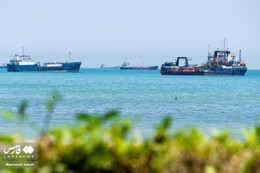
In a significant escalation of regional tensions, Iran’s Islamic Revolutionary Guard Corps (IRGC) announced on July 18th the disruption of a fleet of four civilian vessels attempting to transit the Strait of Hormuz. This action was framed by Tehran as a retaliatory measure against the United States. The IRGC issued a stark warning, urging nations in the southern Persian Gulf to reconsider any actions that could provoke Iran, particularly those perceived as threatening its territorial waters.
This naval maneuver by Iran comes at a time of heightened geopolitical friction between Tehran and Washington, exacerbated by ongoing disputes over Iran’s nuclear program and its regional influence. The Strait of Hormuz, a critical chokepoint for global oil trade, has long been a focal point for potential conflict in the Middle East. Any disruption to shipping in this vital waterway carries significant implications for the global economy and international security.
Escalating Rhetoric and Military Posturing
Adding to the gravity of the situation, a high-ranking IRGC official, General Rezaei, issued a stern warning, suggesting Iran would transition to a "total offensive" if the United States continued its current course of action. Rezaei emphasized that Iran would not compromise on its national security and demanded that the U.S. cease causing damage to Iran’s civilian infrastructure. This statement signals a hardening of Iran’s stance and a clear indication that it is prepared to escalate its response to perceived provocations.
The IRGC’s actions appear to be a deliberate demonstration of force, aimed at signaling Iran’s capability and willingness to control maritime traffic in the strategically important Strait of Hormuz. The seizure or disruption of civilian vessels is a tactic that has been employed by Iran in the past to exert pressure on international powers and underscore its control over the waterway.
Background: The Strategic Significance of the Strait of Hormuz
The Strait of Hormuz, a narrow waterway connecting the Persian Gulf and the Gulf of Oman, is one of the world’s most vital maritime chokepoints. Approximately 20-30% of the world’s oil, or about 15 million barrels per day, passes through this strait. Its strategic importance means that any disruption to shipping traffic can have immediate and far-reaching consequences for global energy markets, leading to price volatility and potential supply shortages.

The United States Navy maintains a significant presence in the region to ensure freedom of navigation and the unimpeded flow of oil. However, Iran has repeatedly threatened to close the strait in response to international pressure or military action, a threat that is taken seriously by global powers due to the immense economic ramifications.
Recent Incidents and Iran’s Assertions
The IRGC’s latest announcement follows reports of two oil tankers being seized near the Strait of Hormuz. Iran claimed these vessels were carrying oil and were carrying out illicit activities, a common justification used by Tehran for its maritime interdictions. The IRGC’s naval forces also declared their complete control over the strait, citing the recent actions by the United States.
Prior to these events, the IRGC had reportedly targeted a commercial vessel flying a Thai flag for allegedly passing through the Strait of Hormuz without proper authorization. Concurrently, the UK Maritime Trade Operations (UKMTO) reported an incident involving an oil tanker off the coast of Oman being targeted by a drone. These seemingly isolated incidents, when viewed collectively, paint a picture of a volatile maritime environment in the Persian Gulf, with Iran increasingly asserting its control.
This period of heightened tension occurs amidst ongoing efforts to de-escalate the broader U.S.-Iran standoff, with Pakistan reportedly mediating efforts to reach a peace agreement. However, the recent actions by Iran suggest that diplomatic channels may be strained, and military posturing is taking precedence.
Naval Forces Targeted by Russian UAVs in Ukraine
In a separate but related development that underscores the interconnectedness of global security concerns, Russia announced on July 17th that its drone forces successfully struck three naval support vessels supplying Ukraine in the port city of Mykolaiv. This attack, reportedly carried out by Geran-4 UAVs, was captured on video released by Russia, showing the drones targeting the command centers of the vessels, resulting in catastrophic fires and thick plumes of black smoke.
According to Ukrainian news outlet RBC Ukraine, the drone strike occurred between 11:00 AM and 11:15 AM local time. The attack reportedly caused significant damage to three foreign-flagged cargo ships and inflicted casualties within the Ukrainian port communities. The targeting of these vessels highlights Russia’s continued efforts to disrupt Ukrainian military logistics and naval capabilities.
The attack on vessels supplying Ukraine underscores the persistent global security challenges and the complex geopolitical landscape. While the events in the Strait of Hormuz and the drone attacks in Ukraine are geographically distinct, they both reflect ongoing conflicts and tensions that have far-reaching implications for international stability and trade.
Analysis of Implications
The IRGC’s aggressive stance in the Strait of Hormuz serves multiple purposes. Firstly, it is a clear signal to the United States and its allies that Iran will not tolerate perceived threats to its security or sovereignty. Secondly, it aims to bolster domestic support by demonstrating a strong, defiant posture against foreign adversaries. Thirdly, it seeks to disrupt the global oil market, potentially impacting economies reliant on stable energy supplies, and thereby exert leverage in diplomatic negotiations.
The targeting of civilian vessels, while framed as a response to U.S. actions, carries significant risks. It can lead to international condemnation, further sanctions, and a more robust military response from the United States and its partners. The potential for miscalculation and accidental escalation in such a tense environment is extremely high, with dire consequences for regional and global peace.
The drone attacks in Ukraine, on the other hand, are part of Russia’s ongoing military campaign to degrade Ukraine’s ability to sustain its defense efforts. The targeting of naval support vessels and port infrastructure indicates a strategy aimed at severing supply lines and impacting Ukraine’s maritime access.
The confluence of these events – maritime provocations in the Persian Gulf and military strikes in Eastern Europe – underscores a period of heightened global instability. International actors will be closely watching the responses from Washington, Tehran, and Moscow, as well as the reactions from key global powers, to gauge the trajectory of these escalating tensions. The coming days and weeks will likely reveal the extent to which these incidents lead to further de-escalation or a deeper descent into conflict. The global economy, particularly the energy sector, remains highly vulnerable to any significant disruption in the Strait of Hormuz, making the situation a critical point of international concern.