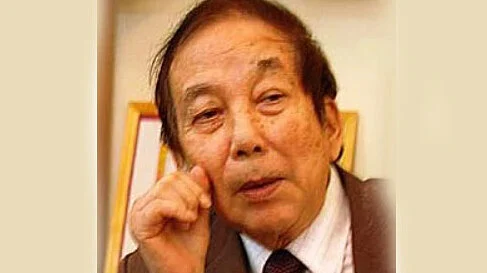
Hanoi, Vietnam – July 18, 2026, 16:56 (GMT+7) – A significant 1.4-kilometer avenue in Hanoi has been officially named after Professor Vu Tuyen Hoang, a distinguished agricultural scientist and academician renowned for his groundbreaking work in crop genetics and breeding. The decision, formalized by the Hanoi People’s Council, underscores the city’s commitment to recognizing and immortalizing the contributions of its most esteemed figures in science and national development.
A Legacy of Agricultural Innovation
Professor Vu Tuyen Hoang, who lived from 1938 to 2008, was a towering figure in Vietnamese agriculture. His career spanned decades of dedicated research and leadership, leaving an indelible mark on the nation’s food security and scientific advancement. As a former Politburo member and Chairman of the Vietnam Union of Science and Technology Associations, his influence extended far beyond the laboratory and the fields.
His most significant contributions lay in the realm of crop breeding. Professor Hoang dedicated 18 years to leading the national plant breeding program. His research focused on developing high-yield, disease-resistant varieties, particularly in rice. He pioneered work on hybrid rice, glutinous rice with high protein content, and importantly, was among the first in Vietnam to research and develop upland rice varieties. His efforts were instrumental in transforming Vietnam from a food-scarce nation to one of the world’s leading rice exporters.
Beyond rice, Professor Hoang was also recognized for his pioneering research into a specific type of rice grown in flooded areas, a critical development for regions prone to waterlogging. This innovative approach addressed a significant agricultural challenge and further solidified his reputation as a visionary scientist.
Accolades and National Recognition
The profound impact of Professor Hoang’s work on Vietnamese agriculture did not go unnoticed. His dedication and achievements earned him numerous prestigious accolades. In 1988, he was honored as an Academician of the USSR Academy of Sciences. This was followed by recognition as an Academician of the Russian Academy of Sciences in 1991, and in 2003, he received the title of Academician of the Third World Academy of Sciences for Developing Countries.
In a posthumous honor, Professor Hoang was awarded the title of Hero of Labor during the Đổi Mới era in 2021, a testament to his enduring legacy and immense contribution to the nation’s progress and modernization. This recognition signifies the high regard in which his scientific contributions and leadership are held by the Vietnamese government and people.
Honoring a Luminary: The Vu Tuyen Hoang Avenue
The newly named avenue, dedicated to Professor Vu Tuyen Hoang, is a substantial artery within the capital. Spanning 1.4 kilometers in length and measuring 20.5 meters in width, it connects key intersections within the Hoang Liet ward. The avenue commences at the intersection of Hoang Liet street, extending towards the Vietnam Fatherland Front Committee of Hoang Liet ward and Hoang Liet Primary School, and concluding at the intersection of Linh Duong street, near the administrative center of Hoang Liet ward. This strategic location ensures high visibility and serves as a constant reminder of the esteemed scientist’s contributions.
The naming of this avenue is part of a broader initiative by the Hanoi People’s Council to honor individuals who have made significant contributions to the nation’s development, particularly in science, culture, and social progress. This practice not only immortalizes their achievements but also serves as an inspiration for future generations.
A City-Wide Initiative: Naming Streets and Public Spaces
The designation of the avenue for Professor Vu Tuyen Hoang is not an isolated event but part of a comprehensive urban planning strategy implemented by the Hanoi People’s Council. The council regularly reviews and updates street names to reflect the city’s evolving identity and to honor exemplary citizens.
According to decisions made by the council, Hanoi has been actively engaged in renaming and extending existing streets, as well as establishing new ones. This process involves careful consideration of individuals who have left a lasting impact on the city and the country. The council has approved the naming of 51 new streets and avenues across the city.
These newly named streets are often located in areas of significant cultural and historical importance, aiming to enhance the cultural landscape and promote heritage tourism. Examples include streets named after prominent historical sites and landmarks such as Chua Mia, Dong Lam, Cam Lam, Chua Tram Gian, and Chua Tram. The naming of these streets serves to connect the present with the past, preserving cultural memory and promoting national identity.
Beyond historical and cultural sites, many streets are named after national heroes, scientists, writers, and artists, thereby immortalizing their contributions to national history, culture, and arts. Among the notable figures honored are Nguyen Huu An, Vu Nam Long, Nguyen Long, Luong Cao Mai, Bui Huy Dap, Quang Dung, Dai Yen, Ngoc Hoa, Phuong Chau, Long Chau, Yen Kha, Ly Trieu, Dong Lam, and Cam Lam. This diverse range of honorees reflects the city’s appreciation for contributions across various fields.
Urban Development and Infrastructure Enhancement
The naming of streets is intrinsically linked to Hanoi’s ambitious urban development plans. The council’s decisions also include adjustments to existing infrastructure projects. In addition to Professor Hoang’s avenue, the council has approved extending and renaming five other streets: Chua Tram, Chuc Son (now Cheong Mon), Dong Thuy Tram (now Nghia Do), Kieu Mai (now Xuan Phuong), and Ta Thanh Oai (Dai Thanh). These extensions and renamings are aimed at improving traffic flow, enhancing urban aesthetics, and facilitating more efficient administrative management.
Furthermore, the city is investing in the development of significant public spaces. The An Hoa Park, located in Cau Giay district, has been designated for planning and construction as a major public space. This park, spanning 27.78 hectares, will feature extensive green areas (approximately 19 hectares of parkland and 8.78 hectares of vegetation). It will be bordered by the Ministry of Agriculture and Rural Development and the Ministry of Natural Resources and Environment to the north, and the Cung Thiếu Niên Hanoi and the Phu Hung commune to the west. This development signifies Hanoi’s commitment to improving the quality of life for its residents by creating more recreational and natural spaces within the urban environment.
A Glimpse into Hanoi’s Naming Conventions
As of 2025, Hanoi boasts a total of 1,465 streets, avenues, lanes, and public works officially named. This comprehensive naming system includes 362 avenues, 880 lanes, one square, 43 public works, 14 flower gardens, and 165 communal areas.
The nomenclature reflects a deliberate strategy. A significant portion, 613 streets, are named after national figures. Another 613 streets are named after geographical locations, and the remaining 239 streets bear names derived from various categories, including historical and cultural relics, scientific achievements, common names, national symbols, and notable figures from different historical periods and regions of Vietnam. This multi-faceted approach ensures that Hanoi’s streetscape is a living testament to its rich history, cultural heritage, and the enduring contributions of its people.
The decision to name a major avenue after Professor Vu Tuyen Hoang is a powerful statement about Hanoi’s values. It highlights the city’s deep respect for scientific endeavor and its commitment to recognizing those who have significantly advanced the nation’s well-being. The avenue will serve as a permanent monument to his legacy, inspiring future generations of scientists and leaders to pursue excellence and contribute to Vietnam’s ongoing development.