Hanoi, Vietnam – In a landmark gathering underscoring Vietnam’s unwavering commitment to digital transformation and technological sovereignty, the Minister of Information and Communications (MIC), Nguyễn Mạnh Hùng, hosted a pivotal working session with the leadership and key personnel of CMC Corporation, a leading 31-year-old technology enterprise. The meeting, held on the afternoon of October 25th at the MIC headquarters, signals the government’s high regard for CMC’s contributions to the national technology landscape and its vision for the company as a key player in Vietnam’s ascent as a digital powerhouse on the global stage.
A Historic Dialogue: Government and Tech Industry Converge
The presence of Minister Nguyễn Mạnh Hùng, alongside Deputy Ministers Nguyễn Thanh Lâm and Bùi Hoàng Phương, and leaders from various MIC units, marked a significant occasion. For the first time in its 31-year history, CMC Corporation’s core leadership had a dedicated working session with the top brass of the MIC, focusing exclusively on its future development roadmap. This unprecedented engagement highlights the Ministry’s recognition of CMC’s substantial contributions to the industry and the nation. It also reflects a profound trust in CMC’s potential to evolve into a major, internationally renowned digital technology enterprise, transcending domestic prominence to achieve global reach.
During the extensive four-hour session, a significant portion of the time was dedicated by Minister Nguyễn Mạnh Hùng, the Deputy Ministers, and other MIC leaders to thoroughly address the recommendations and inquiries raised by CMC. They offered insightful guidance and proposed concrete areas for CMC to prioritize in the coming period, demonstrating a hands-on approach to fostering national tech champions.

CMC’s Vision 2028: A Global Digital and AI Powerhouse
The meeting commenced with a concise video presentation by Mr. Đặng Tùng Sơn, CMC’s Vice Chairman of Strategy, outlining the company’s three-decade journey and its strategic highlights. He then reported on CMC’s business performance for the first half of the 2024 fiscal year and its key operational initiatives. Crucially, Mr. Sơn unveiled CMC’s ambitious development orientation towards 2028, setting a clear trajectory for the corporation.
By 2028, CMC aims to transform into a global digital and Artificial Intelligence (AI) group, adhering to international standards. This ambitious goal includes a projected revenue growth of more than threefold and a workforce expansion to over 10,000 employees, doubling its current size. A significant allocation of this expanded human capital – 40% – is specifically earmarked for AI development, underscoring the company’s strategic pivot towards advanced technologies. This target aligns with Vietnam’s broader national strategy to embrace AI as a critical driver for economic growth and competitiveness. Vietnam’s National Strategy on AI Research, Development, and Application to 2030 envisions the country becoming a leading AI hub in ASEAN and globally, with significant investments in R&D and human resources. Companies like CMC are seen as instrumental in achieving these national aspirations.
Minister’s Mandate: Mastering Technology for National Prosperity
Minister Nguyễn Mạnh Hùng expressed high expectations for CMC, envisioning it as a pioneering digital technology enterprise for Vietnam. He urged CMC’s leadership and key personnel to adopt a new mindset, demonstrating unwavering determination to contribute to Vietnam’s digital transformation revolution. This, he emphasized, is crucial for "ushering Vietnam into an era of powerful ascent for the nation."
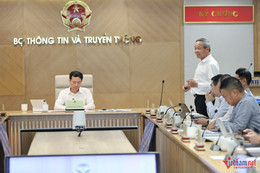
A central theme of the Minister’s address was the imperative for Vietnam to "master technology." He referenced the official declaration by Party General Secretary Tô Lâm, who underscored that Vietnam must achieve technological self-mastery, especially as digital transformation is identified as the fundamental pathway for the country to become a developed nation. This mandate resonates deeply with the "Make in Vietnam" philosophy, which advocates for domestic innovation and production in critical technology sectors.
To achieve technological mastery and lead the nation’s digital transformation process, Minister Hùng recommended that CMC and other Vietnamese digital technology enterprises significantly increase their investment in research and development (R&D). The focus, he advised, should be on mastering applications first, progressively moving towards mastering core technologies. This strategic approach ensures that Vietnamese enterprises can not only adopt but also adapt and create technologies that address unique national challenges and opportunities, reducing reliance on foreign solutions.
Minister Hùng further asserted that now is the opportune moment for CMC to declare itself a leading, large-scale digital technology enterprise, not only domestically but also with international reach. To realize these "leading, large, and international" objectives, he stressed that there is no alternative but for CMC to undertake large-scale projects intrinsically linked to the national mission, executing them with utmost dedication and thoroughness. "If an enterprise wants to grow big, wants to thrive alongside the nation, it must align itself with the national mission," Minister H Hùng articulated, encapsulating the symbiotic relationship between corporate success and national development.
Strategic Focus Areas: Foundational Infrastructure and Specialized AI
The interactive session provided a platform for the MIC to offer concrete guidance on CMC’s development direction. Regarding the challenge of securing land for new undersea cable landing stations – a critical component of robust international connectivity – the MIC leadership advised CMC to thoroughly understand the provisions of the new Land Law. Furthermore, CMC was encouraged to engage with the Department of Telecommunications so that the Ministry could propose to provinces the planning of land for undersea cable landing stations, thereby enhancing the resilience of the national telecommunications network and ensuring national security. This highlights the government’s proactive role in facilitating the necessary infrastructure for digital growth. Vietnam is strategically positioned with several existing undersea cables, and the need for new, resilient connections is paramount for its digital economy.

Addressing concerns about market development space, Minister Hùng advised that beyond seeking "green ocean" or unexplored territories, companies should also consider "red ocean" spaces (existing, competitive markets). He argued that even established markets present opportunities for innovation if enterprises adopt novel and distinctive approaches. "The fields within the Information and Communications sector, such as telecommunications, digital technology, digital infrastructure, and cyber information security, are always evolving. Therefore, the sector itself does not need to overly concern itself with finding new spaces. The real question is whether enterprises dare to venture and execute with excellence," Minister Hùng challenged.
For a large enterprise like CMC, the Minister emphasized the importance of focusing on foundational infrastructure and platform-level work. This includes core areas such as Cloud computing, Data Centers, and foundational software. By building robust foundational layers, CMC can create a platform upon which other enterprises can "stand on its shoulders," fostering a broader ecosystem of innovation and development. This aligns with the global trend where foundational digital infrastructure providers play a critical role in enabling the wider digital economy.
On the critical aspect of AI development, the MIC leadership offered specific guidance. If CMC’s strategy includes the development of IoT (Internet of Things), then AI and semiconductor chips should be considered parallel and equally important branches. For AI development specifically, the advice for CMC and other Vietnamese digital technology enterprises was to concentrate on "narrow AI," "specialized AI," "custom AI," and "AI for individuals and businesses." This approach suggests avoiding direct competition with global tech giants in general-purpose AI, instead leveraging local expertise and data to create highly effective, tailored AI solutions. Enterprises could even focus on building platforms that allow individuals and organizations to create their own virtual assistants by feeding their proprietary data into the system.
Furthermore, Minister Hùng urged CMC to develop technology products that become synonymous with its corporate brand. He also stressed the importance of internal digital transformation. Before offering digital transformation services to other enterprises, CMC must first undergo its own comprehensive digital transformation. This internal experience, he explained, would provide invaluable insights into the process, making it easier and more effective to guide other businesses through their digital journeys. This "walk the talk" approach is crucial for building credibility and demonstrating practical expertise in the rapidly evolving field of digital transformation.
MIC: The "Home" for Vietnamese Digital Enterprises

Minister Nguyễn Mạnh Hùng reaffirmed the Ministry of Information and Communications’ role as the "home" for Vietnamese digital technology enterprises. It is a place where businesses can seek advice, share concerns, and receive support when facing difficulties. The MIC explicitly recognizes that the development of the digital technology sector is inextricably linked to the Ministry’s own progress and the success of the national digital transformation agenda. "The MIC acknowledges that if digital technology enterprises do not develop, then the Ministry and the sector will also not develop, and the national digital transformation story cannot be realized," Minister Hùng declared, highlighting the intertwined destinies of the government and the private sector in achieving digital ambitions.
To symbolize this commitment to partnership and to further inspire CMC’s journey, Minister Nguyễn Mạnh Hùng presented CMC Chairman Nguyễn Trung Chính with two seminal books: "The Information and Communications Sector" and "Digital Transformation Overview: Strategy & Roadmap." These gifts underscore the intellectual and strategic guidance that the Ministry offers to its key industry partners.
CMC’s Commitment: National Development and Global Reach
In response, CMC Chairman Nguyễn Trung Chính expressed profound gratitude to Minister Hùng, the Deputy Ministers, and the leaders of various MIC units for their insightful and dedicated contributions, which he affirmed would greatly assist the Corporation’s continued development. He reiterated that, alongside its corporate growth objectives, the CMC team is deeply committed to contributing to national development, aiming to propel Vietnamese intellect onto the international stage and solidify Vietnam’s position globally.
"To realize the challenging goals and development directions that have been set, in addition to the Corporation’s own efforts, we hope to continue receiving the companionship, support, guidance, and assistance from the Ministry of Information and Communications," Mr. Nguyễn Trung Chính shared. This statement encapsulates the spirit of public-private partnership that is deemed essential for Vietnam to navigate the complexities of the digital age and emerge as a powerful, technologically advanced nation.

Broader Implications for Vietnam’s Digital Future
This high-level meeting between the MIC and CMC Corporation carries significant implications for Vietnam’s digital future. It reinforces the government’s strategic focus on fostering domestic technology champions to drive national digital transformation. By actively engaging with and guiding leading enterprises like CMC, the MIC is not only supporting individual companies but also shaping the entire digital ecosystem.
The emphasis on mastering core technologies, investing in R&D, and developing specialized AI solutions reflects a mature understanding of global tech trends and Vietnam’s competitive advantages. Rather than merely adopting foreign technologies, the strategy is to build indigenous capabilities, which is crucial for long-term economic sovereignty and national security. Furthermore, the call for companies to undertake projects with "national mission" highlights a unique aspect of Vietnam’s development model, where corporate success is intertwined with patriotic duty and national progress.
The focus on foundational infrastructure like Cloud and Data Centers is critical for building a robust digital backbone that can support the burgeoning digital economy. As Vietnam strives to increase the digital economy’s contribution to its GDP (targeting 20% by 2025 and 30% by 2030), companies like CMC providing these foundational services will be indispensable. The guidance on navigating regulatory hurdles, such as land planning for undersea cables, demonstrates the government’s commitment to creating an enabling environment for tech investments.
In essence, the meeting between Minister Nguyễn Mạnh Hùng and CMC Corporation is more than just a corporate consultation; it is a strategic dialogue that charts a course for Vietnam’s digital destiny. It signals a collective ambition to transform Vietnam into a nation that not only consumes technology but also innovates, creates, and leads in the global digital landscape, truly ushering in an era of powerful ascent.