All American Classics Remains a Premier Sanctuary for Automotive History Amidst Urban Development Pressures in Washington State

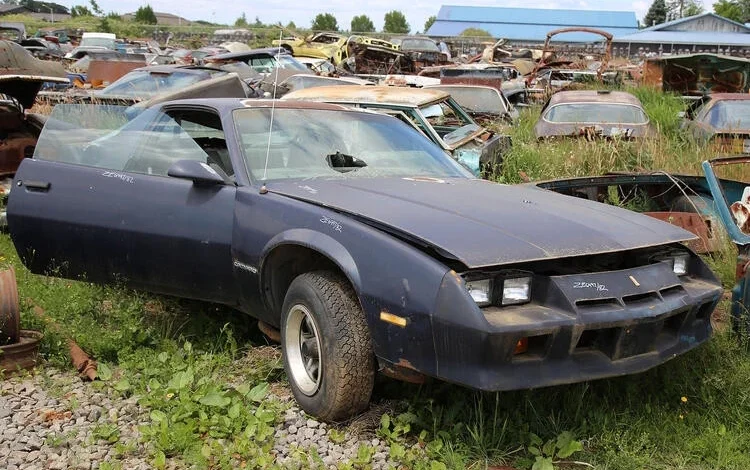
In the heart of Vancouver, Washington, a city nestled along the north bank of the Columbia River, lies a sprawling landscape that many automotive historians and restoration experts consider hallowed ground. All American Classics has long established itself as one of the most significant salvage operations in the United States, specializing exclusively in domestic American marques. Far more than a mere repository for scrap metal, the facility serves as a vital "treasure chest" for the global classic car community, housing a dense population of vehicles that spans the transformative decades of the 20th century, from the pre-war elegance of the 1930s to the technological shifts of the early 2000s.
The yard’s significance has only intensified in recent years as the landscape of the Pacific Northwest undergoes rapid economic and demographic shifts. As Vancouver has evolved into a burgeoning tech and residential hub, the pressures of urban sprawl have reached the gates of this automotive sanctuary. A few years ago, the facility faced a critical turning point when the owner was compelled to sell approximately half of the yard’s total acreage. This decision was driven by the escalating costs of real estate maintenance and a significant surge in property taxes, a common challenge for industrial-scale heritage businesses in the Portland-Vancouver metropolitan area.
The downsizing process was a bittersweet chapter in the yard’s history. To clear the sold land for development, approximately 1,200 vehicles—many of which had sat undisturbed for decades—had to be processed and destroyed. While the loss was mourned by enthusiasts, it necessitated a rigorous selection process that ultimately refined the yard’s remaining inventory. Today, All American Classics maintains a curated collection of over 1,000 high-value vehicles. This inventory ranges from ubiquitous mid-century sedans and family coupes to some of the rarest muscle cars and luxury liners ever produced by Detroit’s "Big Three."
The Operational Philosophy of a Living Museum
Despite the reduction in physical footprint, All American Classics continues to operate with a dynamic inventory strategy. The yard receives "new" arrivals at a steady rate of approximately two vehicles per day. Because land remains a premium resource, the facility has adopted a strict "one-in, one-out" policy. Every time a new acquisition enters the gates, an existing vehicle that has been stripped of its most valuable components must eventually depart to make room.
The yard’s business model is bifurcated to serve different segments of the automotive market. Vehicles that retain a high degree of structural integrity and mechanical potential are offered as "project cars" for sale to collectors and restoration shops. These are the lucky few that may one day return to the road. However, the vast majority of the inventory serves as a primary source of rare, original equipment manufacturer (OEM) parts. For a restorer in Europe or Australia trying to find a specific trim piece for a 1960s Buick, or a local enthusiast seeking a period-correct engine block, All American Classics is often the final and only viable resource.
This role as a parts supplier is fraught with modern challenges. The owner notes that while customers are often permitted to browse and pull their own parts, "shrinkage" remains a persistent issue. The rarity and high resale value of small components, such as emblems, knobs, and specialized hardware, often tempt individuals to conceal items under clothing, a practice that threatens the sustainability of such open-access salvage yards.
A Deep Dive into the Iron Giants: The Camaro and Corvette Corridors
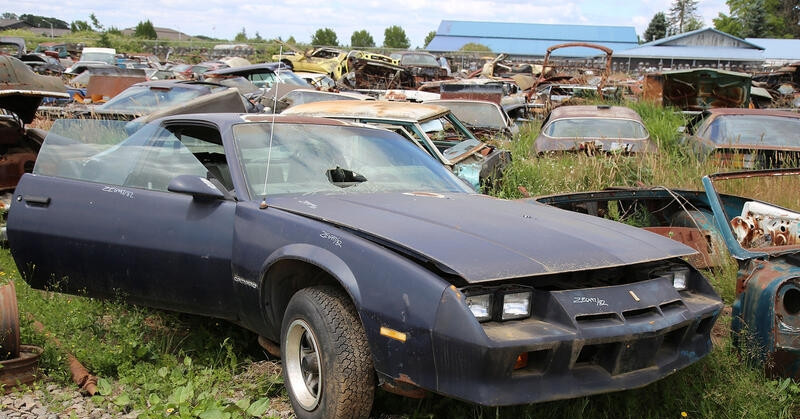
One of the most impressive sectors of the facility is dedicated to the Chevrolet Camaro, a cornerstone of American muscle car culture. The yard currently preserves more than 120 individual Camaros, representing a chronological lineage from the inaugural 1967 model year through to the more modern 2017 iterations. This concentration of F-body platforms provides an unparalleled library of components for restorers. Some of these vehicles have occupied the same patch of earth for decades, slowly accumulating a layer of moss and patina that serves as a testament to their long-term residency.
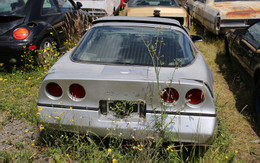
The facility also places a heavy emphasis on high-performance survivors, such as the 1990 Chevrolet Corvette ZR-1. Known in its era as the "King of the Hill," the ZR-1 featured a sophisticated LT5 engine designed in collaboration with Lotus. The owner of All American Classics emphasizes that sourcing salvaged Corvettes—even those that have suffered significant accident damage—is a core pillar of the business. Because Corvette owners are notoriously meticulous about using genuine parts, and because local supplies of these specialized components are often non-existent, a single wrecked ZR-1 can provide the "donor organs" necessary to keep a dozen other pristine examples on the road.
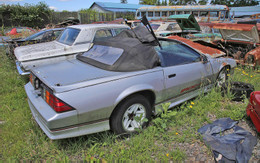
The tragedy of automotive loss is also visible in pieces like a 1988 Chevrolet Camaro IROC-Z convertible. Once the pinnacle of 1980s performance, this particular example remains structurally sound from the firewall back, but a catastrophic engine fire has rendered its front end a charred skeleton. Now relegated to the status of a parts donor, it serves as a reminder of the fragility of these aging machines.
Rare Gems and Retractable History
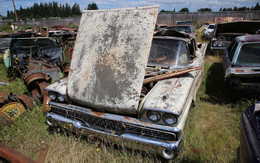
Among the rows of rust and chrome are vehicles of genuine historical rarity. Two notable residents are 1959 Ford Fairlane 500 Skyliners. The Skyliner is legendary for its "Hide-Away Hardtop," a complex electromechanical system that allowed the solid roof to fold and vanish into the trunk. In 1959, this was a feat of engineering that required seven motors and hundreds of feet of wiring. With only 13,000 units produced that year, finding two examples in a single salvage yard is a statistical anomaly that highlights the depth of the All American Classics collection.
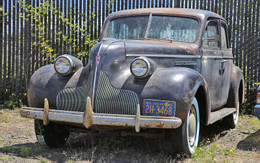
The yard also houses a 1939 Buick that tells a story of familial transition. This pre-war relic had been kept in dry storage by its original owner since 1962. It was eventually inherited by the owner’s grandson, who brought it to the yard with the intent of a full restoration. After fitting the car with new whitewall tires, the grandson realized the sheer scale and financial burden of the project exceeded his resources. The car was ultimately sold to the yard, where it now sits as a remarkably intact specimen, awaiting a collector with the vision and capital to complete its journey back to the showroom floor.
The Luxury and Utility of Bygone Eras
The diversity of the inventory extends into the realm of mid-century luxury and specialized utility. The yard features a 1972 Cadillac Eldorado convertible, a vehicle that represented the zenith of American opulence in the early 70s. While Cadillac produced over 40,000 Eldorados that year, only about 8,000 were convertibles, making them highly sought-after in the secondary market. Nearby, a 1965 Cadillac DeVille Convertible sits in a state of advanced decay; its roof has long since disintegrated, and the interior has been reclaimed by the elements after years of exposure to the rainy climate of the Pacific Northwest.
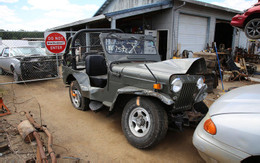
In a surprising departure from the purely domestic lineup, the yard also contains a 1979 Mitsubishi Jeep. This vehicle is a relic of a unique licensing agreement where Mitsubishi produced Jeep-branded vehicles in Japan from 1953 to 1998. While approximately 200,000 were built, only a tiny fraction ever made it to American soil, making this battered, accident-damaged example an exotic rarity within a sea of domestic iron.
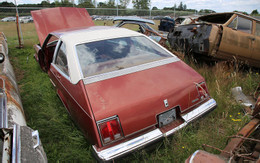
For those interested in the "Mopar" family, the yard offers a 1973 Dodge Dart equipped with a functional V8 engine, priced at a modest $1,700. Just a few feet away, a 1972 Dart with a more economical 6-cylinder engine is priced at $1,100, reflecting the price premium that enthusiasts still place on displacement and cylinder count.
Analysis: The Future of Automotive Salvage in a Changing World
The existence of All American Classics raises important questions about the preservation of industrial history. As the automotive industry pivots toward electrification and digital integration, the mechanical simplicity of the 20th-century American car is becoming a niche interest. However, the economic value of these "car cemeteries" remains high. The classic car market has seen a significant appreciation in value over the last decade, with even "common" models from the 70s and 80s now commanding premium prices.
The implications of the yard’s potential eventual closure—whether due to real estate development or environmental regulations—are significant. Without repositories like All American Classics, the cost of maintaining a classic car would skyrocket, as parts would have to be custom-fabricated rather than sourced from original donors. This yard acts as a stabilizer for the hobby, providing the physical material necessary to sustain a multi-billion dollar restoration industry.
In the final analysis, All American Classics is a living archive of the American Dream on wheels. It is a place where the design trends of the past—from the tailfins of the 50s to the wedge shapes of the 80s—coexist in a state of suspended animation. While many of these vehicles will never move under their own power again, their "death" in the yard provides the lifeblood for thousands of other vehicles across the globe. As long as the gates remain open, the history of the American road remains accessible, one part at a time.