Understanding Automotive Transmissions: The Mechanics, Market Impact, and Driving Dynamics of CVT Versus Stepped Gearboxes

The modern automotive landscape is defined by a continuous push toward greater fuel efficiency, smoother urban commuting experiences, and stringent emissions compliance. Central to achieving these targets is the vehicle’s transmission system, the critical mechanical link that transfers power from the internal combustion engine to the wheels. For decades, traditional automatic transmissions relying on fixed gear ratios dominated the market. However, the automotive industry has progressively shifted toward continuously variable transmissions (CVTs), particularly within the high-volume B-segment and compact crossover categories. Models such as the Toyota Vios and the Hyundai Accent have popularized CVTs across Southeast Asia, fundamentally altering how everyday drivers experience acceleration and highway cruising.
To fully understand this shift, one must examine the fundamental engineering principles, the distinct advantages and drawbacks of CVT technology, how it compares to traditional stepped gearboxes like the 6-speed automatic found in models such as the Mazda3, and what these mechanical choices mean for the modern car buyer.
The Core Mechanics of Continuously Variable Transmissions
To understand why a CVT behaves differently from a traditional automatic transmission, one must first look at its internal architecture. A conventional automatic transmission relies on a series of fixed gear sets with predetermined gear ratios, commonly referred to as first gear, second gear, third gear, and so on. When a vehicle accelerates, the transmission physically shifts between these distinct steps, resulting in momentary interruptions in power delivery accompanied by noticeable changes in engine revs.
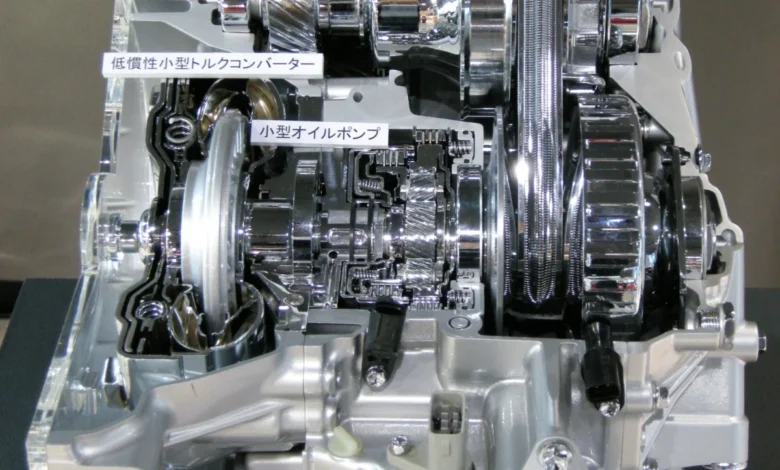
In contrast, a Continuously Variable Transmission eliminates fixed gears entirely. Instead, a standard CVT utilizes a system of two variable-diameter pulleys connected by a robust steel push-belt. Each pulley consists of two cone-shaped halves that can move closer together or farther apart under hydraulic pressure. When the pulley halves slide inward, the belt rides higher on a larger radius; when they move apart, the belt drops lower onto a smaller radius.

Because the effective diameters of both pulleys can adjust infinitely along a continuous spectrum, the transmission ratio changes seamlessly. Rather than jumping through five or six discrete steps, a CVT continuously alters the gear ratio to match the driving conditions in real time. According to technical documentation provided by major manufacturers like Honda, this infinite adjustability allows the internal combustion engine to remain at its optimal operating rpm range for any given driving scenario, rather than fluctuating up and down through fixed gear steps. The primary benefits highlighted by engineering teams include seamless acceleration without shifting shocks and significantly improved fuel economy during stop-and-go driving.
Market Integration: How Vios and Accent Adopted the CVT
The implementation of CVT technology is most visible in high-volume, affordable passenger cars designed for daily commuting. In Vietnam and wider regional markets, the Toyota Vios stands out as a prime example of this transition. Available in multiple trims, including the manual 1.5E MT and the automatic 1.5E CVT and 1.5G CVT variants, the Vios relies heavily on its automatic offerings to capture family car and fleet buyers alike.
Official fuel consumption data from manufacturers demonstrates the efficiency gains achieved by these systems. For instance, the Toyota Vios 1.5E CVT achieves an estimated fuel economy of approximately 5.83 liters per 100 kilometers in mixed driving conditions. Interestingly, this figure is slightly lower than its manual counterpart, the 1.5E MT, which averages around 6.02 liters per 100 kilometers. In urban environments, both versions demonstrate nearly identical efficiency, hovering around 7.60 to 7.62 liters per 100 kilometers. These figures challenge the historical assumption that manual gearboxes are universally more fuel-efficient than automatics, proving that modern CVT engineering can optimize fuel burn effectively during city commutes.
Similarly, Hyundai has embraced variable transmission technology across its core lineups. The Hyundai Accent, utilizing the Smartstream 1.5-liter engine—which generates 115 horsepower at 6,300 rpm and 144 Nm of torque at 4,500 rpm—offers consumers a choice between a 6-speed manual transmission and an intelligent variable transmission. Hyundai brands its proprietary CVT system as the Intelligent Variable Transmission (IVT). While it incorporates specific software calibrations designed to mimic traditional shifting patterns to appease drivers, the underlying mechanical foundation remains rooted in the classic pulley-and-belt CVT design.
The Psychological Hurdle: Why CVTs "Drone" Under Heavy Acceleration

Despite their clear efficiency and smoothness benefits, CVTs have historically polarized drivers due to a specific behavioral trait often described as "rubber-banding" or engine droning.
The primary mechanical critique of a CVT centers on the subjective driving experience during sudden, heavy acceleration. When a driver aggressively depresses the accelerator pedal to overtake a slower vehicle or merge onto a highway, a conventional automatic transmission will cycle rapidly through its fixed gears, causing engine rpm to spike and drop rhythmically. This auditory feedback provides the driver with a subconscious sense of speed and mechanical engagement.
In a CVT, however, the physics of power delivery are entirely different. When the throttle is floored, the transmission immediately commands the engine to jump to its peak power band and holds it there continuously while the vehicle’s speed catches up gradually. For the driver inside the cabin, the engine noise remains at a loud, constant pitch—often described as "mooing" or "gaping"—while the car accelerates smoothly without the familiar stepped surges. This acoustic mismatch frequently leads inexperienced drivers to perceive the vehicle as underpowered or sluggish, even when the speedometer confirms that the car is accelerating rapidly.
To mitigate this psychological drawback, automotive engineers have developed software solutions commonly referred to as "step-programming" or manual paddle-shifters. Modern CVTs are routinely programmed to simulate stepped gear ratios when the throttle is applied aggressively, or when the driver manually selects a sequential shifting mode. When passing vehicles or descending steep mountain grades, these simulated steps allow the driver to lock in specific pulley ratios, utilizing engine braking and controlling engine revs in a manner that mimics a traditional geared automatic.
An Alternative Philosophy: Mazda3 and the 6-Speed Stepped Automatic
While the vast majority of economy sedans and compact crossovers have migrated toward CVTs or dual-clutch transmissions, certain manufacturers maintain a distinct engineering philosophy. A prominent example in the C-segment is the Mazda3, which rejects the CVT configuration entirely in favor of a traditional 6-speed automatic transmission.

Powered by a 1.5-liter engine delivering 110 horsepower at 6,000 rpm and 146 Nm of torque at 3,500 rpm, the Mazda3 relies on fixed gear sets with conventional torque converter technology. According to technical evaluations provided by Mazda, this setup prioritizes direct mechanical connection and driver engagement over infinite ratio adjustability. When a driver steps on the accelerator of a Mazda3, the throttle response is immediate, and each shift is marked by a crisp, distinct mechanical transition.
Comparing these two approaches reveals a clear trade-off in automotive design philosophies. The CVT excels at thermal efficiency, smooth cruising, and minimizing fuel consumption in congested urban traffic. Conversely, the stepped 6-speed automatic delivers a connected, tactile driving experience with decisive, predictable shift points. It is worth noting that because the Mazda3 competes in a higher market segment than subcompact cars like the Vios and Accent, comparing their transmissions is less about declaring a definitive winner and more about understanding how different brands cater to distinct consumer priorities.
Consumer Profiles: Who Benefits Most from CVT Technology?
Selecting a vehicle involves weighing numerous mechanical variables, but the choice of transmission heavily dictates day-to-day driving satisfaction. For the average urban commuter who spends hours navigating heavy traffic, crawling through gridlock, and prioritizing low fuel expenditures over aggressive driving dynamics, a CVT represents a logical and pragmatic choice. The absence of shift shock during frequent stop-and-go maneuvers reduces driving fatigue significantly.
Conversely, driving enthusiasts or those who frequently navigate winding country roads may find the linear, unhurried power delivery of a CVT uninspiring. For these motorists, vehicles equipped with stepped automatics or manual transmissions offer a more rewarding tactile feedback loop.
Practical Maintenance and Ownership Considerations

Beyond driving dynamics, prospective buyers—particularly those considering the pre-owned vehicle market—must account for the unique maintenance requirements of CVT systems. Unlike traditional manual gearboxes or even older planetary-gear automatics, CVTs operate under immense physical tension, with the steel belt constantly transferring force across polished steel pulley faces.
Consequently, maintaining a strict fluid-change schedule is critical to the longevity of a CVT. Neglecting recommended transmission fluid replacement intervals can lead to premature wear on the pulley surfaces and belt degradation, resulting in catastrophic and costly transmission failure. When purchasing a used vehicle equipped with a CVT, reviewing the service history regarding transmission maintenance should always be a primary priority for the buyer.
Conclusion: The Enduring Role of Transmissions in Automotive Evolution
The transmission may not be the first feature a consumer asks about when visiting a dealership showroom, but it fundamentally dictates the rhythm and quality of every journey. While CVTs have faced criticism for their unique acoustic behavior during heavy acceleration, their supremacy in efficiency and urban refinement has cemented their place in high-volume global markets. Whether one prefers the seamless, frugal nature of a continuously variable transmission or the mechanical engagement of a stepped automatic, understanding the engineering behind these systems empowers consumers to make informed choices that best align with their driving lifestyle.