To Turn on Hazard Lights or Not During Heavy Rain: A Comprehensive Safety Analysis for Drivers

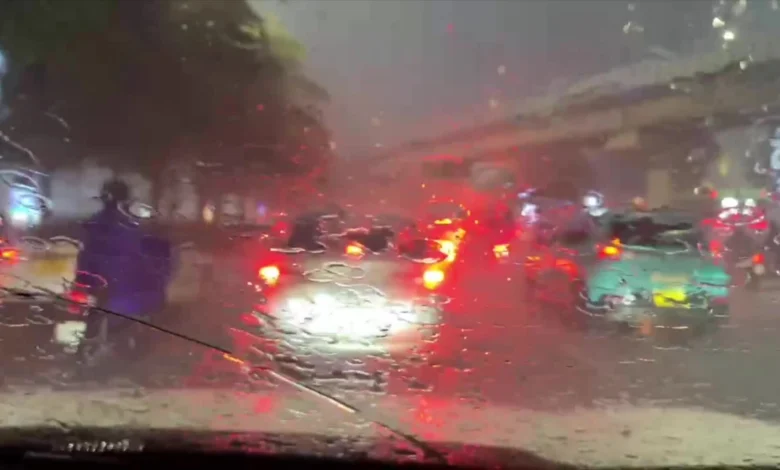
Driving through a torrential downpour is a universal trial for motorists worldwide, often transforming familiar roadways into hazardous corridors of reduced visibility, hydroplaning risks, and snarled traffic. Among the myriad decisions drivers must make in these high-stress environments, one particular habit has sparked intense, long-standing debate among automotive experts, traffic safety authorities, and drivers alike: the widespread practice of turning on hazard warning lights—commonly known as emergency flashers or hazard lights—while traveling at normal speeds in heavy rain.
While some motorists believe that activating these blinking lights enhances their vehicle’s visibility to others, traffic engineers and safety organizations consistently caution that the practice often achieves the opposite effect. By masking critical directional signals and confusing surrounding drivers regarding intent, the misuse of hazard lights during active transit can significantly increase collision risks on slick, waterlogged roadways.
The Core Dilemma: Visibility Versus Confusion on Wet Roadways
The debate is epitomized by the contrasting experiences of daily commuters. For drivers like Minh Tài, a motorist based in Ho Chi Minh City who frequently navigates dense urban traffic during tropical storms, turning on hazard lights provides a psychological sense of security. Initially hesitant to adopt the practice, Tài noted that seeing a critical mass of surrounding vehicles utilizing their hazard lights during severe downpours eventually normalized the behavior for him, transforming it into a routine reflex whenever heavy rain sets in.
Conversely, fellow motorist Hoàng Hải approaches the same meteorological challenge with heightened anxiety, largely attributed to the very practice Tài relies upon. For Hải, driving in heavy rain requires intense cognitive focus to anticipate the maneuvers of cars ahead. When those vehicles activate their hazard lights while continuing to move at speed, Hải describes the driving environment as a guessing game. Because the flashing lights simultaneously illuminate both left and right turn indicators, it becomes nearly impossible to decipher whether a vehicle is preparing to change lanes, navigate around an obstacle, or simply maintain its course.
"Rain already makes observation difficult," Hải explains. "By the time a car ahead abruptly changes direction or navigates a deep puddle, you are left with almost no clear signal to base your split-second reactions on."
Understanding the Engineering Purpose of Hazard Lights
To resolve this persistent controversy, transportation safety experts emphasize the original, intended engineering purpose of hazard warning lights. Automotive lighting systems are specifically designed to communicate abnormal, stationary, or emergency situations to surrounding traffic. When a driver presses the hazard light button, both the left and right directional signals flash simultaneously at a fixed interval.
This universal automotive language signals to other road users that a vehicle is experiencing a mechanical failure, has been involved in an accident, is moving significantly slower than the flow of traffic due to an emergency, or is actively warning of an imminent obstacle further ahead.
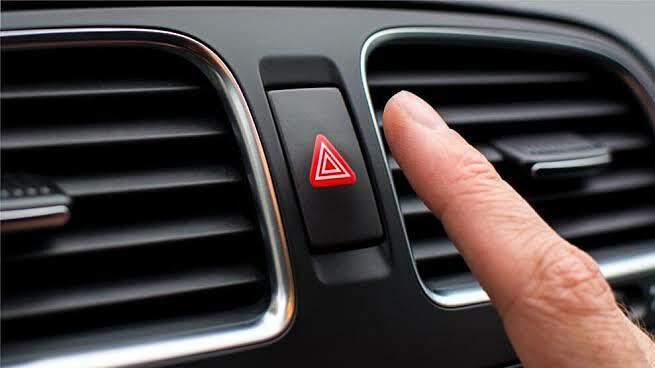
When motorists activate hazard lights while traveling at regular speeds amidst flowing traffic, the primary communication channel breaks down. While trailing drivers can certainly perceive the presence of the vehicle ahead through the flashing glow, they lose the ability to interpret localized directional intent. For instance, if a vehicle with active hazard lights encounters a deep pool of standing water and suddenly attempts to swerve or change lanes to avoid hydroplaning, trailing motorists cannot determine which direction the vehicle intends to move. This ambiguity eliminates the crucial reaction window that proper turn signals are engineered to provide.
Consequently, official consensus from global automotive safety organizations dictates that hazard lights should be reserved for stationary emergencies, unexpected slowdowns that impede traffic flow, or warning drivers behind of a sudden hazard ahead. During normal transit, drivers are advised to deactivate hazard lights and rely instead on standard indicators—commonly known as turn signals—when executing lane changes or turns.
Exceptions and Nuanced Scenarios on High-Speed Corridors
Despite clear guidelines against the general use of hazard lights during routine wet-weather driving, traffic safety specialists acknowledge limited exceptions where the practice may be provisionally justified. The most prominent exception occurs on high-speed expressways or motorways struck by torrential downpours of such severity that visibility drops precipitously near zero. In these extreme conditions, when the highway surface is completely obscured by sheet water and stopping abruptly on the shoulder poses an immediate, catastrophic risk of being rear-ended by other speeding traffic, drivers may temporarily use hazard lights to announce their exceptionally slow, vulnerable presence.
Even under these severe circumstances, however, safety protocols dictate that if the driver must execute a lane change or exit the highway, the hazard lights must be immediately switched off, and the standard directional signal must be engaged to communicate the upcoming maneuver.
Furthermore, relying solely on hazard lights fails to solve the underlying visibility challenge. To enhance vehicle recognition in heavy rain without creating signal confusion, safety advocates recommend the proper use of specialized automotive lighting systems.
Optimizing Vehicle Lighting During Inclement Weather
Navigating heavy rain safely requires a strategic, hierarchical approach to vehicle lighting. Drivers must understand the specific functions and limitations of fog lights, low beams, and high beams to maximize their visibility to others while maintaining clear lines of sight.
Fog Lights as a Targeted Visibility Aid
Front and rear fog lights can be valuable tools during severe downpours. Front fog lights emit a wide, low-slung beam designed to cut beneath falling rain and illuminate the immediate road surface, helping other motorists identify the vehicle’s position in a hazy environment.
However, fog lights are not intended to replace standard headlights. More importantly, rear fog lights—which possess a high luminous intensity to pierce through heavy mist—can cause severe glare and temporary visual discomfort for trailing drivers if used when visibility is still relatively clear. Drivers are advised to reserve rear fog lights strictly for conditions where visibility is severely compromised.
The Indispensable Role of Low-Beam Headlights
For standard wet-weather driving, automotive experts universally recommend the continuous use of low-beam headlights (commonly known as low beams or "cos" lights). Activating low beams significantly increases a vehicle’s visibility to oncoming and trailing traffic while providing adequate illumination of the wet asphalt surface. Unlike hazard lights, low beams maintain a steady, non-distracting source of light that allows other road users to accurately gauge distance, position, and relative speed without confusion.
The Hazards of High-Beam Headlights in Rain
Conversely, the use of high-beam headlights during heavy rain is strongly discouraged. High beams produce an intense, long-range light cone that interacts poorly with atmospheric precipitation. When high-intensity beams strike falling raindrops and water vapor suspended in the air, the light reflects intensely back toward the driver. This phenomenon creates a luminous, blinding wall of white light directly in front of the windshield, severely impairing the driver’s ability to discern the road surface, lane markings, and potential obstacles. High beams should only be utilized when traveling on unlit roads devoid of other traffic and must be immediately switched to low beams upon the approach of oncoming or preceding vehicles.
Broader Implications for Road Safety and Infrastructure
The ongoing debate over hazard light usage during heavy rain reflects a broader challenge in modern traffic safety: the gap between formal driving education and reactive driving habits observed on public roads. As climate patterns shift and urban centers experience increasingly intense precipitation events driven by severe weather phenomena, the frequency of low-visibility driving conditions is projected to rise.
Traffic safety analysts point out that inconsistent driver behavior during storms exacerbates congestion and increases the statistical likelihood of multi-vehicle pileups. When drivers adopt unverified practices—such as driving with hazard lights engaged—solely because they observe surrounding vehicles doing so, it creates a cascading effect of misinformation on the highway.
To mitigate these risks, transportation authorities and driving academies are increasingly emphasizing standardized wet-weather protocols in driver training curricula. Emphasizing the distinction between visibility enhancement tools (such as low beams and proper fog lights) and emergency warning systems (hazard flashers) is critical to reducing confusion on saturated roadways.
Ultimately, navigating heavy rain safely relies less on collective conformity to unverified habits and more on disciplined adherence to established traffic signals. By utilizing low beams for continuous visibility, reserving hazard lights strictly for genuine emergencies or stationary hazards, and employing clear turn signals for all lateral movements, motorists can significantly enhance their safety and the safety of everyone sharing the road.