The Evolution of Vietnamese Science: Bridging Historical Patriotism and Modern Innovation for National Development


The trajectory of scientific advancement in Vietnam has consistently been defined by an unyielding spirit of patriotism, intellectual dedication, and strategic foresight. From the pioneering days of the mid-20th century, when brilliant minds abandoned comfortable careers abroad to answer the call of nation-building, to the modern era of high-tech laboratories and digital transformation, the Vietnamese scientific community has remained a vital engine for socio-economic growth, national defense, and global integration. Recent policy directives, most notably Resolution No. 57-NQ/TW issued by the Politburo, underscore a renewed national commitment to making science, technology, innovation, and digital transformation primary drivers of national development. By analyzing historical milestones and contemporary initiatives, experts and policymakers continue to evaluate the mechanisms necessary to harness intellectual capital and propel Vietnam forward in a rapidly evolving global landscape.

Historical Roots: The Call of the Homeland and Wartime Leadership
The foundational era of modern Vietnamese science is inextricably linked to the struggles for national independence and sovereignty. In 1946, responding directly to the appeal of President Ho Chi Minh, distinguished engineer Pham Quang Le—later renowned as General Tran Dai Nghia—left behind a promising career in France. Returning to a newly independent nation grappling with severe economic hardships, scarce resources, and a rudimentary technological infrastructure, General Tran Dai Nghia played a pivotal role in establishing and shaping the nation’s military industry. His efforts, alongside those of other early visionaries, laid the groundwork for research and development designed to meet the urgent demands of national defense.
Over two decades later, this legacy of responsibility was inherited by a new generation of scholars. Notably, Professor Nguyen Van Hieu returned from the Soviet Union and was entrusted by Prime Minister Pham Van Dong with the monumental task of establishing the Institute of Physics at the remarkably young age of 31. These historical accounts illustrate more than just individual acts of selflessness; they highlight a systemic vision within Vietnam’s leadership regarding the identification, cultivation, and strategic deployment of exceptional talent. Subsequent generations of scientific leaders, including professors such as Dang Vu Minh and Chau Van Minh, built upon these foundations, creating a robust institutional framework for research and development across various disciplines.

Contemporary Frameworks: Policy Shifts and Institutional Growth
Today, as science and technology assume a central role in global competitiveness, the lessons of the past carry profound contemporary relevance. Resolution 57-NQ/TW establishes clear mandates for breaking through traditional barriers in science, technology, and innovation. The directive emphasizes the necessity of cultivating talent and establishing a favorable operational environment that allows intellectuals to maximize their capabilities and directly contribute to national prosperity.
Leaders within the national scientific infrastructure, such as Professor and Academician Tran Hong Thai, emphasize that the golden thread connecting past generations of scholars to contemporary researchers is the absolute commitment of science to societal development, national security, and economic resilience. As underscored by national leadership, the Vietnam Academy of Science and Technology (VAST) serves as a critical intellectual pillar for the state. In the current era of digital transformation, VAST and related research bodies are tasked with translating theoretical breakthroughs into practical applications that enhance labor productivity and drive sustainable economic growth.

The decision of a scientist to return to their homeland is often driven by a unique synthesis of patriotism, cultural affinity, and professional passion. While global science recognizes no strict geographical boundaries, scientists themselves possess profound ties to their native lands. For many Vietnamese researchers trained abroad, the opportunity to apply their expertise directly to the development of their local communities provides a deep sense of professional and personal fulfillment.
The Dual Challenge of Infrastructure and Talent Retention
Despite a profound desire among many expatriate intellectuals to contribute to Vietnam’s development, structural challenges regarding research infrastructure, funding ecosystems, and working environments have historically posed significant hurdles. In earlier decades, limitations in laboratory facilities and advanced equipment occasionally constrained the ability of local researchers to operate at the cutting edge of global science.
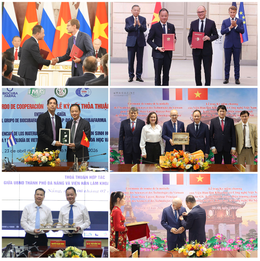
To address these disparities, the Vietnamese government has progressively increased investments in research and development infrastructure. Modernization initiatives aim to bridge the gap between domestic research facilities and international standards. According to academic leaders, creating large-scale, high-impact scientific projects is essential for attracting not only returning Vietnamese experts but also international scholars and specialists who view Vietnam as a fertile ground for collaborative research.
Modern talent acquisition strategies increasingly recognize that physical relocation is no longer the sole prerequisite for contribution. In an interconnected global economy, international networks, virtual collaborations, and advisory frameworks allow researchers based abroad to maintain active partnerships with domestic institutions. By fostering a hybrid ecosystem that integrates local expertise with the global diaspora, Vietnam is expanding its intellectual resource pool beyond traditional geographic limitations.

Case Study in Modern Scientific Execution: The 500-Day DNA Identification Campaign
A prominent contemporary example of Vietnam’s scientific capability and national resolve is the ambitious 500-day campaign launched by the State to identify the remains of unknown martyrs using advanced DNA technology. This large-scale, time-sensitive undertaking represents a convergence of high-level political will, institutional mobilization, and cutting-edge scientific application.
Entrusted with a significant portion of this national mission, the Vietnam Academy of Science and Technology approached the task with both rigorous scientific precision and profound moral responsibility. The initiative required the deployment of modern genetic profiling technologies capable of analyzing highly degraded biological samples with unprecedented accuracy, extending beyond traditional direct lineage markers to incorporate broader comparative datasets.
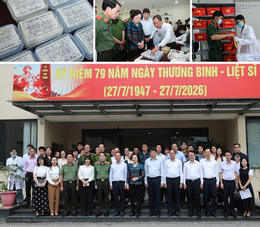
Beyond its technical complexity, the campaign holds profound humanitarian and cultural significance. For hundreds of families searching for lost relatives decades after the conclusion of national defense conflicts, the deployment of advanced DNA sequencing offers closure and honors the ultimate sacrifice made by preceding generations. The success of this campaign demonstrates the maturation of Vietnam’s biotechnology sector, reflecting a high degree of coordination between government agencies, academic institutions, and technological enterprises.
International Integration and Future Horizons looking toward 2045
As Vietnam looks toward the future, strategic planning focuses on multi-decade horizons to ensure sustainable development and technological sovereignty. Strengthening basic research remains a fundamental priority, as mastery over foundational science is widely regarded as a prerequisite for mastering future technologies.

Institutional leaders stress the importance of fostering seamless synergy across the entire innovation value chain—spanning from fundamental research and applied sciences to experimental production and commercialization. Furthermore, expanding international partnerships serves as a vital bridge for acquiring advanced technologies and integrating domestic talent into global research networks.
By cultivating an open, well-funded, and legally protected environment for innovation, Vietnam aims to transform its intellectual capital into a primary driver of national growth. The enduring spirit of dedication demonstrated by early pioneers like General Tran Dai Nghia, combined with the modern capabilities of contemporary researchers, ensures that science and technology will continue to serve as the bedrock of the nation’s future prosperity and global standing.