Bé gái 14 tháng tuổi ngừng tim đột ngột tại lớp mầm non, bác sĩ cứu sống ngoạn mục sau 20 phút hồi sức

The fragile window of survival in pediatric cardiac emergencies was starkly highlighted in Ho Chi Minh City, where a 14-month-old infant was successfully resuscitated after suffering an unexpected cardiac arrest at a local nursery school. The harrowing medical emergency, which required a synchronized inter-hospital response between Gia Dinh’s People’s Hospital 115 and Children’s Hospital 1, underscores the critical importance of early pediatric life support, rapid communication, and advanced emergency preparedness in early childhood educational institutions.
A Morning Routine Tragic Turn
The sequence of events began on a seemingly ordinary morning. According to family accounts, the 14-month-old toddler was dropped off at her nursery school by her mother in high spirits, showing no apparent signs of illness, distress, or discomfort. However, the routine separation turned into a parent’s worst nightmare roughly 50 minutes later.
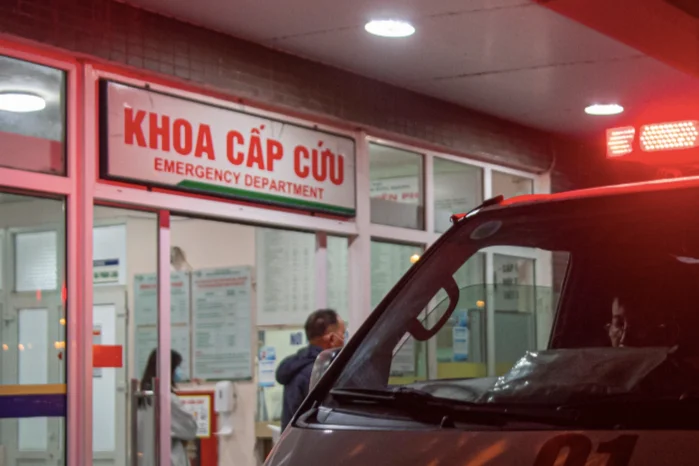
The mother received a frantic phone call from the school administration stating that her child had suddenly lost consciousness. Panic-stricken, she rushed to the scene as the infant was urgently transported to the Emergency Department of People’s Hospital 115. Upon arrival, the medical team confirmed that the baby was in a state of out-of-hospital cardiac arrest (OHCA).
For an infant, cardiac arrest is a uniquely catastrophic medical emergency. Prolonged periods of oxygen deprivation at such a tender age exponentially increase the risk of irreversible anoxic brain injury and multi-organ failure. Recognizing the extreme vulnerability of the patient, the emergency medical team immediately mobilized a high-level pediatric resuscitation protocol.
High-Stakes Resuscitation in the Emergency Room
Upon admission, the emergency room transformed into a tightly coordinated theatre of life-saving interventions. The medical staff executed a multi-faceted approach, assigning precise roles to ensure seamless execution. Chest compressions were initiated immediately, paired with advanced airway management and targeted pharmacological interventions administered according to strict pediatric resuscitation guidelines.
However, the medical team encountered a formidable hurdle during the critical initial moments: establishing peripheral intravenous (IV) access in an unresponsive, dehydrated, or shock-stricken infant is notoriously difficult due to peripheral vascular collapse. To circumvent this delay, physicians utilized an intraosseous (IO) infusion technique. This specialized procedure allows emergency drugs and fluids to be rapidly delivered directly into the vascular network via the bone marrow cavity, bypassing collapsed veins when intravenous access cannot be swiftly secured.
Simultaneously, the hospital activated an inter-facility emergency response mechanism, alerting Children’s Hospital 1 to prepare for specialist pediatric support and establish a collaborative treatment strategy. For 20 relentless minutes, doctors, nurses, and specialists alternated chest compressions, managed airway support, and monitored the infant’s physiological response to the rigorous resuscitation efforts.
The coordinated tenacity paid off. After approximately 20 minutes of uninterrupted, high-quality cardiopulmonary resuscitation (CPR), the infant’s heart began to beat spontaneously. Spontaneous circulation was successfully restored, marking a monumental initial milestone in a battle that was far from over.
The Ongoing Battle: Post-Resuscitation Care
While the return of spontaneous circulation (ROSC) is a vital victory, medical professionals emphasize that the journey to full recovery is fraught with complex challenges. Following cardiac arrest, pediatric patients remain at extreme risk for post-cardiac arrest syndrome, which encompasses reperfusion injury, neurological damage, and systemic inflammation.
The 14-month-old girl was immediately transitioned to intensive care, where she remains under meticulous monitoring and advanced neuroprotective management. Specialists at People’s Hospital 115 noted that continuous therapeutic interventions are required to safeguard brain function and support other vital organs that may have suffered during the period of oxygen deprivation.
Medical Insights into Pediatric Cardiac Arrest
ThS. BSCKI. Nguyen Kim Long, representing the Emergency Department at People’s Hospital 115, shed light on the complex etiology of sudden cardiac arrest in young children. Unlike adults, where cardiac events are frequently driven by underlying primary cardiovascular disease such as myocardial infarction, sudden cardiac arrest in infants and toddlers is typically secondary to other critical conditions.
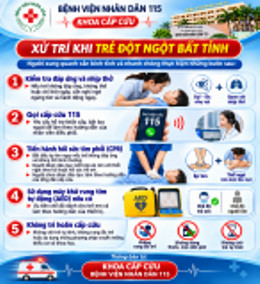
Common pediatric triggers include acute respiratory distress, severe airway obstruction, foreign body aspiration (choking), near-drowning, congenital heart defects, or severe systemic infections. Because a child’s physiological reserve is significantly lower than that of an adult, respiratory compromise can rapidly deteriorate into complete cardiovascular collapse if not identified and intercepted in its earliest stages.
Medical experts reiterate that the first few minutes following a sudden loss of consciousness—characterized by an absence of breathing or merely agonal gasps—dictate the boundary between life and death, full neurological recovery and permanent disability.
Imperative Protocols for Early Childhood Institutions
The incident has reignited urgent discussions regarding safety standards and emergency preparedness within nursery schools and childcare centers. Healthcare professionals strongly advocate for mandatory basic life support (BLS) training for all educators, administrators, and childcare staff.
When a child collapses unexpectedly, bystanders must immediately activate emergency medical services (such as dialing 115) while simultaneously initiating bystander CPR if trained. For those untrained in formal CPR techniques, dispatcher-assisted instructions provide vital, real-time guidance on performing hands-only or standard chest compressions tailored to pediatric patients.
Furthermore, early childhood institutions are urged to integrate comprehensive safety protocols that include:
- First Aid and Foreign Body Management: Equipping staff with the skills to recognize and manage choking incidents swiftly using age-appropriate back blows and chest thrusts.
- CPR Certification Programs: Mandating regular, certified training sessions in pediatric basic life support for all teachers and facility workers.
- Rapid Communication Channels: Establishing direct, expedited communication pathways with local emergency medical services to minimize response times during critical incidents.
The miraculous survival of the 14-month-old infant in Ho Chi Minh City serves as both a testament to the extraordinary skill of modern emergency medical teams and a sobering reminder of the vigilance required in environments dedicated to the care of society’s youngest members.