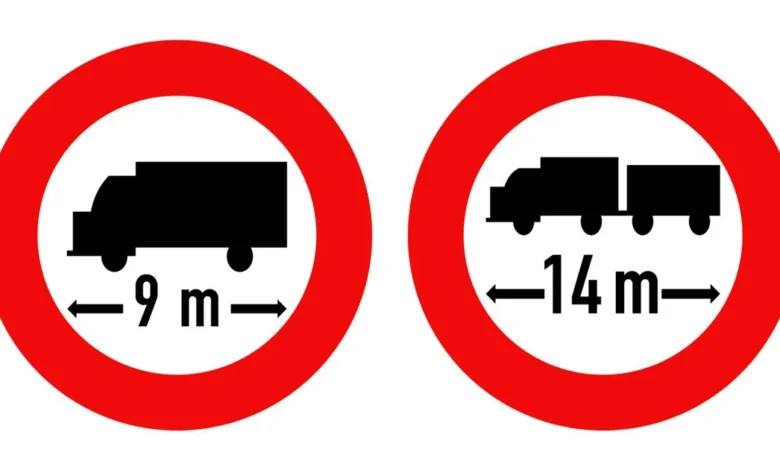
In the intricate landscape of Vietnamese traffic regulation, road signs serve as the primary language of safety and order. However, even seasoned motorists can occasionally falter when interpreting signage that shares a similar aesthetic but dictates fundamentally different legal obligations. Among the most commonly confused are road signs P.119 and P.120. Both are circular, red-bordered, white-background prohibition signs featuring a vehicle silhouette and a numerical value representing the maximum allowable length in meters. Despite their visual resemblance, these signs target different categories of vehicles and apply to distinct configurations of transport, necessitating a precise understanding to ensure compliance and safety on the road.
Technical Context and Regulatory Framework
The confusion surrounding these two signs is addressed under the latest Vietnam National Technical Regulation on Road Signs and Signals, designated as QCVN 41:2024/BGTVT. This regulation provides the definitive legal framework for all traffic control devices deployed across the national highway network and urban arteries.
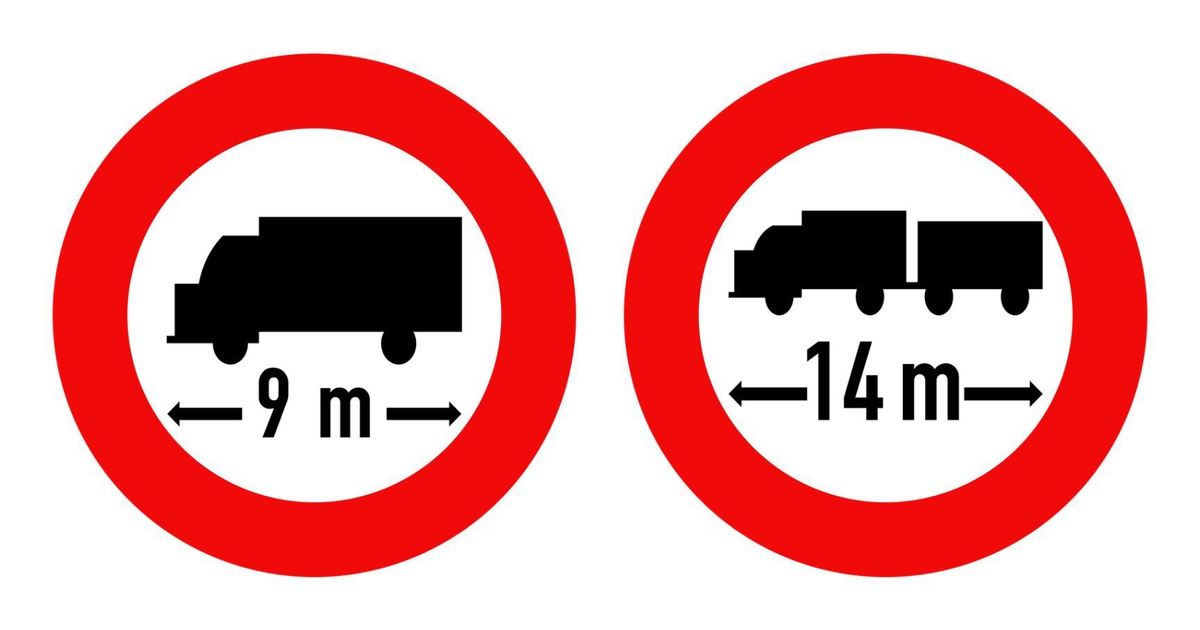
The P.119 sign is officially titled "Length limit for vehicles," while the P.120 sign is titled "Length limit for vehicles towing trailers or semi-trailers." While both function under the umbrella of prohibitive signage, their operational scope is vastly different. The P.119 sign features a silhouette of a standard truck, whereas the P.120 sign explicitly depicts a tractor unit pulling a trailer. This seemingly minor visual detail is the most critical factor for drivers to identify before committing to a route.
Chronology of Regulatory Standardization
The evolution of these signs has been a gradual process aimed at harmonizing Vietnamese standards with international road safety practices. For decades, the lack of clear, standardized visual differentiation led to inconsistent enforcement and driver frustration. The introduction of the QCVN 41:2024/BGTVT update serves as a modern refinement of previous standards, such as QCVN 41:2016 and 2019, which often left gaps regarding the specific calculation of vehicle length—particularly when cargo overhangs were involved.
By refining the definitions within the 2024 regulation, the Ministry of Transport sought to eliminate the ambiguity that frequently led to commercial drivers inadvertently violating the law. This updated guidance clarifies that the "length" referred to on the signs is not merely the vehicle’s chassis length as registered by the manufacturer, but the total physical footprint of the vehicle including any cargo extensions.
Operational Implications of Sign P.119
Sign P.119 is designed to restrict the passage of vehicles—including cars, trucks, and special-purpose vehicles—that exceed a specific total length. It is typically deployed on mountainous routes, narrow urban roads with sharp, tight-radius curves, or areas where the physical dimensions of the roadway cannot accommodate long-wheelbase vehicles without causing significant traffic congestion or safety hazards.
To understand its application, consider a scenario where a P.119 sign indicates a limit of 9 meters. If a driver operates a single-unit truck with a manufacturer-stated length of 8.5 meters, they are in full compliance with the law. However, if that same truck is loaded with goods that extend beyond the bumper, pushing the total length to 10 meters, the driver is in direct violation of the prohibition. The law does not distinguish between the vehicle’s static length and the length of the load it carries; it considers the entire "train" of the vehicle.
Operational Implications of Sign P.120
Sign P.120 operates on a different, more specialized scale. It is strictly aimed at vehicles towing trailers or semi-trailers. This includes tractor units with semi-trailers and passenger vehicles towing trailers. The key distinction here is that the numerical value on the P.120 sign applies to the combined length of the tractor unit, the trailer (or semi-trailer), and any cargo protruding from either.
If a driver encounters a P.120 sign set at 14 meters, they must calculate the sum of the tractor and the trailer. If the total length of the combination is 16 meters, they are prohibited from entering that road segment. Conversely, if a driver is operating a solo truck or a standard passenger bus that does not have a trailer attached, the P.120 sign does not apply to them. This creates a scenario where a very long solo vehicle might be permitted to pass a P.120 sign, while a shorter tractor-trailer combination would be barred.
Critical Analysis: Calculating Vehicle Length
The most frequent cause of enforcement disputes arises from how "total length" is calculated. Many drivers rely solely on their vehicle’s registration documents, which provide the dimensions of the vehicle in its empty, factory-spec state. Traffic authorities, however, define the length as the maximum longitudinal distance between the rearmost point of the load and the foremost point of the vehicle.
This interpretation is crucial for logistics companies and freight operators. In the event of an inspection, enforcement officers utilize the actual physical dimensions. For instance, if a transport company loads steel beams that protrude significantly from the rear of a flatbed trailer, the driver must account for this additional length. Failure to do so often results in fines, as the vehicle is technically in violation of the length limit posted on the P.119 or P.120 signs.
Official Responses and Enforcement Trends
Traffic police authorities have emphasized that the primary purpose of these signs is to mitigate the risk of "jackknifing" or blocking intersections on narrow roads. When a vehicle exceeds the design capacity of a road’s curvature, it often forces the driver to swing into oncoming lanes, creating high-risk scenarios.
Official guidance from the Ministry of Transport suggests that the standardized use of these signs is a key pillar in the ongoing effort to digitize and automate traffic management. As Vietnam moves toward more advanced Intelligent Transport Systems (ITS), the reliance on clear, unambiguous signage becomes even more critical. There is a growing consensus among transport safety experts that standardized visual cues, such as those provided by the QCVN 41:2024, are essential for reducing the human error component in commercial logistics.
Broader Impact on the Logistics Sector
The clear distinction between P.119 and P.120 has significant economic implications. Logistics and supply chain managers must integrate these regulations into their route planning software. Incorrectly planning a route that involves a road prohibited by these signs can lead to substantial delays, increased fuel costs due to re-routing, and the risk of heavy penalties.
Furthermore, the integration of these regulations into driver training curricula is vital. While the signs appear intuitive, the nuance of calculating total length—especially with cargo—is a skill that requires professional judgment. The shift toward stricter enforcement means that transport companies can no longer rely on "best guesses" regarding their vehicle lengths.
Conclusion
Mastering the difference between P.119 and P.120 is more than just a matter of passing a driver’s license test; it is an essential component of professional driving in an increasingly regulated environment. By recognizing the visual differences—the solo truck silhouette of the P.119 versus the trailer-towing silhouette of the P.120—and understanding that both regulations strictly include cargo overhangs in their calculations, drivers can ensure they remain compliant.
As road safety standards in Vietnam continue to modernize, the focus remains on clarity and prevention. For the individual motorist, the rule of thumb remains simple: always measure your vehicle at its longest point, including all cargo, and pay close attention to the silhouette on the sign before proceeding. Through rigorous adherence to these standards, the logistics industry and individual drivers alike can contribute to a more efficient and safer national road network. The complexity of the regulation is a small price to pay for the reduction in accidents and congestion that these clear, well-defined signs aim to achieve.
Related posts: