New Law on Organ Donation and Transplantation Sets Strict Safeguards to Prevent Commercialization and Protect Minors

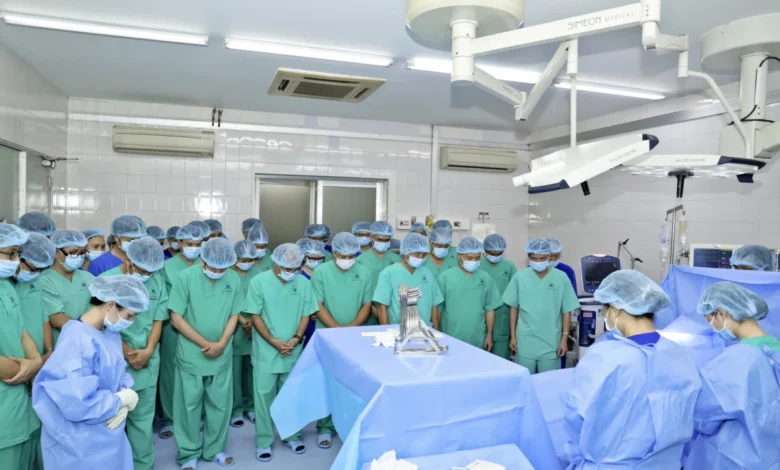
The landscape of organ donation and transplantation in Vietnam has undergone a profound legislative transformation following the official passage of the amended Law on Donation, Removal, and Transplantation of Human Tissues and Organs and Donation and Removal of Cadavers. Approved by the National Assembly on November 21, this landmark legal framework represents a decisive step toward modernizing the nation’s medical ethics, expanding altruistic opportunities, and—most importantly—establishing an impenetrable barrier against the illegal commercialization of human body parts.
Immediately following the legislative green light, the Ministry of Health moved swiftly to clarify the core provisions of the new statute. At the heart of the legislation lies a dual mission: to eradicate organ trafficking and the commodification of human tissues, and to fiercely protect the voluntary autonomy of donors. By setting forth comprehensive boundaries, the law addresses systemic vulnerabilities that have challenged medical ethicists and legal experts for decades, ensuring that the gift of life remains a noble act of humanity rather than a transaction driven by desperation.
Comprehensive Restrictions and 29 Prohibited Acts
One of the most consequential components of the newly enacted law is the explicit codification of 29 distinct groups of prohibited acts. This robust legal foundation equips law enforcement and health authorities with the tools necessary to monitor, detect, and deter illicit activities within a sector highly vulnerable to exploitation.
The prohibited acts cover a vast spectrum of violations, starting with the outright ban on the appropriation of human organs, body parts, and cadavers. The buying and selling of tissues, organs, and dead bodies are criminalized unequivocally. Furthermore, the law strictly forbids any form of enticement, deception, threat, or coercion directed at compelling individuals to donate. Exploiting pre-existing relationships—such as adoption, legal guardianship, alternative care arrangements, or employment dependencies—to influence a person into donating an organ is treated as a severe violation of trust and law.
To completely dismantle any commercial motivations, the statute prohibits the procurement, transplantation, utilization, or preservation of organs and body parts for commercial purposes. Advertising, brokering, or intermediary activities aimed at facilitating organ exchanges for profit are strictly outlawed. The legislation also clamps down on the abuse of regulatory mechanisms, prohibiting individuals from manipulating waiting lists or obtaining unauthorized preferential treatment through corruption or administrative loopholes.

Particularly noteworthy are provisions targeting cross-border illicit activities. The law classifies any act of organizing, encouraging, or facilitating Vietnamese citizens to travel abroad for the purpose of purchasing organs, as well as bringing foreign nationals into Vietnam for unauthorized organ transplants, as major criminal offenses. These measures align Vietnam with international protocols against human trafficking and organ tourism, sealing off escape routes for transnational criminal syndicates.
Regulatory Safeguards for Living Donors and Age Restrictions
A critical area of reform within the new law addresses the age limits and relational dynamics governing living organ donors. Under the previous framework established in 2006, individuals aged 18 and older were generally permitted to donate organs to others under specified conditions. The amended legislation introduces a nuanced, multi-tiered age structure designed to safeguard younger, potentially vulnerable adults from external pressures.
According to the updated statute, individuals aged 18 to under 25 are legally restricted to donating organs exclusively to close family members. The privilege of donating a renewable organ or tissue to individuals outside one’s immediate family is reserved exclusively for those aged 25 and older.
Ministry of Health officials explained that this age threshold is anchored in psychological and sociological research. By requiring donors to be at least 25 years old before engaging in non-family donations, the state ensures that the individual has reached full maturity, cognitive independence, and emotional stability. At this stage of life, young adults are far less susceptible to economic hardships, familial coercion, or predatory financial inducements. All organ distribution and matching processes must be managed exclusively through the national coordination agency, effectively eliminating the risk of private, direct negotiations that historically fostered black-market transactions.
The execution of organ removal from a living donor is subjected to rigorous administrative and legal checks. Surgeries can only proceed following the written approval of an independent Consultation Council for Donation and Transplantation. Furthermore, law enforcement agencies, local People’s Committees, and relevant authorities are mandated to collaborate closely to verify the identities, family relationships, and residential backgrounds of both the donor and the recipient. In cases involving spouses, strict criteria regarding the minimum duration of marriage must be satisfied to preempt fraudulent unions orchestrated solely for organ procurement.
The Inviolable Principle of Voluntary Consent
Throughout the legislative process, the principle of absolute voluntarism remained the cornerstone of Vietnam’s organ donation framework. The law affirms that any citizen aged 18 or older possessing full cognitive capacity holds the legal right to register for organ and tissue donation, as well as post-mortem body donation. Registered individuals retain complete sovereignty over their decision, maintaining the right to modify, cancel, or re-register their intentions at any time.

Crucially, the statute establishes that registering to donate does not mean an individual is automatically obligated to proceed under all circumstances. Both the registered donor and their legal representatives—including parents or guardians—retain the absolute right to revoke consent at any stage prior to the actual medical procedure. If a family member expresses hesitation, dissent, or a lack of consensus at the critical juncture, medical professionals are legally barred from proceeding with the removal of tissues or organs. This safeguard ensures that family grieving processes are respected and that donations stem exclusively from unanimous moral agreement.
For living donors, the legal framework imposes mandatory, independent psychological and legal counseling. These sessions are designed to ensure that donors are fully informed of potential medical risks, long-term health consequences, and their absolute right to withdraw consent without penalty. For minors under the age of 18, the regulations are exceptionally stringent. Minors are strictly prohibited from donating non-regenerative organs. Donation of regenerative tissues, such as hematopoietic stem cells or bone marrow, is permissible exclusively for the benefit of an ailing biological brother or sister, and only under strict parental consent, comprehensive medical evaluation, and child-appropriate counseling.
Ministry of Health representatives emphasized that these multi-layered protective mechanisms are vital to preventing the exploitation of economically disadvantaged populations. By shielding vulnerable demographics from the predatory influence of financial distress, the government aims to foster an ethical environment rooted in true altruism.
Expanding Altruism and National Recognition
Complementing these stringent legal prohibitions and protective measures, the newly passed law seeks to actively foster a nationwide culture of empathy and civic responsibility. Recognizing the profound sacrifice made by donors and their families, the legislation officially establishes May 20th of each year as the National Day of Gratitude for Organ, Tissue, and Body Donors.
This annual observance is designed to honor donors and their families, destigmatize post-mortem donation within traditional cultural contexts, and raise public awareness regarding the life-saving impact of transplantation medicine. Public health advocates believe that coupling robust criminal deterrents with positive social recognition will normalize donation, encouraging more citizens to pledge their organs voluntarily.
Context, Chronology, and Legislative Evolution
The journey toward this comprehensive legislative overhaul reflects years of careful deliberation, public debate, and medical advancement within Vietnam. Since the initial Law on Donation, Removal, and Transplantation of Human Tissues and Organs was enacted in 2006, the country’s medical capabilities have expanded exponentially. Vietnamese hospitals routinely perform complex heart, liver, kidney, and lung transplants, matching global standards of medical excellence.

However, rapid medical progress exposed regulatory gaps. Over the past decade, rapid urbanization, digital connectivity, and economic disparities created new avenues for illicit brokers to exploit desperate patients and impoverished potential donors. Reports and discussions surrounding regulatory loopholes—including debates over minor involvement and cross-border trafficking risks—sparked intense public discourse across traditional media and social networks in late 2024 and 2025.
In response, lawmakers, medical professionals, ethicists, and legal experts engaged in extensive consultations to draft amendments that would balance the surging clinical demand for organs with unyielding ethical standards. The drafting process involved gathering multidimensional feedback, addressing parental concerns regarding minors, and studying international best practices in organ procurement governance. The culmination of these efforts is the November 21 legislative passage, which successfully bridges the gap between modern clinical ambition and social protection.
Analytical Implications of the New Legal Framework
From a public health and legal perspective, the amended law carries far-reaching implications for Vietnam’s medical sector.
First, the centralization of organ allocation through national coordination agencies minimizes corruption and ensures equitable access for patients on waiting lists, dismantling informal networks that previously favored wealth or influence. Second, the explicit criminalization of intermediary activities and cross-border trafficking sends a clear message to domestic and international syndicates that Vietnam will not tolerate medical exploitation.
Furthermore, by refining the age brackets for living non-family donors and mandating independent psychological evaluations, the state has built a resilient defense against economic coercion. While these stringent administrative hurdles may temporarily lengthen the evaluation process for live donations, health experts agree that the trade-off is entirely justified by the enhanced protection afforded to human rights and bodily integrity.
Ultimately, the new law redefines organ transplantation in Vietnam not merely as a technical triumph of modern medicine, but as a profound test of societal morality. By protecting the vulnerable, honoring the altruistic, and punishing the predatory, Vietnam has established a progressive, humane, and secure legal framework destined to save countless lives while preserving the dignity of every individual involved in the noble act of giving life.