Three Drivers Fined for Cruising Below Minimum Speed on the Left Lane of Phap Van – Cau Gie Expressway


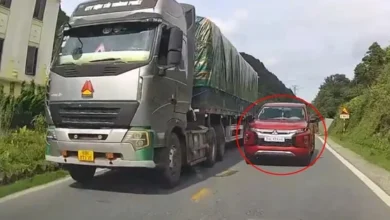
The Traffic Police Department under the Ministry of Public Security has officially announced the imposition of administrative fines on three motorists for willfully driving below the prescribed minimum speed limit on the innermost passing lane of a major national expressway. This enforcement action highlights a persistent and hazardous traffic culture issue across Vietnam’s rapidly expanding expressway network: vehicles moving at sluggish paces while occupying lanes designated exclusively for high-speed travel and overtaking maneuvers.
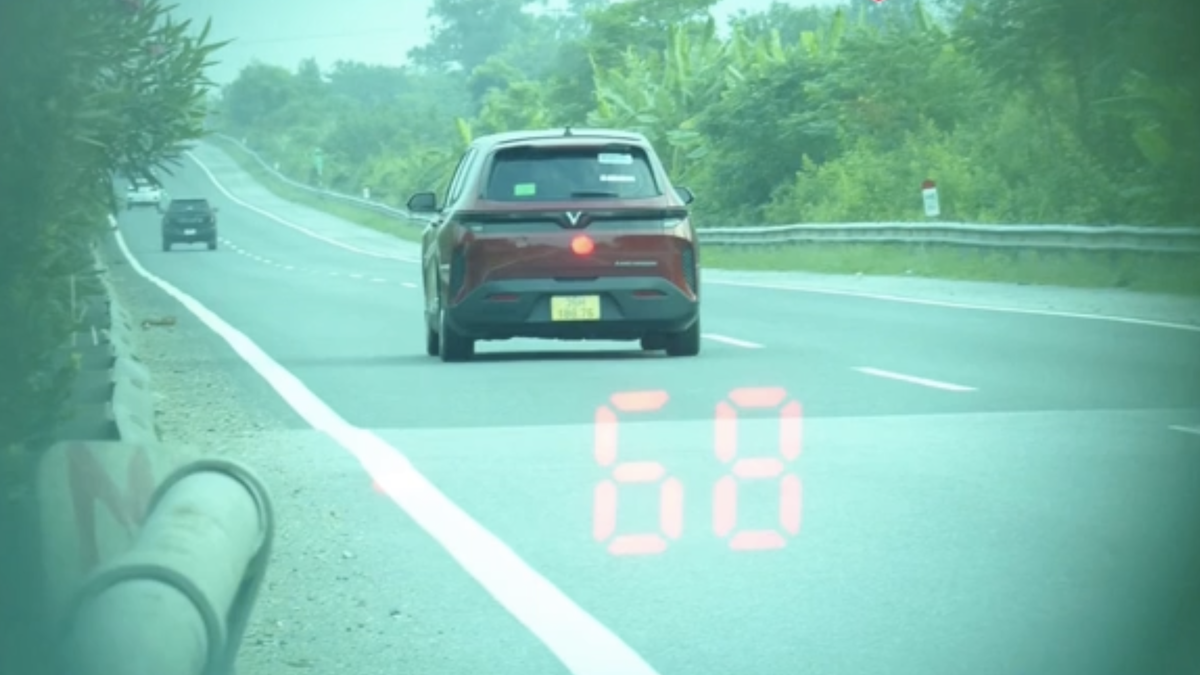
According to the official police report released on November 7, the violations were recorded on October 28 along Lane 1 of the Phap Van – Cau Gie Expressway, one of the busiest arterial gateways connecting the capital city of Hanoi to southern provinces. The penalized motorists included the operators of two passenger cars traveling at speeds of 62 km/h and 68 km/h, respectively, alongside a commercial passenger transport bus moving at 68 km/h. These velocities fall significantly short of the mandatory minimum speed threshold established for that specific lane, directly compromising traffic flow dynamics and elevating the risk of rear-end collisions.
Evolution of Expressway Lane Management and the Implementation of New Traffic Schemes
The enforcement measures follow the implementation of an updated traffic organization scheme on the Phap Van – Cau Gie Expressway, which took effect on October 14. Under this refined framework, authorities introduced strict functional delineations for each lane to optimize throughput and enhance highway safety. Lane 1, defined as the leftmost lane directly adjacent to the median barrier, was designated strictly as the high-speed passing and cruising lane, operating under a speed regime with a maximum limit of 100 km/h and a mandatory minimum limit of 80 km/h.
Conversely, Lane 2 accommodates vehicles operating under a maximum speed limit of 100 km/h and a lower minimum threshold of 60 km/h, serving general automobile traffic. In addition to these limits, regulatory frameworks explicitly restrict heavy commercial vehicles—specifically passenger buses with more than 29 seats and freight trucks with a payload capacity exceeding 7.5 tons—from maintaining continuous transit in Lane 1. These heavy vehicles are legally permitted to utilize the leftmost lane solely for passing slower traffic before promptly returning to Lane 2 when conditions allow. Lighter vehicles failing to maintain the mandatory 80 km/h baseline are similarly required to vacate Lane 1 and shift to the right to maintain overall traffic synchronization.
Legal Framework and Penalties for Sub-Minimum Speed Operations
The legal foundation for penalizing drivers who fail to maintain minimum speed thresholds is anchored in Decree 168/2024/ND-CP, which governs administrative sanctions for road traffic infractions. Under the provisions of this decree, operating a motor vehicle at a velocity lower than the stipulated minimum speed limit on highway sections where such limits are legally posted carries a financial penalty ranging from 800,000 VND to 1,000,000 VND.
While the monetary fines may appear modest relative to penalties for egregious offenses such as driving under the influence or excessive speeding, traffic safety experts note that the psychological and operational impact of slow-moving vehicles in fast lanes is profound. Sub-minimum speed operations on passing lanes trigger a cascade of hazardous driving behaviors, including abrupt lane changes, tailgating, sudden braking by unsuspecting motorists approaching from behind, and dangerous weaving across multiple lanes to bypass obstructed pathways.
Broader Context and Ongoing Enforcement Campaigns by Traffic Police
Over the preceding months, the Traffic Police Department has intensified educational campaigns, public service announcements, and active on-ground enforcement targeting the chronic practice of lane hogging and under-speed driving on national expressways. Law enforcement agencies have repeatedly issued advisories reminding motorists that the primary purpose of the leftmost lane is dynamic overtaking rather than sustained, leisurely cruising. Drivers are strongly encouraged to utilize Lane 1 exclusively for passing maneuvers and to smoothly transition back to the right-hand lanes once the maneuver is safely completed, provided traffic conditions permit.
Traffic authorities emphasize that cracking down on sub-minimum speed violations represents a critical milestone in establishing disciplined driving habits on high-speed corridors. For years, expressway operations in Vietnam have contended with structural inefficiencies caused by a lack of lane discipline. Vehicles traveling well below design speeds in fast lanes disrupt the natural rhythm of traffic, compress following distances, and artificially restrict the operational capacity of multi-lane highways. By penalizing non-compliant drivers, the Traffic Police aim to eliminate bottlenecks and enforce a predictable flow of traffic where vehicles are segregated according to their operational velocities.
Future Outlook and Proposed Policy Adaptations for Expressway Networks
Beyond direct enforcement actions, the Traffic Police Department is actively researching and evaluating comprehensive traffic organization models inspired by international best practices. One such proposal involves refining lane usage policies so that the lane immediately adjacent to the median barrier is reserved strictly for overtaking, requiring all other traffic to populate the right lanes under normal cruising conditions.
To test these theories, authorities have proposed piloting refined traffic models on select expressway corridors across the country. These pilot programs are designed to evaluate whether stricter lane segregation can effectively eliminate the phenomenon of slow vehicles lingering in fast lanes, thereby maximizing throughput capacity, reducing travel times, and mitigating the frequency of multi-vehicle collisions.
As Vietnam’s expressway network continues to expand, connecting major economic hubs and metropolitan centers, the enforcement of rigorous lane discipline and speed compliance remains paramount. The recent penalties issued on the Phap Van – Cau Gie Expressway serve as a clear signal to motorists that highway authorities are adopting zero-tolerance policies toward behaviors that compromise collective road safety. Through a combination of legislative updates, automated surveillance technology, active patrolling, and public awareness initiatives, law enforcement agencies are steadily building a safer, more efficient motoring environment for all road users.