Ho Chi Minh City authorities have recently introduced a significant policy proposal aimed at resolving long-standing land tenure disputes involving property transactions conducted via informal "handwritten" agreements. This legislative move, spearheaded by the municipal Department of Agriculture and Rural Development, seeks to provide financial compensation and resettlement support for individuals who purchased land through private, unnotarized contracts between July 1, 2014, and August 1, 2024. If approved by the City People’s Council, this policy would serve as a critical bridge between historical informal land use and modern regulatory compliance, potentially accelerating the progress of stalled public infrastructure projects across the metropolitan area.
Historical Context and the Rise of Informal Transactions
The practice of "giấy tay" (handwritten) land transactions has been a persistent feature of Vietnam’s rapidly urbanizing regions. In districts on the periphery of Ho Chi Minh City—such as Binh Chanh, Hoc Mon, Cu Chi, and District 12—rapid population growth and limited access to formal legal documentation for land transfers historically drove residents to rely on private agreements.
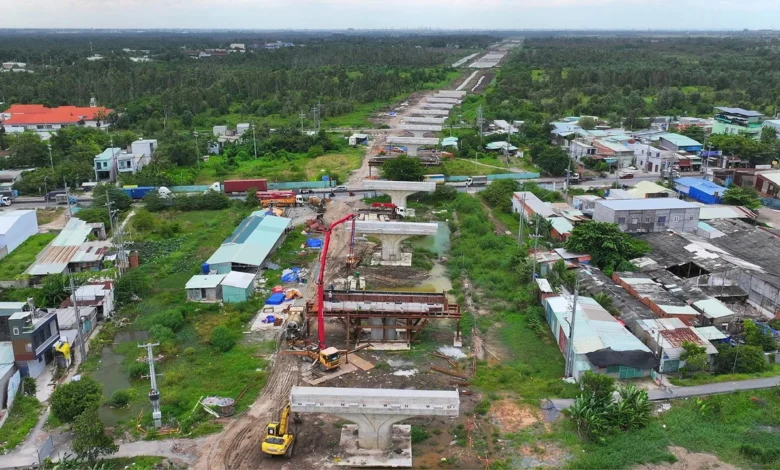
While these transactions allowed for housing access in a high-demand market, they created a legal gray area. Under the Land Law, property rights are typically formalized through state-issued certificates. When the government acquires land for public projects—such as the construction of the Ring Road 3 or other socio-economic development initiatives—holders of informal titles often found themselves ineligible for full compensation. This discrepancy has led to thousands of cases where compensation claims were denied or severely restricted, directly contributing to project delays, litigation, and the freezing of public investment capital.
The Proposed Policy Framework: A Tiered Compensation Model
The proposed resolution outlines a structured, tiered system to calculate support levels, ensuring that compensation remains equitable while preventing the "double counting" of land area. The core objective is to offer support equivalent to the value of legally recognized land use rights, provided the claimant can prove consistent, non-disputed usage.
The draft proposal establishes a clear hierarchy for support, contingent on the timeline of land usage and the presence of legal violations:
- Pre-October 15, 1993: Eligible for up to 100% of the standard compensation rate.
- October 15, 1993, to June 30, 2004: Eligible for 80% of the compensation rate.
- July 1, 2004, to June 30, 2014: Eligible for 60% of the compensation rate.
- July 1, 2014, to August 1, 2024: Eligible for 40% of the compensation rate.
Crucially, the proposal accounts for potential non-compliance or illegal occupation of land. If the land in question was involved in unauthorized usage—such as encroachment on canals, drainage systems, or protected zones—the support rates are adjusted downward (70%, 56%, 42%, and 28% respectively, corresponding to the same time periods).
Supporting Structures and Construction Valuation
Beyond the value of the land itself, the policy provides a path for homeowners to receive compensation for structures built on the land. Buildings constructed without formal permits or in violation of zoning regulations prior to August 1, 2024, are eligible for support ranging from 50% to 100% of their reconstruction value.
This measure acknowledges the reality that many families invested their life savings into these homes under the assumption of permanence. By offering a baseline of support, the city aims to facilitate the transition for these residents, ensuring that the burden of state-led urban development does not fall disproportionately on vulnerable households. Furthermore, for projects categorized as significant socio-economic development initiatives, the city is proposing an additional 10% bonus for both land value and early handover of the site, incentivizing cooperation and minimizing project lead times.

Administrative Requirements and Verification Protocols
To mitigate the risk of fraudulent claims, the proposal mandates a rigorous verification process. Claimants are required to submit formal written commitments regarding the origin of their property and the full history of their transactions. These documents must be validated by the local Ward or Commune People’s Committee.
The verification process is designed to be transparent:
- Public Posting: Once submitted, applications will be posted at the local authority headquarters and on the electronic government portal for a mandatory three-day period to allow for public feedback or challenges.
- Resettlement Eligibility: Residents who meet the criteria for resettlement but prefer to seek independent housing solutions will be eligible for direct financial assistance, ranging from 1 billion VND to 6 billion VND, depending on the specific location and market value of the district.
- Legal Exclusions: Property owners who hold other legal residential properties within the same jurisdiction will generally be ineligible for additional state-funded resettlement units, preventing resource hoarding and ensuring that support reaches those with the greatest need.
Strategic Implications for Public Infrastructure
The backlog of land acquisition cases has been a primary bottleneck for Ho Chi Minh City’s public investment plans. As of late 2026, tens of thousands of parcels of land in suburban districts remain in a state of legal limbo. This has created a "deadlock" where the state cannot legally compensate occupants, and occupants cannot legally relinquish their claims.
By providing a clear, legislative pathway for resolution, the city aims to unlock significant capital. Analysts suggest that the implementation of this policy could reduce the litigation period for public works projects by as much as 18 to 24 months. For high-priority projects like the Ring Road 3, this could mean the difference between timely completion and years of stagnant construction.
Analysis: Balancing Equity and Urban Planning
The proposed resolution is a pragmatic response to a complex sociological issue. Critics have previously argued that rewarding "handwritten" land transfers could incentivize future illegal construction. However, the policy explicitly limits its scope to transactions occurring before August 1, 2024, effectively creating a "hard stop" that discourages ongoing informal activity.
From an economic perspective, the policy functions as an urban renewal tool. By clearing the legal titles of thousands of suburban properties, the city is effectively regularizing the land market in these areas. This, in turn, provides greater security for citizens and enables the government to proceed with infrastructure development that is essential for the city’s long-term economic competitiveness.
Conclusion and Future Outlook
The Ho Chi Minh City Department of Agriculture and Rural Development is expected to present the final draft to the City People’s Council in December 2026. If ratified, the policy will apply to all ongoing projects where compensation plans have not yet been approved.
As the city continues to transition toward a more formal and digitized land management system, this initiative stands as a necessary intervention to rectify the legacy of the past. By balancing the need for strict land use enforcement with the necessity of social equity, Ho Chi Minh City is attempting to settle a decade-long issue, providing a roadmap for other rapidly developing urban centers in Vietnam to manage the challenges of informal property tenure in the face of modern development.