PSG Navigates Rotated Squad Challenge to Edge Troyes 1-0 and Consolidate Ligue 1 Summit

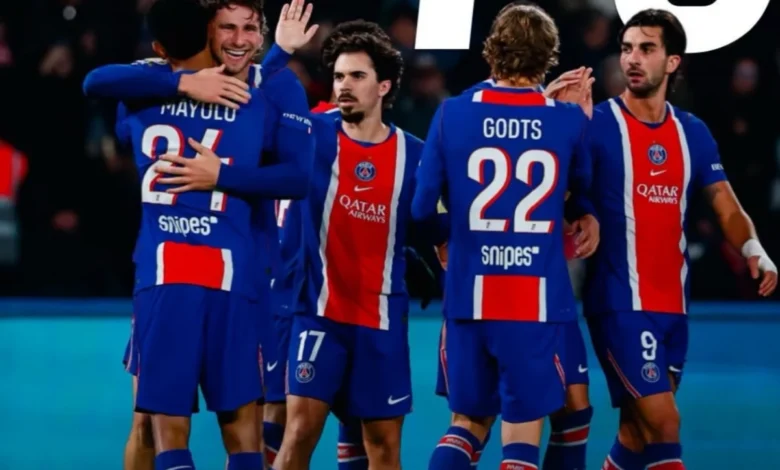
Paris Saint-Germain demonstrated resilience and tactical maturity as they secured a hard-fought 1-0 victory over Troyes at the Parc des Princes. Despite deploying a heavily rotated starting lineup that lacked several of their marquee players, manager Luis Enrique orchestrated a disciplined performance that ultimately yielded all three points. The decisive moment arrived in the 39th minute when central defender Illia Zabarnyi rose above the visitors’ defense to head home from a pinpoint delivery provided by Senny Mayulu.
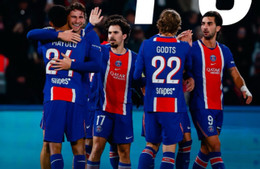
This slender victory elevates the defending French champions to 23 points after 10 matches in the 2026/27 Ligue 1 campaign, establishing a three-point cushion at the summit over closest rivals Paris FC. While the performance lacked the explosive, free-flowing brilliance that has often characterized PSG’s European outings this season, the ability to grind out a victory while resting key personnel highlights the growing depth and pragmatic evolution of Luis Enrique’s squad.

Strategic Squad Rotation Sets the Tone

The fixture against Troyes presented a unique tactical challenge for the Parisian technical staff. Caught between the grueling demands of a domestic title defense and high-stakes European commitments in the UEFA Champions League, Luis Enrique opted for a calculated gamble. By leaving several first-team regulars on the bench or out of the matchday squad entirely, the Spanish tactician aimed to preserve physical energy across a congested autumn fixture list.

Safonov took his place between the posts behind a defensive line featuring Lucas Hernandez, Willian Pacho, and match-winner Illia Zabarnyi. In midfield, Warren Zaire-Emery, Senny Mayulu, Vitinha, and Fabian Ruiz formed a dynamic quartet tasked with controlling the tempo, while Mika Godts, Ibrahim Torres, and Duela Doue comprised the forward line.

While this configuration dominated possession from the opening whistle, the collective chemistry in the final third was visibly disrupted. Troyes, fully aware of the alterations in the opponent’s attacking trident, executed a disciplined, low-block defensive strategy that successfully neutralized PSG’s initial wave of probing attacks.

A First-Half Breakthrough

As the first half progressed, the frustration of dominating possession without carving out clear-cut scoring opportunities began to mount for the home supporters. Troyes maintained their defensive shape with admirable discipline, forcing PSG to recycle possession laterally and search for tiny pockets of space between the lines.

The breakthrough finally materialized in the 39th minute through a moment of set-piece brilliance. Senny Mayulu, operating with maturity beyond his years in the center of the pitch, drifted toward the flank to orchestrate an attacking sequence before curling a precise, inviting cross into the penalty area. Illia Zabarnyi, timing his run from deep, leaped above his marker to deliver a powerful header that left Troyes goalkeeper Konate with no chance, breaking the deadlock and sending the Parc des Princes into celebration.

The goal served as a psychological relief for the hosts, who had labored to unlock the stubborn visiting defense for the better part of forty minutes.

Tactical Pragmatism in the Second Half

Rather than pressing for a second goal to put the game beyond doubt after the interval, PSG surprised observers by noticeably lowering their tempo upon the resumption of play. Luis Enrique’s side prioritized game management, ball retention, and defensive stability over high-intensity offensive transitions.

This shift in momentum invited Troyes back into the contest. Recognizing the sudden passivity of the champions, the visitors mounted several notable attacking sequences, probing the Parisian flanks and testing the concentration of Pacho and Hernandez at the heart of the defense. Despite creating a few half-chances and putting pressure on Safonov’s goal, Troyes ultimately lacked the clinical execution required to breach a well-organized PSG backline that tightened its ranks during the closing stages.

PSG’s midfield, anchored by Vitinha and supported by the tireless running of Zaire-Emery, successfully managed the tempo, suffocating potential counter-attacks and starving the visitors of sustained offensive pressure as the clock wound down.

Broader Implications for the Ligue 1 Title Race

The 1-0 scoreline remained intact until the final whistle, sealing a pragmatic three points for the reigning champions. With this victory, PSG moves to 23 points from 10 matches, maintaining their position at the pinnacle of French football. Crucially, the result opens a three-point gap over second-placed Paris FC, who continue to mount a surprising and spirited challenge at the upper echelons of the table.

Concurrently, the win reinforces a broader narrative surrounding Luis Enrique’s tenure: a capacity to secure results through defensive organization and squad depth rather than relying exclusively on individual brilliance. Fact-based analysis of PSG’s domestic campaign reveals a team transitioning toward greater tactical versatility, capable of rotating crucial pillars without sacrificing foundational defensive solidity—a vital asset for a club juggling domestic dominance with continental ambitions.

Looking Ahead: The Domestic and European Landscape

As the 2026/27 season approaches its winter phase, the fixture congestion will only intensify for the capital club. With standout recent results—including a 6-0 demolition of Villarreal in the Champions League and a dramatic 4-2 victory over Barcelona—PSG has proven its capacity to scale the highest European peaks. However, domestic slip-ups against defensively resilient teams remain a persistent threat if squad rotation is mismanaged.

Recent reports linking PSG to high-profile midfield targets like Manchester United’s Kobbie Mainoo for future transfer windows underscore Luis Enrique’s long-term vision of continuously fortifying the squad’s central axis. For now, however, the immediate focus shifts toward maintaining domestic momentum, protecting their slender lead at the top of the table, and preparing for the next wave of challenges that lie ahead in both Ligue 1 and European competition.