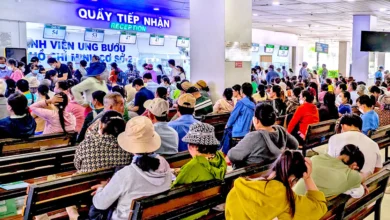
At 5:00 PM, after a grueling nine-hour shift at the National Traditional Medicine Hospital in Hanoi, 26-year-old Hoang Duc Hung does not head home to rest. Instead, he performs a swift transformation: the white medical coat is exchanged for the uniform of a ride-hailing service, and his focus shifts from patient charts to the glowing screen of a navigation app. This transition is not a choice born of luxury, but a pragmatic response to the financial realities facing young medical professionals in Vietnam’s current healthcare training landscape.
The Professional Gap: A Financial Conundrum
Hung, a native of Bac Ninh province, graduated from the Hanoi Medical University in June 2025. Following his graduation, he fulfilled a mandatory two-month military service as a reserve officer. Upon his return, he enrolled in a 12-month clinical practice program at the National Traditional Medicine Hospital. This clinical internship is a mandatory requirement stipulated by the Law on Medical Examination and Treatment for any doctor seeking to obtain a medical practice license from the National Medical Council.
Under the current medical education system in Vietnam, the journey from medical school enrollment to becoming a fully licensed, autonomous physician is arduous, often spanning a decade. However, the transitional period between graduation and licensure is particularly fraught with economic uncertainty. As an intern, Hung holds the status of a "trainee," not a formal employee of the hospital. Consequently, he does not receive a base salary, has no health insurance benefits, and is not permitted to perform surgical procedures or autonomous clinical interventions.
Compounding this financial burden, the interns themselves must pay a training fee—in Hung’s case, approximately 21.6 million VND—to cover the costs of their 12-month clinical supervision. This creates a "dead zone" of income that lasts between 12 and 18 months post-graduation, a period during which these doctors are expected to refine their skills while simultaneously struggling to meet basic living expenses in expensive urban centers like Hanoi.
A Double Life: The Daily Schedule
Hung’s daily life is a testament to discipline and resilience. His hospital shift begins at 8:00 AM, where he is responsible for administrative tasks, monitoring patient records, and assisting senior physicians with treatments. By 5:00 PM, he pivots to the gig economy to supplement his income. His monthly rent of 2.5 million VND, excluding utilities and food, necessitates a secondary source of revenue.

After 10:00 PM, when the demand for ride-hailing services wanes, Hung transitions to a more physically taxing role: loading and distributing imported flowers from Kunming, China, at wholesale markets. This secondary job, undertaken with a business partner, generates roughly 10 million VND per month. On a typical Sunday, Hung might earn around 419,000 VND from driving, supplemented by the late-night logistics work.
There are nights when his work concludes at 2:00 or 3:00 AM. After grabbing a few hours of sleep—often on the concrete floors of a warehouse—he wakes up at 6:30 AM to return to the hospital. While hospital administrators have confirmed that Hung fulfills his clinical duties diligently, they also acknowledge that his moonlighting activities take place entirely outside of the mandated clinical hours.
The Perspective of the Family
The decision to moonlight was initially met with intense resistance from Hung’s family. His father, Mr. Hoang Duc Thien, who has supported two sons through medical school, viewed the profession with a sense of pride that felt tarnished by his son’s need to work in the gig economy.
"I asked him, ‘Why, after graduating from medical school, are you doing this job? You have the talent and the degree; you are fully capable of finding other ways to earn money,’" Mr. Thien recalled. "I wanted him to have peace of mind and focus on his career, but he refused, insisting on his plan to eventually pursue a master’s degree."
The stigma surrounding the medical profession in Vietnam—where doctors are often expected to maintain a certain social standing—meant that the father feared the judgment of neighbors and peers. However, as he witnessed his son’s unwavering determination and physical endurance, his stance shifted from opposition to reluctant support. "Seeing my son become leaner and more exhausted is painful, but seeing his persistence and his willpower to survive on his own, I feel a sense of relief and respect," he added.
Structural Implications and Future Outlook
Hung’s situation is a microcosm of a broader, systemic issue within the Vietnamese medical training framework. The lack of a "stipend-for-service" model during the mandatory internship year places an undue burden on young doctors.

Educational experts suggest that the "income gap" during the licensing period forces many talented medical graduates to divert their energy toward survival rather than specialization. This can lead to burnout before a doctor’s career has even truly begun. Furthermore, the reliance on high training fees acts as an entry barrier that disproportionately affects students from lower-income backgrounds.
For Hung, the ride-hailing and logistics work is a temporary solution. Once he completes his clinical practice and secures his license next year, he plans to cease his gig work to join a private clinic while simultaneously studying for his master’s degree.
"I still prefer working at the hospital," Hung says, his eyes fixed on his future goals. "Despite the current struggles, it remains a prestigious profession that I have pursued with passion since I first entered medical school."
Analysis: Bridging the Gap
The story of Hoang Duc Hung underscores the urgent need for policy reform regarding the internship phase of medical education. If the healthcare system aims to retain talent and prevent the migration of doctors to other industries, the financial structure of the licensing period must be revisited.
Potential solutions discussed in policy circles include:
- Government Subsidies: Providing state-funded stipends for interns, recognizing their contribution to hospital administrative and support work.
- Reduced Training Fees: Re-evaluating the costs associated with clinical rotations to ensure they do not exceed the capacity of a graduate.
- Institutional Employment Models: Transitioning interns from "trainees" to "junior staff" with basic salaries and social protections.
As Vietnam continues to modernize its healthcare system, the focus must shift not only to the quality of training but also to the sustainability of the livelihood of the practitioners themselves. Until then, young professionals like Hung will continue to navigate the difficult road between the hospital ward and the steering wheel, driven by the hope that their current sacrifices will eventually lead to a more secure and fulfilling medical career.