Banks Liquidate Luxury SUVs Like Lexus GX470 and Audi Q5 at Fraction of Original Prices Amid Rising Non-Performing Loans


The Vietnamese used car market is currently experiencing an unprecedented influx of high-end vehicles originating from banking institutions and state asset management agencies. These luxury SUVs and sedans, once commanding multi-billion-dong price tags upon their initial debut in showrooms, are now reappearing on auction blocks with starting prices slashed down to just a few hundred million VND. This distinct wave of asset liquidations offers a fascinating window into the broader economic pressures facing corporate and individual borrowers, while simultaneously creating a high-risk, high-reward hunting ground for bargain-seeking motorists.
Understanding the Mechanics of Bank Asset Liquidation
Unlike standard used vehicles sold directly by private owners or certified pre-owned dealerships, automobiles liquidated by financial institutions are typically seized collateral tied to defaulted commercial or consumer loans, corporate fleet vehicles, or assets confiscated via court-ordered civil enforcement. When a borrower fails to service their debt, the lending institution initiates legal and operational procedures to repossess the pledged property. To recover the outstanding principal and interest, these banks partner with professional auction houses to appraise and auction the assets to the highest bidder.
Because the primary objective of a bank or state agency is risk mitigation and debt recovery rather than maximizing retail profit margins, the starting prices for these vehicles are often set attractively low. This strategy is designed to stimulate immediate market interest, accelerate turnover, and minimize ongoing storage and depreciation costs. However, industry veterans emphasize that an enticing initial bid does not equate to a turnkey bargain. Seized vehicles are sold strictly on an as-is, where-is basis, meaning buyers assume full responsibility for any mechanical latent defects, pending administrative fines, and the often convoluted legal paperwork required to transfer ownership.

Spotlight on the Lexus GX470: A Japanese Heavyweight Under the Microscope
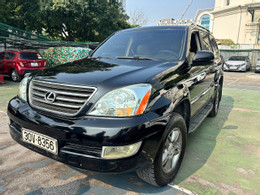
Among the most notable entries in recent bank-managed auction catalogs is a 2009 Lexus GX470, which was put up for liquidation by VPBank with a starting price of 563 million VND. As a staple of the mid-size luxury SUV segment, this vehicle originally represented elite status, combining robust off-road capability with premium comfort. Powered by a potent 4.7-liter V8 gasoline engine paired with a 5-speed automatic transmission and a permanent four-wheel-drive system, the GX470 features body-on-frame construction designed to handle both rugged terrain and executive highway cruising.
On the open used car market, a well-maintained 2009 Lexus GX470 typically commands between 595 million and 650 million VND, depending on its overall condition, maintenance records, and specific trim configuration. At first glance, VPBank’s starting price of 563 million VND appears to offer a modest discount of roughly 32 million VND compared to standard market valuations.
However, a deeper financial and mechanical analysis reveals potential pitfalls. The subject vehicle has already logged approximately 200,000 kilometers—a substantial mileage milestone for any luxury vehicle approaching its seventeenth year of existence. Furthermore, comprehensive documentation regarding the engine’s compression, transmission health, and the condition of the complex air suspension or four-wheel-drive actuators is often sparse or entirely absent prior to the auction. Potential buyers must factor in the inherent fuel consumption of a large-displacement V8 engine alongside the notoriously high cost of sourcing replacement parts for aging Toyota and Lexus luxury platforms.
The Audi Q5 Quattro: German Engineering at a Crossroads
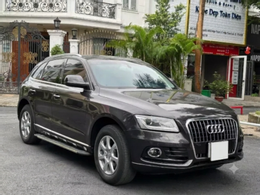
Adding to the diversity of the current liquidation pool is a 2014 Audi Q5 2.0 TFSI Quattro, previously owned and operated under the portfolio of the Joint Stock Commercial Bank for Investment and Development of Vietnam (BIDV), specifically its Thai Nguyen branch. With an initial auction starting price set at 470 million VND, this compact luxury SUV has drawn significant attention from enthusiasts looking to cross the threshold into German engineering without paying full market value.
In comparison, standard 2014 Audi Q5 models currently circulating on the private secondary market in major hubs like Ho Chi Minh City and Hanoi generally trade within a price bracket of 485 million to 599 million VND, with many urban listings hovering around 499 million VND. BIDV’s starting price thus undercuts prevailing market averages by anywhere from 15 million to nearly 130 million VND, depending on regional demand and vehicle grading.
The 2014 Audi Q5 2.0 TFSI is powered by a 2.0-liter turbocharged four-cylinder engine generating 225 horsepower and 350 Nm of torque, channeled through an 8-speed Tiptronic automatic transmission and Audi’s legendary Quattro all-wheel-drive system. Characterized by its signature single-frame grille, sharp illumination clusters, and high-grade cabin materials, the Q5 offers balanced driving dynamics and enhanced road grip.
Nevertheless, experts urge caution. Having surpassed the ten-year mark, this generation of Audi Q5 relies heavily on intricate electronic architectures, precision turbochargers, and complex multi-link suspension systems. Should major components such as the timing chain, mechatronics unit, cooling system, or turbocharger fail, the cost of specialized repairs can easily eclipse the initial savings achieved at the auction block.
Macroeconomic Implications and the Hidden Costs of Ownership

Financial analysts and automotive market researchers point out that the rising volume of bank-liquidated luxury vehicles reflects broader credit conditions within the economy. As businesses and individuals navigate fluctuating interest rates and tighter liquidity cycles, the default rate on asset-backed loans inevitably sees upward pressure. The resulting repossession and liquidation cycles serve as a lagging indicator of financial stress within certain corporate sectors, particularly real estate, construction, and speculative trading circles where luxury SUVs frequently serve as high-value collateral.
For prospective retail buyers, navigating these bank auctions requires a disciplined, multi-step risk assessment framework. Financial advisors emphasize that the purchase price paid at an auction represents only the opening phase of a much larger financial commitment. The total cost of ownership for a decade-old luxury vehicle often expands rapidly once post-auction realities set in.
Key factors that buyers must evaluate include:
- Comprehensive Mechanical Inspection: Because test drives are rarely permitted prior to bidding, buyers must rely on visual assessments or bring independent technicians to inspect the exterior, chassis, and engine bay during designated viewing windows.
- Legal and Administrative Clearance: Seized vehicles may carry accumulated toll violations, expired inspection stickers, or encumbrances tied to ongoing civil litigation. Clearing these hurdles can introduce unexpected delays and legal fees.
- Maintenance Backlog: Deferred maintenance is common in repossessed fleets. Replacing worn tires, servicing transmissions, overhauling suspension bushings, and replacing degraded rubber hoses can quickly add tens or even hundreds of millions of VND to the initial investment.
- Insurance and Depreciation: Insuring older luxury vehicles can be costly, and their long-term resale liquidity remains volatile as newer, more technologically advanced models enter the market.
Conclusion and Outlook for the Secondary Market
The current availability of deeply discounted luxury SUVs like the Lexus GX470 and Audi Q5 through bank liquidation channels provides a unique avenue for value-conscious consumers to acquire high-end transportation. However, these opportunities are accompanied by elevated operational and financial risks that demand rigorous due diligence.
As financial institutions continue to clear their balance sheets of non-performing assets throughout the fiscal year, savvy buyers are advised to approach these auctions not as effortless windfalls, but as specialized transactions requiring professional mechanical audits, clear legal verification, and prudent budgetary buffers for restoration and maintenance.