Nearly 100 Meters of Embankment Collapse in Quang Tri Province Prompting Urgent Relocation of Cargo Containers Near International Border Gate

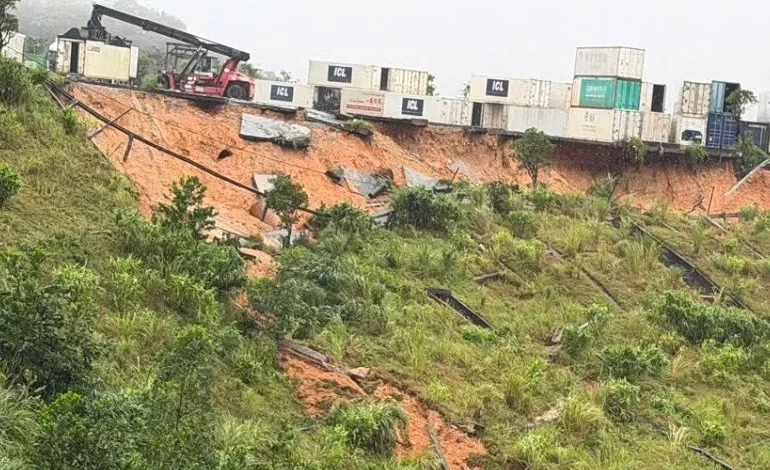
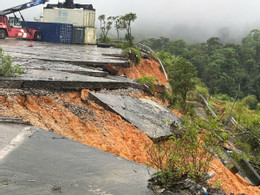
Heavy and persistent rainfall over recent days has triggered a severe landslide and ground subsidence affecting nearly 100 meters of a stream embankment in Dan Hoa Commune, located within the Huong Hoa and mountainous border region of Quang Tri Province, Vietnam. The natural disaster, exacerbated by active tropical weather systems traversing the central region, has directly threatened corporate logistics assets, container yards, and critical infrastructure situated near a major international trade corridor. Local authorities, in close coordination with border management agencies and emergency response teams, launched an immediate evacuation and mitigation operation to secure high-value commercial assets and prevent potential structural catastrophes.
Incident Overview and Immediate Geographic Context
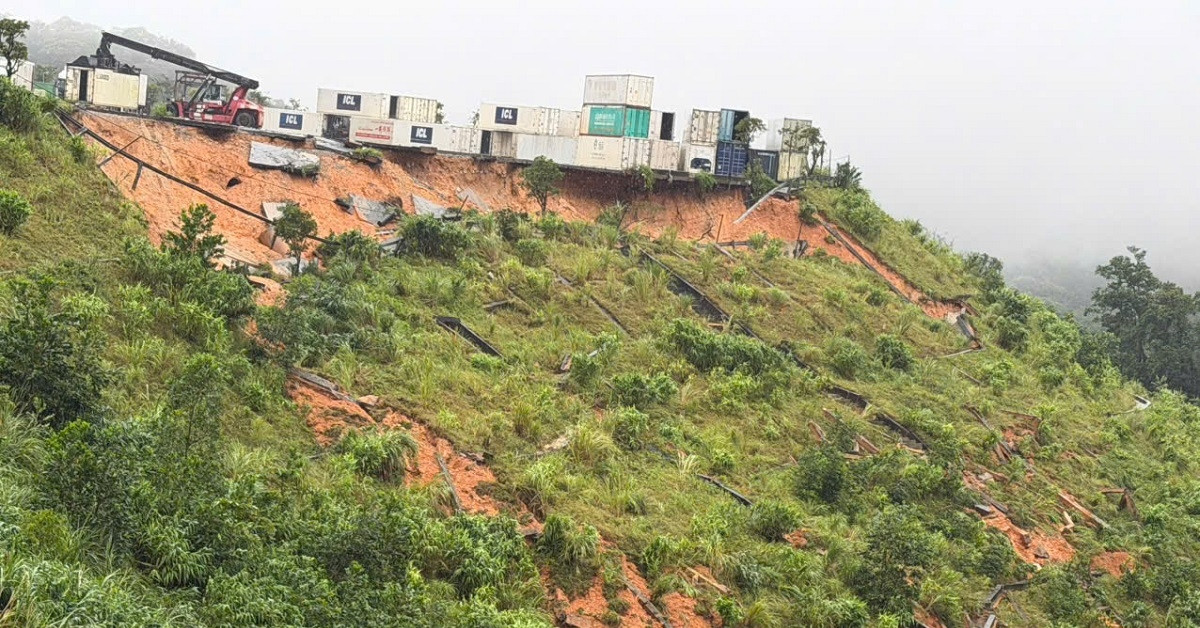
The critical ground failure occurred within a logistics and cargo consolidation yard operated by a private enterprise in Dan Hoa Commune. According to Mr. Dinh Minh Thao, Chairman of the Dan Hoa Commune People’s Committee, the affected stream embankment spans nearly 100 meters, with substantial portions of the soil structure giving way due to prolonged soil saturation.
The geographical positioning of the landslide zone elevates its strategic and economic significance. The site is situated approximately 700 meters from the national border gate of the Cha Lo International Border Gate following the transit axis toward neighboring Laos, and roughly 600 meters east of National Border Marker No. 528 on the Vietnamese side. Because this area serves as a bustling logistics bottleneck for cross-border freight transport, heavy commercial trucks, and shipping containers moving between Vietnam, Laos, and Thailand, the sudden land destabilization posed an immediate hazard to multi-million-dollar supply chains and human safety.
The continuous downpours have saturated the mountainous terrain, turning hillsides into unstable masses of mud and rock. The localized subsidence compromised the structural integrity of the yard’s foundation, threatening to topple stacked cargo containers and slide them directly into the swollen stream below. Recognizing the imminent danger of a catastrophic collapse that could block waterways and destroy commercial goods, the local administration acted without delay.
Emergency Response and Container Evacuation Operations
Upon receiving emergency reports from field monitors on the afternoon of September 14, the People’s Committee of Dan Hoa Commune convened an emergency session with the Management Board of the Cha Lo International Border Gate Economic Zone and other pertinent security, defense, and transport units.
The multi-agency task force recognized that waiting for the weather to clear was not an option. Heavy machinery, specialized cranes, and a fleet of heavy-duty transport trucks were rapidly mobilized to the disaster zone. Under adverse weather conditions and continuous rainfall, emergency workers labored against time to lift and haul away numerous commercial containers and high-value assets stored within the high-risk perimeter.
By late afternoon, concerted efforts by local authorities and logistics personnel successfully evacuated all containers and vulnerable industrial cargo from the danger zone to secure, pre-designated holding areas outside the geological hazard zone. Disaster management teams subsequently deployed warning signs, safety tape, and physical barriers around the perimeter of the collapsed embankment to prevent unauthorized access by civilian motorists and transport workers.
Local engineering teams and geological inspectors remain stationed near the site to conduct continuous monitoring, utilizing surveying tools to measure ground displacement rates and assess the likelihood of secondary landslides as rain bands continue to impact the region.
Broader Meteorological Context and Regional Vulnerability
The landslide in Dan Hoa Commune is part of a larger, severe weather crisis affecting central Vietnam. Meteorological bulletins indicate that a low-pressure system recently strengthened into a tropical depression, making landfall directly over Quang Tri Province before steadily weakening as it tracked westward into Central Laos.
Despite the downgrading of the weather system’s wind intensity, its expansive moisture envelope has continued to dump torrential rainfall across the Truong Son mountain range and coastal provinces of central Vietnam. This prolonged precipitation has pushed cumulative rainfall totals to critical thresholds, saturating watersheds and elevating the risk of flash floods, deep inundation, and massive soil displacement across more than 100 communes in Quang Tri and neighboring provinces.
The broader region has experienced multiple cascading crises driven by the severe weather system. Just days prior to the Dan Hoa embankment collapse, local media and disaster response units reported a parallel maritime emergency on the Rao Luong River, where rising floodwaters and intense river currents broke the moorings of multiple industrial barges belonging to a local construction materials enterprise. Three large barges were swept downstream and ultimately wedged dangerously beneath the piers of the Ma Chanh railway bridge in Nam Hai Lang Commune, Quang Tri Province. The dual pressure of managing stranded river craft while confronting inland mountain landslides stretched local emergency response capabilities to their limits.
Socio-Economic Implications and Infrastructure Risks
The recurring threat of landslides along key transit corridors like the Cha Lo International Border Gate underscores the delicate balance between economic development in mountainous border zones and climate resilience. The Cha Lo corridor handles billions of dollars in bilateral trade annually, serving as a vital commercial artery within the East-West Economic Corridor connecting Vietnam, Laos, Thailand, and Myanmar.
Any prolonged disruption to this trade route—whether caused by structural collapses at logistics yards, blocked mountain passes, or compromised bridges—carries immediate financial repercussions for regional supply chains, import-export businesses, and freight forwarders. While the swift intervention by Dan Hoa authorities prevented the loss of cargo containers in this specific instance, the incident highlights the vulnerability of commercial infrastructure built along natural watercourses and steep mountain slopes.
Economic analysts note that as extreme weather events become more frequent and intense due to shifting climatic patterns, industrial facilities operating in mountainous border regions must incorporate rigorous geological assessments and climate-adaptive engineering into their site planning. Traditional embankments and unreinforced soil stabilization methods are proving increasingly inadequate against the sheer volume of water delivered by modern tropical depressions.
Official Warnings and Long-Term Mitigation Strategies
In response to the escalating danger, the People’s Committee of Dan Hoa Commune, alongside provincial disaster management steering committees, has issued broad public safety warnings. Residents, transport workers, and business operators in mountainous areas have been urged to maintain heightened vigilance, closely monitor official weather forecasts, and strictly avoid traveling through or working near active landslide zones, steep slopes, and swollen riverbanks.
Local authorities have emphasized a community-based reporting mechanism. Citizens who observe abnormal ground fissures, tilting trees, unusual muddy runoff, or any signs of structural compromise in residential or commercial zones are instructed to immediately notify local governance bodies so that preventative evacuations can be orchestrated before disasters strike.
Looking forward, provincial authorities in Quang Tri are planning comprehensive geological surveys across all high-risk infrastructure nodes within the Cha Lo Economic Zone. Long-term remediation plans are expected to include the construction of reinforced concrete retaining walls, advanced drainage systems to divert surface runoff away from vulnerable slopes, and the mandatory relocation of high-risk industrial storage yards away from unstable stream embankments.
As central Vietnam transitions into the peak of the rainy and storm season, federal and local agencies remain on high alert, balancing the immediate demands of disaster relief with the complex task of securing critical international trade infrastructure against the forces of nature.