Vietnam Roads Administration Threatens to Suspend Bến Thủy Toll Collection Over Highway 1 Deterioration

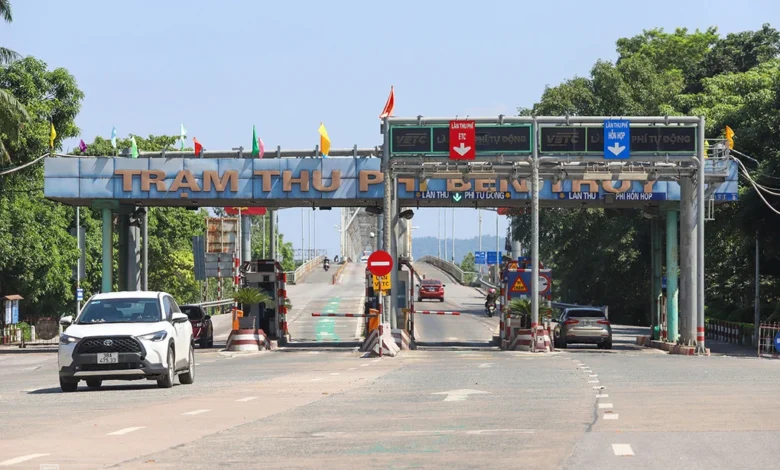
The Vietnam Roads Administration has issued a stern ultimatum to infrastructure developer Cienco 4, mandating the prompt and comprehensive repair of severely damaged sections along National Highway 1 spanning from Nghe An to Ha Tinh provinces. Regulatory authorities have drawn a firm administrative line, warning that if the investor fails to rectify the widespread structural deficiencies and maintain quality compliance by the stipulated deadline of October 10, the operation of the vital Bến Thủy toll stations will be temporarily suspended starting October 15.
This decisive regulatory intervention highlights mounting government frustration over persistent maintenance failures within major Build-Operate-Transfer (BOT) transport projects across the country. The directive not only underscores heightened oversight regarding the upkeep of national arterial roads but also places the spotlight on infrastructural accountability, financial risk mitigation, and commuter safety along some of Vietnam’s busiest economic corridors.
Escalating Maintenance Failures on National Highway 1
The controversy centers on a critical segment of National Highway 1 stretching south from the Bến Thủy Bridge to the northern bypass of Ha Tinh City, alongside the Vinh City bypass route. Recent comprehensive inspections conducted by the Directorate for Roads of Vietnam, in collaboration with Road Management Zone II, revealed alarming levels of deterioration that pose severe safety hazards to motorists, commercial freight carriers, and local residents alike.
Field assessments conducted in early September 2026 documented extensive structural fatigue across multiple subsections of the roadway. Inspectors noted widespread surface failures, including severe asphalt stripping, extensive map cracking, alligator cracking, and pronounced rutting caused by heavy vehicular loads. In several areas, wheel-track ruts have exceeded permissible safety thresholds, creating hazardous driving conditions—especially during adverse weather events when standing water accumulates in these depressions, heightening the risk of hydroplaning and vehicular loss of control.

Despite repeated warnings and formal administrative notices issued by the Vietnam Roads Administration over previous months, the investor, Cienco 4, and its subsidiary unit, the Vinh City Bypass BOT Branch, have allegedly failed to execute the required corrective measures. Regulators state that while minor patch-up work has occasionally been attempted, the interventions have consistently fallen short of the technical standards mandated by concession agreements and highway maintenance regulations.
Strict Deadlines and Consequences for Non-Compliance
Under the terms of the latest administrative directive, Cienco 4 and the Vinh City Bypass BOT Branch have been instructed to complete all necessary structural repairs, resurfacing, and safety enhancements by October 10, 2026. Road Management Zone II has been mobilized to maintain a continuous, rigorous on-site presence, conducting daily inspections and mandating weekly progress reports to ensure that remedial work proceeds without delay.
The regulatory framework empowering this decision is grounded in the contractual obligations stipulated within the original BOT concession contracts and their subsequent supplementary amendments. According to these legal instruments, private investors assume full responsibility for maintaining the structural integrity and operational safety of the infrastructure throughout the concession period. Failure to meet established maintenance key performance indicators constitutes a material breach of contract.
Consequently, if the investor misses the October 10 deadline—or if the completed repairs fail to satisfy technical quality audits—the Vietnam Roads Administration will exercise its statutory authority to suspend toll collections at the Bến Thủy 1 and Bến Thủy 2 stations indefinitely, beginning at 0:00 on October 15, 2026. Such a suspension would directly impact the revenue stream of the project company, making prompt compliance a financial imperative for the investor.
Investor Response and Operational Context
In response to the mounting pressure from transport authorities, representatives from the Vinh City Bypass BOT Branch have stated that maintenance crews are actively working to address the identified flaws. The operating entity has asserted that rehabilitation efforts are being integrated into broader capital improvement plans requested by the road administration, alongside ongoing routine maintenance activities designed to preserve traffic safety.

The National Highway 1 expansion project from south of the Bến Thủy Bridge to the Ha Tinh City bypass was originally developed under the BOT model by Cienco 4 with a total investment capitalization of approximately 2.430 trillion VND. The project achieved commercial completion and opened to traffic in 2014, playing a pivotal role in easing congestion, accommodating rising freight volumes, and stimulating economic integration between Nghe An and Ha Tinh provinces.
To facilitate financial cost recovery and loan amortization, the Vinh City Bypass BOT Branch was authorized to collect tolls at the Bến Thủy stations, strategically positioned at the geographic boundary between Truong Vinh Ward in Nghe An and Nghi Xuan Commune in Ha Tinh. Current toll tariffs range widely from 40,000 VND to 200,000 VND per trip depending on vehicle classification, serving as a primary revenue generator for the consortium of investors and lending financial institutions.
Historical Precedents of Toll Suspension Threats
This is not the first time regulatory authorities have had to resort to drastic financial penalties to compel Cienco 4 into fulfilling its contractual maintenance duties. A remarkably similar standoff occurred in September 2023, when Road Management Zone II issued an identical ultimatum demanding immediate repairs for deteriorating sections of National Highway 1 running through Ha Tinh province.
At that time, authorities similarly threatened a temporary shutdown of the Bến Thủy toll plaza if maintenance schedules were ignored. Facing the imminent loss of daily toll revenues, Cienco 4 mobilized resources and executed the necessary paving and structural repairs within the stipulated timeframe, averting the toll suspension. Industry analysts note that transport ministries have increasingly adopted this hardline approach as an effective regulatory instrument to combat deferred maintenance practices among private infrastructure operators nationwide.
Broader Economic and Infrastructure Implications
The ongoing dispute at the Bến Thủy corridor reflects broader systemic challenges facing Vietnam’s ambitious Public-Private Partnership (PPP) and BOT transport infrastructure models. As many first-generation highway projects age under conditions of exponential traffic growth and the proliferation of heavy multi-axle freight trucks, maintenance capital expenditures have risen significantly.

When concessionaires attempt to cut operational costs by deferring heavy repairs, the degradation accelerates rapidly, transferring safety risks to the tax-paying public and commercial transport operators who continue to pay full toll rates. The strict enforcement action taken by the Vietnam Roads Administration signals a shifting regulatory landscape where the state is intensifying oversight to ensure that private sector partners uphold service quality standards throughout the entire lifecycle of a concession contract.
As the October 10 repair deadline approaches, all eyes remain fixed on the Bến Thủy corridor. Whether Cienco 4 can successfully complete the extensive engineering interventions in time will determine whether the transport ministry exercises its unprecedented punitive measures on October 15, setting a defining precedent for BOT accountability across Vietnam’s national highway network.