Phu Me’s Zero-Dong Ambulance Bridging the Healthcare Gap in Dak Lak’s Most Isolated Region

The rugged, mist-shrouded terrain of Phu Me commune in Dak Lak province has long presented immense challenges for local residents seeking emergency medical care. Spanning over 547 square kilometers, Phu Me is the second-largest commune by area in Dak Lak, surpassed only by Buon Don. Home to more than 9,000 residents—over 60% of whom belong to ethnic minority groups, predominantly the Cham H’roi and Ba Na communities—the region struggles with a poverty rate exceeding 40%. For years, the lack of accessible transportation options meant that a medical emergency could easily turn into a life-threatening crisis, particularly for villagers living up to 27 kilometers away from the commune center and nearly 40 kilometers away from the district health center.
However, a transformative initiative launched in late 2025 has entirely altered the medical landscape for these remote populations. Known locally as the "Zero-Dong Ambulance Team," this community-driven lifeline provides completely free medical transportation to patients in critical need, bridging the profound geographical and socioeconomic divides that have historically plagued the area.
The Genesis of a Lifesaving Mission: From Natural Disaster to Medical Relief
The turning point for Phu Me occurred in November 2025, when a historic flood swept across several eastern communes in Dak Lak province, leaving a trail of severe destruction to both human lives and local infrastructure. Amid the arduous recovery efforts, a relief delegation led by Most Venerable Thich Thich Vinh, abbot of Buu Da Pagoda in Ho Chi Minh City, traveled to the region to visit, encourage, and distribute disaster relief packages to affected families.
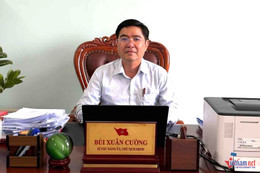
During this mission, Most Venerable Thich Thich Vinh crossed paths with Bui Xuan Cuong, Secretary of the Phu Me Commune Party Committee, and took the opportunity to learn about the deep-seated difficulties and earnest aspirations of the local community. Mr. Cuong shared his profound concerns regarding the commune’s isolation and the stark absence of an emergency vehicle capable of promptly transferring patients to higher-level medical facilities.
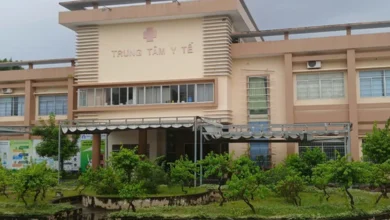
With the district health center located roughly 40 kilometers from the commune center and numerous remote villages situated miles beyond that, transporting the sick or injured was an ordeal fraught with peril. Every medical emergency required navigating precarious dirt roads, often on motorcycles, which frequently resulted in delayed diagnoses and worsened medical outcomes.
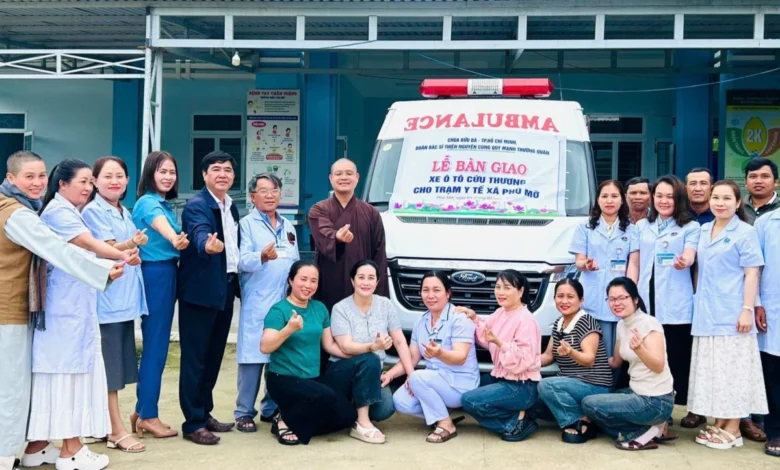
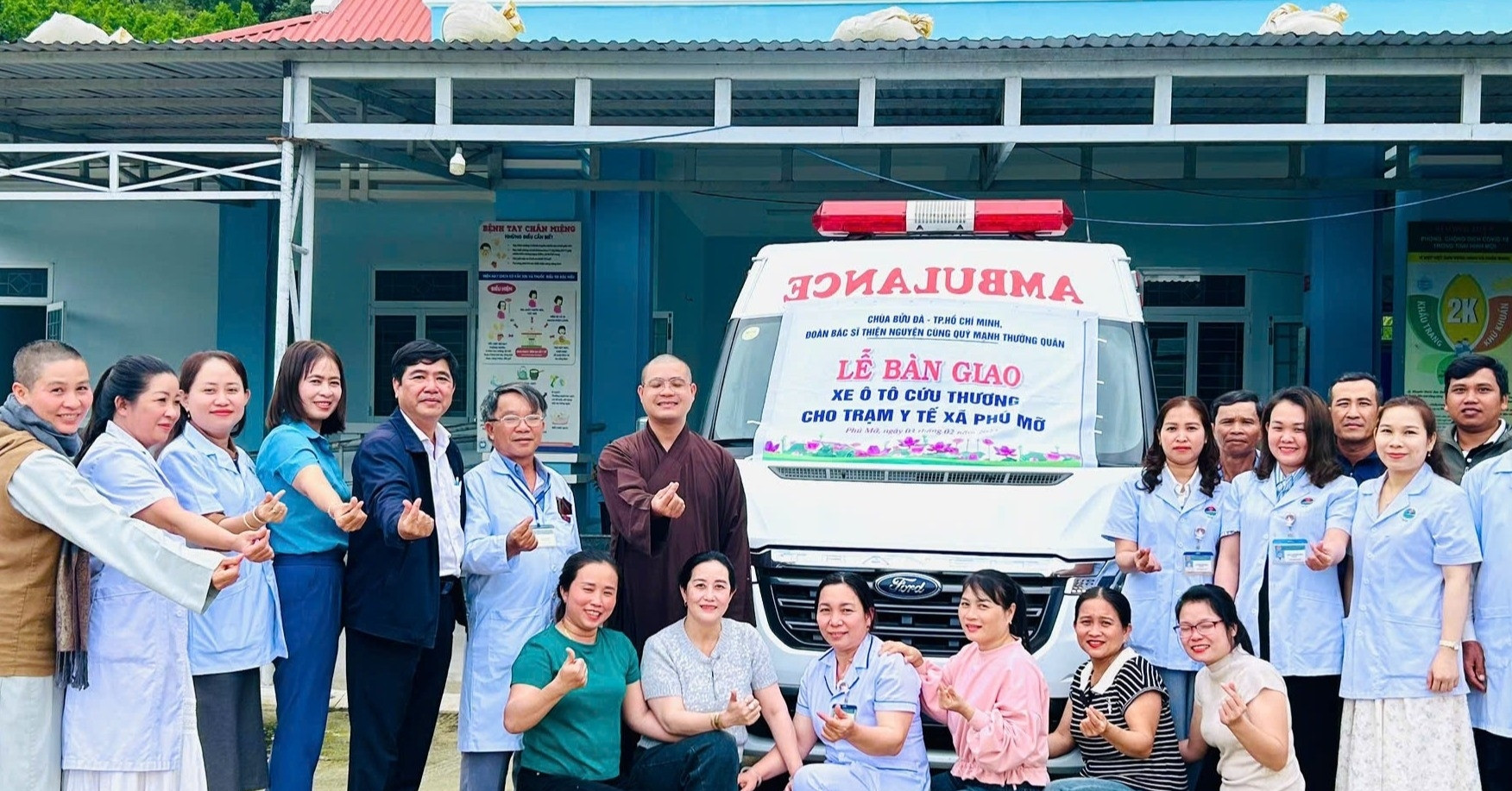
Moved by the Party Secretary’s account, Most Venerable Thich Thich Vinh immediately pledged support, mobilizing generous philanthropists to sponsor a brand-new ambulance valued at 600 million VND.
Recalling the moment, Mr. Cuong expressed immense gratitude, stating that when he first voiced his wish, the abbot readily agreed. He felt deeply overjoyed knowing that the locality finally had a zero-dong ambulance to transport local residents to the hospital in a timely manner whenever emergency cases arose, thereby minimizing tragic risks. On December 8, 2025, Mr. Cuong and a team of commune officials traveled to Ho Chi Minh City to officially receive the vehicle and bring it back to serve the local population.
Establishing and Sustaining the Zero-Dong Ambulance Team
Acquiring the vehicle was only the first step; sustaining its daily operations presented a new logistical and financial challenge. Recognizing that a free ambulance service requires dedicated personnel and continuous funding for fuel and maintenance, Mr. Cuong immediately set to work solving the puzzle.
He spearheaded the establishment of a volunteer driving team and actively appealed to local officials, civil servants, public employees, and philanthropic donors to contribute resources. Currently, the Zero-Dong Ambulance Team comprises 16 members, with the Chief of the Commune People’s Committee Office serving as team leader. The volunteer drivers are a diverse group consisting of commune officials, local residents, and dedicated volunteers who step forward to transport patients free of charge whenever the need arises.
To ensure long-term sustainability, the local government has implemented a multi-layered funding model. Fuel expenses are primarily covered through voluntary contributions from civil servants, public workers, and external benefactors. According to local health officials, the reserve fuel fund currently stands at approximately 25 million VND. When this financial resource is depleted, the local administration plans to issue further appeals for support, ensuring that the vehicle remains perpetually ready to serve the community.
Real-World Impact: Saving Lives in Remote Mountainous Terrain
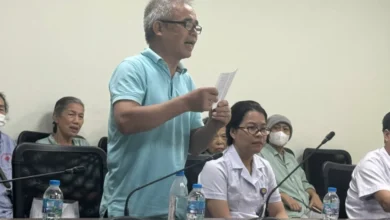
The tangible benefits of the zero-dong ambulance are best illustrated by the daily operations on the ground. Dr. La O Du, born in 1969 and a member of the Cham H’roi ethnic group, serves as the Head of the Phu Me Commune Health Station. According to Dr. Du, the ambulance has fundamentally transformed medical referrals since its introduction, turning what was once a dangerous gamble into a reliable, timely procedure.
Dr. Du noted that before the ambulance service was established, patients from the commune’s most distant hamlets—some located up to 27 kilometers from the center—had to rely on motorcycles or improvised transport to reach medical care. This created insurmountable barriers for patients suffering from severe trauma, acute illnesses, or obstetric emergencies.
Over the past year of operation, the ambulance has handled dozens of critical cases, safely transferring patients with severe injuries, fractures, and acute medical conditions to the district health center free of charge. Dr. Du recounted a recent case involving a patient who suffered a severe arm fracture, breaking the bone into two distinct segments. Thanks to the immediate dispatch of the zero-dong ambulance, the patient was swiftly transported across the 40-kilometer stretch to the district health center, where timely medical intervention successfully prevented further complications.
When a medical emergency occurs at the grassroots level, the Phu Me Commune Health Station immediately contacts the Zero-Dong Ambulance Team. The volunteer drivers quickly coordinate their schedules and arrive on the scene to provide rapid transport, ensuring that patients reach definitive care within the critical golden hour.

Broader Implications and Grassroots Leadership Models
The success of Phu Me’s zero-dong ambulance highlights a growing trend of innovative, grassroots leadership across rural and mountainous regions in Vietnam. Local leaders are increasingly stepping outside traditional administrative boundaries to address systemic gaps in infrastructure and social welfare through community mobilization and digital outreach.
Similar initiatives across the country have demonstrated the profound impact of proactive local governance. For instance, in recent years, local officials such as Nguyen Hoang Trung, Party Secretary and Chairman of the People’s Council of Long Coc commune in Phu Tho province, have utilized digital platforms to share local stories and attract millions of views, boosting regional visibility and tourism. Similarly, Party leaders in remote areas like Thuan An commune in Lam Dong have traveled hundreds of kilometers to secure clean food supplies for boarding school students, while leaders in Phuc Thuc, Hanoi, have explored equipping village heads with bicycles to improve daily outreach to constituents.
In Phu Me, the leadership’s ability to identify a critical healthcare bottleneck and mobilize both religious and secular philanthropic networks to solve it underscores the power of collaborative community development. By transforming a logistical challenge into a unified civic effort, the leaders and residents of Phu Me have not only secured a vital medical asset but have also strengthened the social fabric of an isolated mountainous community.

As the Zero-Dong Ambulance Team continues its vital work, it stands as a testament to the compassion of individual donors, the dedication of local volunteers, and the unwavering commitment of grassroots officials. For the residents of Phu Me, this vehicle is far more than a mode of transportation; it is a rolling symbol of hope, safety, and equitable access to healthcare in Vietnam’s most challenging landscapes.