The ancient royal capital of Huế, now ascending as a centrally managed municipality, occupies a uniquely advantageous position within Vietnam’s economic landscape. Despite harboring vast potential across its cultural, historical, and ecological domains, the local real estate market has historically experienced a relatively muted pace, often lagging behind the hyper-accelerated growth seen in other major metropolitan hubs. To dissect this dichotomy, the Vietnam Association of Realtors (VARS) convened a high-level economic symposium on September 12 in Huế City. Entitled "Huế – Heritage Economy: A New Momentum for Investment Capital," the event brought together high-ranking government officials, economic experts, corporate executives, and real estate investors to chart a sustainable course for awakening the region’s dormant asset classes.
A Paradigm Shift from Traditional Real Estate to Heritage Economics
Opening the conference, Dr. Nguyễn Văn Đính, Vice Chairman of the Vietnam Association of Realtors and Chairman of VARS, emphasized that Huế’s strategic advantage does not lie in breakneck urban expansion, but rather in deliberate, master-planned, and sustainable growth. He noted that long-term real estate attractiveness can no longer rely purely on speculative price appreciation. Instead, value must be anchored in genuine housing demand, robust infrastructure, sophisticated urban development capacity, and high utility value.
The core dilemma for investors in Huế is not whether the city possesses potential, but rather how that potential can be systematically converted into developmental momentum through appropriate medium- and long-term capital channels.
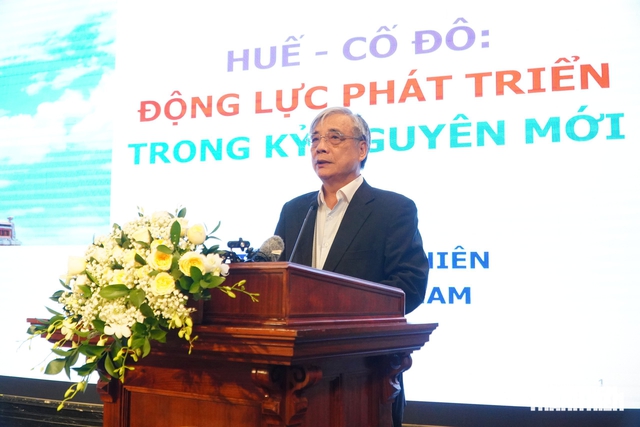
Echoing this perspective, Associate Professor Dr. Trần Đình Thiên, former Director of the Vietnam Institute of Economics and former member of the Prime Minister’s Economic Advisory Group, delivered a comprehensive keynote address on Huế’s distinct position within modern economic frameworks. Dr. Thiên argued that Huế’s competitive edge is not confined to isolated historical relics. Rather, it is anchored in an uninterrupted socio-historical and ecological tapestry that spans from the Imperial Citadel and royal tombs to the Perfume River, traditional garden houses, ancient villages, and community lifestyles.
This living heritage forms the bedrock for Huế to differentiate itself from conventional industrial or commercial cities. Dr. Thiên stressed the urgent necessity for the locality to transition from a mindset of passive preservation to an active "heritage economy." Under this model, historical, cultural, and landscape assets cease to be mere preservation projects and instead become primary economic drivers. Moving forward, specialized sectors such as the creative economy, cultural industries, advanced specialized healthcare, university-town ecosystems, and high-quality tourism are expected to form the structural pillars of this new growth model.
Market Dynamics and the Art of Selling a Unique Narrative
From a market operations perspective, experts concurred that possessing a rare asset does not guarantee investment success without a differentiated narrative. Dr. Thiên pointedly remarked that real estate development in Huế cannot be approached simply as selling houses or square meters; developers must sell an irreplaceable narrative that no other region can replicate.
Providing granular market analysis, Dr. Nguyễn Minh Phong, a member of the Economic Advisory Council of the Central Committee of the Vietnam Fatherland Front, observed that the Huế real estate market is presently navigating a critical phase of inception and structural realignment. Following a prolonged quiet period, housing supply began showing clear signs of recovery starting in 2025. However, market data reveals a widening gap between supply growth and actual absorption capacity.
In 2025, the local market recorded 505 successful transactions—nearly triple the volume of 2024. Despite this quantitative rebound, the absorption rate experienced a downward trajectory, dropping from 47% to 40%, and further declining to roughly 32% in the first half of 2026. Significantly, approximately 65% of all transactions were driven by genuine end-user housing demand.
Dr. Phong cautioned that while price gaps and new supply create room for market depth, they should not trigger unchecked price inflation. Real estate values in the new market cycle must be propelled by tangible macroeconomic growth, demographic shifts, infrastructural enhancements, purchasing power, and practical usage utility. The city’s characteristic "slow and steady" development pace is emerging as its ultimate safeguard, as the market is progressively filtered and driven by authentic residential needs rather than speculative frenzy.
Policy, Infrastructure, and Regional Connectivity
Moderating the afternoon panel discussion titled "Huế – Heritage Economy: A New Momentum for Investment Capital," Dr. Nguyễn Minh Phong steered the dialogue toward policy frameworks, regional economic integration, urban planning, and capital outlooks.
Offering a national regulatory perspective, Mr. Nguyễn Xuân Tịp, former Deputy Director and Deputy Head of the Secretariat of the Central Steering Committee on Housing Policy and Real Estate Market under the Ministry of Construction, asserted that Huế is currently converging all the right conditions for a breakthrough developmental phase. The city’s elevated urban status, increasingly lucid master planning, and aggressive investments in transportation, civic infrastructure, and regional connectivity are collectively expanding its spatial footprint and attracting institutional capital.
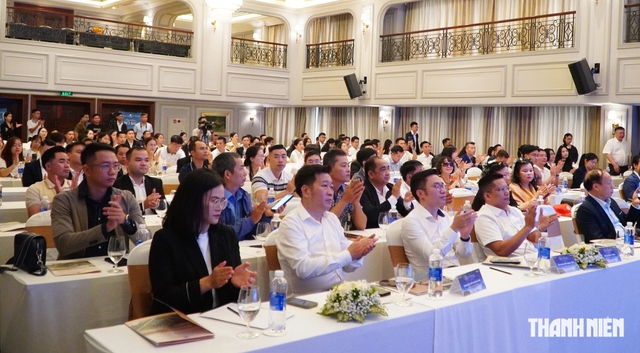
Mr. Tịp highlighted that alongside its distinct advantages in culture, heritage, tourism, and environmental standards, Huế still retains substantial headroom for commercial, service, and residential real estate development. The fact that the market has avoided overheated speculation creates a welcoming environment for patient, long-term capital. Nevertheless, to sustainably harvest this potential, developers must strictly adhere to master plans, align their projects with grassroots socioeconomic needs, and attract capable developers capable of delivering enduring asset value.
Setting Benchmarks: The VRES 2026 Certifications
To underscore the importance of quality and transparency in this emerging market, the conference featured the official announcement and presentation of the "Vietnam Standardized Real Estate Project – VRES 2026" certifications. Jointly awarded by VARS and VARS IRE, the recognition was bestowed upon two standout urban developments in Huế: Eco Garden Huế and Emerald Bao Vinh.
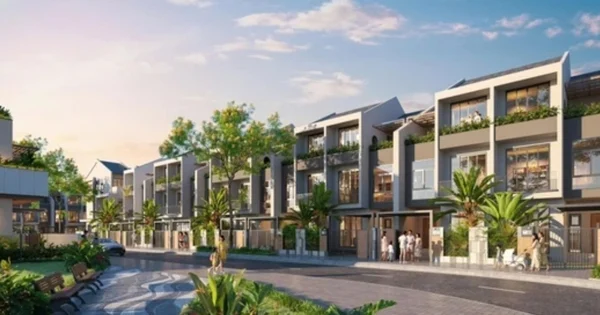
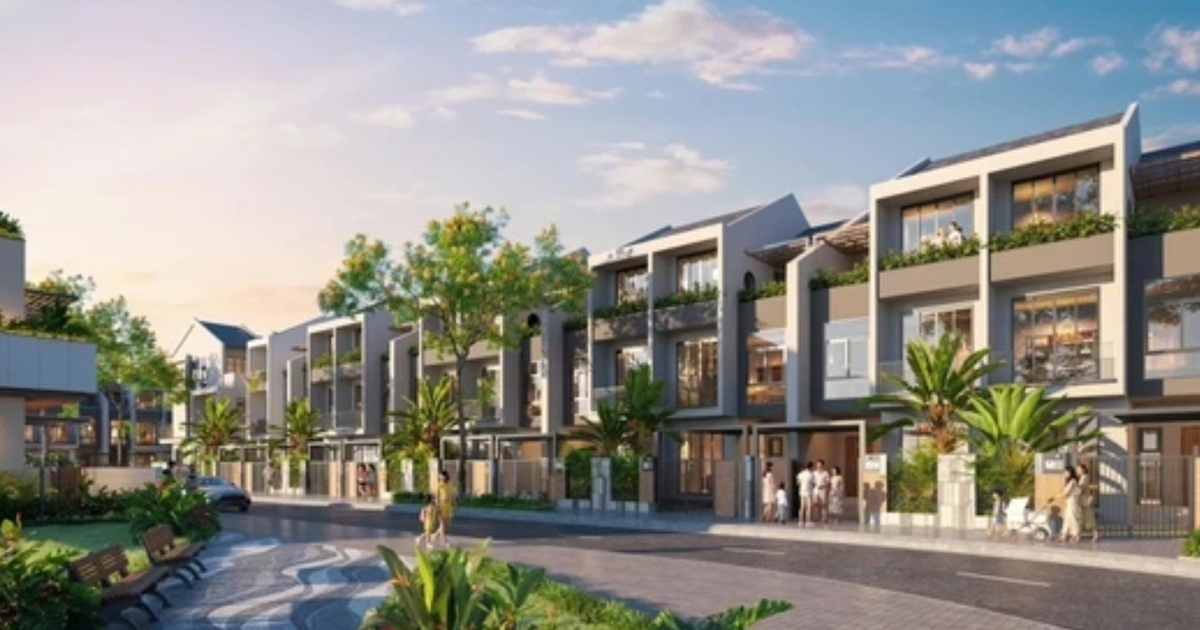
Eco Garden Huế is a sprawling 44.65-hectare modern ecological urban area situated within Subdivision B of the An Vân Dương New Urban Area, along Võ Nguyên Giáp and Lê Đức Anh streets in An Đông Ward, Huế City. Developed by Cotana Capital representing a joint venture of investors, the project is designed around green spaces, synchronized utility infrastructure, and high living standards tailored for long-term residency.
Meanwhile, Emerald Bao Vinh is positioned as a riverside urban development north of the Perfume River in Hóa Châu Ward, Huế City. Developed by a joint venture between Phước Thịnh Co., Ltd. and Tân Bảo Thành Investment Co., Ltd., the 8.28-hectare project features a synchronized master plan, modern tropical architecture, and 273 low-rise residential units alongside 45 internal utilities. It is engineered to deliver enduring security, high liveability, and long-term asset retention for investors.
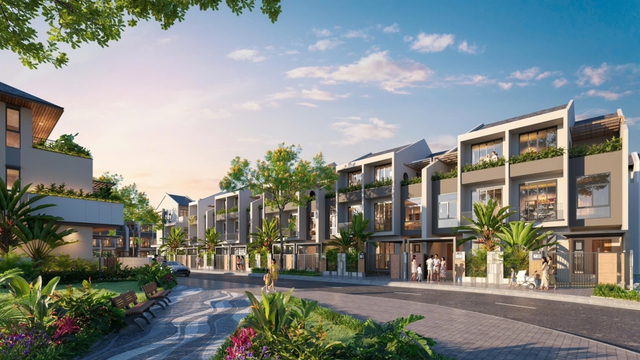
The VRES certification framework evaluates projects based on rigorous criteria assessing developer capacity, market appeal, positive community impact, and alignment with sustainable development goals.
Conclusion: A Market Defined by Value, Not Velocity
The overarching consensus emerging from the Huế economic symposium is that untapping the region’s potential does not equate to pursuing growth at all costs. A sustainable real estate market must be built upon genuine end-user demand, transparent legal frameworks, robust infrastructure, and uncompromised project quality.
As Huế successfully translates its heritage pedigree into tangible economic momentum, backed by disciplined urban planning and infrastructure execution, the city is positioning itself as a premier destination for medium- and long-term capital. By rejecting speculative bubbles in favor of intrinsic asset value, Huế is steadily cementing its role as a dynamic new growth pole in Central Vietnam, proving that true real estate excellence lies in selling a story that no other place can replicate.