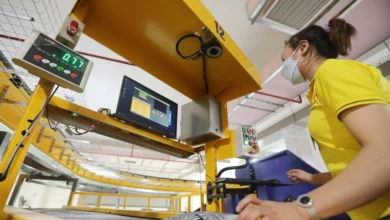
Make in Vietnam: The Strategic Evolution of Vietnam’s Tech Sector Toward Global Innovation and Sovereignty


The Vietnamese technology sector has entered a transformative era, shifting its foundational identity from a low-cost assembly hub to an innovation-led ecosystem defined by the "Make in Vietnam" philosophy. As of the end of 2024, this strategic pivot has yielded significant economic dividends, solidifying the role of digital technology as a cornerstone of the nation’s long-term development strategy. This evolution is not merely a quantitative increase in the number of firms, but a qualitative leap in engineering, product design, and global market integration.
The Landscape of 2024: A Quantitative Leap
By the close of 2024, the Ministry of Information and Communications (MIC) reported that the total number of digital technology enterprises in Vietnam reached 73,788, reflecting a robust growth rate of 10.12% compared to the previous year. This workforce, now totaling approximately 1.26 million individuals, forms the backbone of the Information and Communications Technology (ICT) industry.
The economic output of this sector has reached approximately 158 billion USD, representing a 10.2% year-on-year increase. Beyond sheer revenue, the composition of this income is shifting. Notably, there are now 1,900 Vietnamese technology companies generating revenue from international markets—a staggering 58% increase compared to 2018. The total export revenue from these foreign operations hit 11.5 billion USD in 2024, a 54% jump from 2023, signaling that Vietnamese technology is increasingly competitive on the global stage.
The Genesis of "Make in Vietnam"
The "Make in Vietnam" initiative, formally launched in 2019, represents a fundamental shift in national policy. Before this period, the domestic ICT sector was largely characterized by "Made in Vietnam" products—often meaning the final assembly of foreign-designed components. The new mandate—"Research in Vietnam, Innovate in Vietnam, and Make in Vietnam"—demanded that local firms take control of the intellectual property, design, and manufacturing processes.

This was not a singular event but a structured, multi-year policy roadmap. Since 2019, the government has provided the legal framework and economic incentives to move companies up the value chain. By focusing on high-tech integration rather than simple labor-intensive assembly, the industry has seen its value-add ratio rise significantly. Data from the Ministry confirms that the ratio of "Vietnam Value" (local content and intellectual contribution) relative to total ICT revenue has increased by 1.5 times over the last five years, proving that the move toward domestic design is paying off in higher profit margins and greater economic resilience.
Chronology of Progress
- 2019: The Ministry of Information and Communications launches the "Make in Vietnam" strategy, shifting the national focus toward indigenous innovation and R&D.
- 2020-2022: Despite global supply chain disruptions, Vietnam accelerates the development of its digital infrastructure, with domestic firms stepping in to provide 5G hardware and cloud computing solutions.
- 2023: A pivot point where the number of tech companies with international revenue streams begins to grow at double-digit rates, validating the global scalability of local software and hardware services.
- 2024: The industry reaches a record 158 billion USD in revenue. Legislative preparations for a comprehensive Law on Digital Technology Industry commence to institutionalize these gains.
- 2025 (Target): Government targets a 10% increase in the total number of tech companies, aiming for 60,000 active enterprises by year-end, with revenue projected to reach 169.3 billion USD.
Strategic Standing in the Global Market
Vietnam currently ranks among the global leaders in several specific high-tech categories. It holds the second position worldwide in the export of smartphones, fifth in computer components, and sixth in computer hardware. These rankings are not solely the result of foreign direct investment; they are increasingly supported by domestic enterprises that provide the software, system integration, and specialized components that surround these massive global value chains.
Furthermore, Vietnam is becoming a notable player in software outsourcing and specialized digital services, currently ranking seventh globally. The ability to pivot from basic hardware assembly to software-defined services is a hallmark of the country’s industrial maturity.
The Role of Industry 4.0 and Emerging Technologies
The global transition toward Industry 4.0—characterized by the convergence of 5G, the Internet of Things (IoT), Artificial Intelligence (AI), Big Data, and Blockchain—has provided the catalyst for Vietnam’s next stage of growth. Domestic firms are no longer just supporting existing global workflows; they are creating new, proprietary solutions for smart homes, digital governance, and industrial automation.
The government recognizes that to sustain this momentum, the regulatory environment must be as agile as the startups it fosters. Consequently, the Ministry is currently drafting the Law on Digital Technology Industry. This legislation is intended to create a predictable, favorable legal environment that encourages private investment in R&D and protects intellectual property, ensuring that Vietnamese companies can compete not just on cost, but on the sophistication of their technological offerings.

Official Responses and Economic Implications
The Ministry of Information and Communications (MIC) has emphasized that the goal is not just revenue growth, but the transformation of the ICT sector into a primary driver of the national economy. With a profit margin exceeding 272,000 billion VND in 2024 and tax contributions surpassing 43,000 billion VND, the sector is increasingly self-sustaining and a vital contributor to the national treasury.
"The shift from assembly to design is the most critical milestone for our tech industry," noted a spokesperson for the Ministry. "When we master the core technology, we create a multiplier effect that benefits every other sector, from agriculture and manufacturing to healthcare and education."
The implications are clear: by fostering a domestic tech ecosystem, Vietnam is reducing its reliance on foreign technology transfers and insulating its economy from global supply chain shocks. This technological sovereignty is essential for the realization of the "Digital Government, Digital Economy, and Digital Society" model.
Challenges and the Path to 2025
Despite the optimism, the path to 2025 involves significant challenges. The primary bottleneck is the need for highly skilled labor capable of managing AI-driven workflows and complex system integration. Additionally, the need to harmonize domestic regulations with international standards remains a priority for the government.
The target for 2025 is ambitious: a projected 169.3 billion USD in revenue and a 12.3% increase in hardware and electronics exports. To achieve this, the government is incentivizing the creation of "Tech Hubs" across the country, providing infrastructure and fiscal support to startups that focus on deep-tech research.

A Broader Economic Context
The transition to a tech-driven economy is deeply aligned with the government’s broader "Resolution 57" on scientific and technological development. By linking ICT growth to scientific innovation, Vietnam is attempting to break the "middle-income trap" by leveraging its demographic dividend—a young, tech-savvy workforce—into a high-value workforce.
The success of the "Make in Vietnam" campaign suggests that the nation is moving toward a more sophisticated model of development. The focus is no longer just on how many units are produced, but on how much value is captured within the country. As local firms continue to innovate and expand their reach into global markets, the "Make in Vietnam" brand is likely to evolve from a national initiative into a global hallmark of high-quality, efficient, and innovative technological solutions.
In conclusion, the trajectory of Vietnam’s tech sector is one of calculated ambition. By transitioning from a manufacturing floor to an innovation lab, Vietnam is positioning itself to be a significant player in the global digital landscape. The data from 2024 provides a clear proof of concept, and if the current regulatory and investment momentum continues, the country is well on its way to becoming a prominent hub of digital innovation in Southeast Asia and beyond.