Understanding Motorcycle Rearview Mirror Regulations in Vietnam: Legal Standards, Safety Implications, and Enforcement Realities

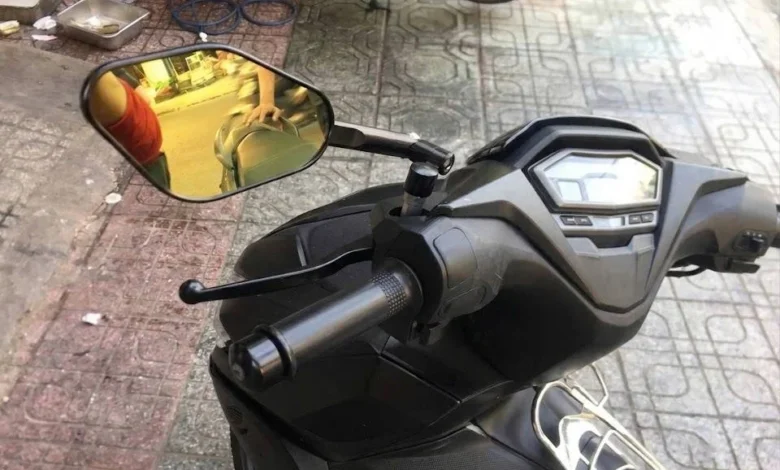
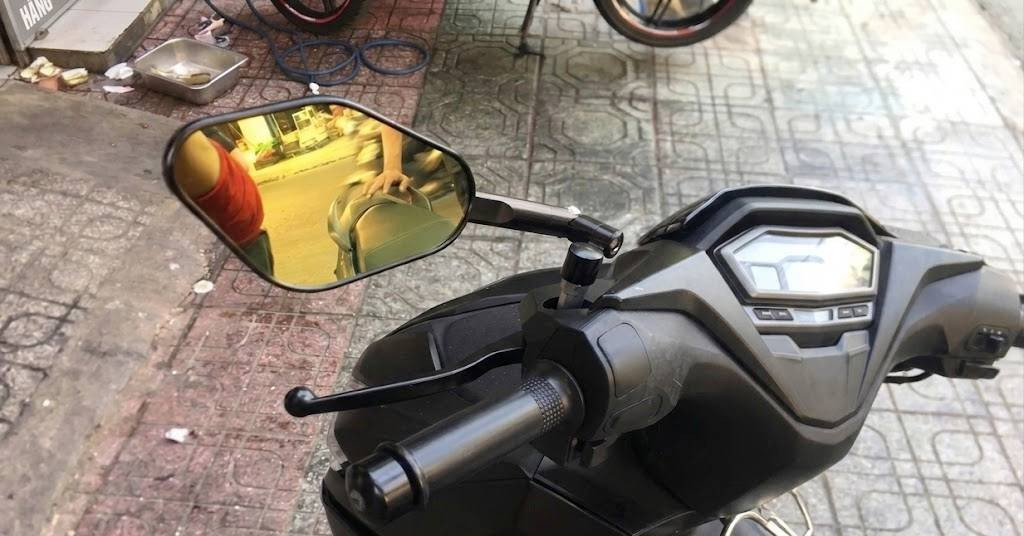
The legal requirements governing motorcycle rearview mirrors in Vietnam often spark confusion among everyday commuters, particularly regarding whether a vehicle must be equipped with both left and right mirrors to remain fully compliant with national traffic safety laws. According to the current regulatory framework outlined in the Law on Road Traffic Safety and Order alongside subsequent administrative decrees, the operational standards for two-wheeled motor vehicles mandate specific criteria for auxiliary viewing devices. Specifically, a motorcycle or motorized scooter must feature at least one functional rearview mirror positioned on the left side of the vehicle relative to the operator. While common street observations reveal numerous riders operating vehicles stripped of their right-side mirrors or featuring only a single left-side apparatus, understanding the precise nuances of traffic legislation clarifies why certain configurations are legally permissible while others invite severe financial penalties.
Under the provisions of Decree 168/2024/ND-CP, which dictates administrative penalties for violations within the road traffic domain, motorists caught operating a motorcycle without the legally mandated left-side rearview mirror—or with a mirror that is broken, obstructed, or otherwise rendered entirely ineffective—face substantial monetary fines ranging from 400,000 to 600,000 Vietnamese Dong. This enforcement mechanism underscores the critical legal weight assigned to the driver-side mirror, anchoring the baseline of technical safety compliance required for vehicles navigating public thoroughfares. However, the explicit specification of the left mirror as the sole mandatory requirement frequently leads to a widespread misconception: many motorists mistakenly assume that removing the right-side mirror is actively encouraged or entirely devoid of regulatory significance, simply because the absence of a right mirror alone does not trigger a direct fine under the specific wording of the penalty clauses.
To appreciate the architecture of these traffic laws, examining the historical context and legislative evolution of vehicle safety standards in Southeast Asia provides valuable clarity. For decades, the rapid expansion of urban centers like Hanoi and Ho Chi Minh City transformed motorcycles into the dominant mode of daily transportation for millions of citizens. As traffic density surged, national regulatory bodies continually updated vehicle safety inspection codes, alignment standards, and manufacturing prerequisites to mitigate rising accident statistics. The distinction between mandatory single-mirror compliance and optional double-mirror configuration emerged not as an oversight, but as a practical acknowledgment of baseline manufacturing minimums and historical import standards for older vehicle fleets. Nevertheless, modern legislative updates, culminating in the comprehensive traffic safety frameworks established through 2024, continue to refine how enforcement agencies evaluate technical compliance during routine roadside checkpoints and accident investigations.
Chronology of Traffic Safety Legislation and Mirror Mandates
The legal framework governing vehicle accessories in Vietnam has evolved systematically over the past two decades, transitioning from broad, ambiguous guidelines to highly specific technical mandates.
- Early 2000s: As motorcycle ownership experienced exponential growth across urban and rural landscapes, traffic authorities operated under general administrative decrees that broadly required vehicles to be in safe operating condition, leaving considerable room for subjective interpretation by traffic police regarding missing mirrors.
- 2008 Law on Road Traffic: This landmark legislation established formal statutory requirements for all motor vehicles to meet strict technical safety standards before entering public roads. It introduced explicit mentions of signaling and viewing devices, setting the foundation for standardized equipment rules.
- Decrees on Administrative Penalties (2010s): Successive legislative updates introduced concrete monetary fines for operating vehicles missing essential safety components. During this period, the specific requirement for a left-side rearview mirror was codified to address the predominant flow of traffic and overtaking behaviors.
- Law on Road Traffic Safety and Order (2024): The most recent legislative milestone reinforced technical safety prerequisites for motorcycles and mopeds, solidifying the legal baseline that requires at least one rearview mirror on the driver’s left side while maintaining strict performance capabilities for any equipped viewing apparatus.
- Decree 168/2024/ND-CP: The current enforcement decree took effect, establishing the exact penalty structure of 400,000 to 600,000 Vietnamese Dong for operating vehicles lacking a functional left-side mirror or possessing mirrors rendered ineffective due to severe damage or improper positioning.
Technical Rationale Behind the Left-Side Mirror Priority
The legislative decision to mandate the left-side rearview mirror as an absolute minimum requirement is deeply rooted in the operational dynamics of traffic flow in Vietnam. Because the country enforces a right-hand traffic system, all standard vehicular overtaking maneuvers, lane transitions, and high-speed passing take place predominantly on the left side of the roadway.
When operating a motorcycle within densely packed urban traffic arteries—where two-wheeled vehicles frequently share narrow corridors alongside buses, commercial trucks, and passenger cars—the ability to monitor approaching threats from the rear is a matter of paramount survival. The left-side rearview mirror grants the operator vital visibility over vehicles closing in from behind before executing a left turn, shifting lanes, or merging into fast-moving traffic streams. Without this critical viewing angle, a motorist is effectively blinded to fast-approaching traffic in adjacent lanes, exponentially escalating the probability of side-swipe collisions, rear-end impacts, and severe personal injury accidents during routine maneuvers.
Traffic safety experts emphasize that while the law establishes the left mirror as the absolute floor for legality, it does not imply that the right mirror is functionally useless. The human field of vision is naturally constrained when wearing protective helmets, navigating congested intersections, or executing complex lane-weaving maneuvers. Consequently, relying exclusively on a single mirror creates substantial blind spots, particularly when operating in multi-lane environments where vehicles may unexpectedly surge past on the right side or travel closely alongside the passenger-side fairings.
Legal Distinctions: Minimum Standards Versus Comprehensive Safety
A frequent point of debate among motorists centers on the legal interpretation of missing equipment versus non-functional equipment. Under Article 14 of Decree 168/2024/ND-CP, the penalty threshold applies specifically when the left-side mirror is entirely absent or when a mirror is present but rendered completely ineffective—such as being severely cracked, obscured by cargo, or vibrating so violently at operational speeds that no coherent image can be discerned.
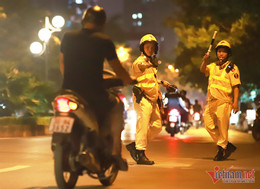
However, legal analysts and traffic enforcement officials repeatedly clarify a crucial distinction: the absence of a statutory penalty for lacking a right-side mirror does not equate to a regulatory endorsement of its removal. Many riders mistakenly strip both mirrors for aesthetic reasons, to streamline the motorcycle for easier filtering through tight traffic spaces, or to prevent theft and parking damage. While a traffic police officer cannot legally issue a fine solely for the absence of a right-side rearview mirror under the strict wording of current penalty schedules, operating a vehicle with a modified, incomplete configuration increases the driver’s exposure to heightened operational risks.
Furthermore, enforcement agencies possess discretionary authority to inspect the overall technical safety of any vehicle involved in a traffic dispute, minor collision, or erratic driving incident. If an investigator determines that a stripped or damaged mirror directly contributed to a failure in maintaining situational awareness during an accident, secondary liabilities can be assigned to the operator under broader provisions governing reckless operation and failure to maintain safe control.
Expert Perspectives and Recommendations for Motorists
Transportation safety organizations, consumer advocacy groups, and automotive engineers uniformly advocate for the retention and proper adjustment of both rearview mirrors on all motorcycles and scooters, regardless of the minimum thresholds established by penal codes.
According to advisory reports published by road safety institutes, an optimal riding posture combined with dual, properly aligned mirrors reduces visual blind spots by up to forty percent. Experts recommend the following best practices for everyday riders:
- Dual Mirror Installation: Maintain both left and right rearview mirrors to ensure comprehensive 360-degree situational awareness, particularly when navigating multi-lane boulevards, ring roads, and complex urban interchanges.
- Proper Adjustment and Stability: Ensure mirrors are securely fastened using durable mounting hardware that resists excessive engine vibration. The reflective glass must be clean, uncracked, and easily adjustable from the standard seated riding position to match the individual operator’s height and posture.
- Avoid Decorative Compromises: Refrain from utilizing miniature, stylized, or purely decorative mirrors that offer insufficient reflective surface area or fail to capture an adequate field of view. Safety equipment must prioritize functional utility over minimalist aesthetics.
- Complementary Head Checks: Remind riders that mirrors should serve as an initial warning tool rather than an absolute substitute for direct shoulder checks. Whenever traffic conditions and road safety permit, a brief glance over the shoulder combined with early signal activation remains the safest method for executing complex lane changes.
Broader Economic and Public Health Implications
The enforcement of vehicle safety equipment standards carries significant socio-economic implications for Vietnam. With tens of millions of registered motorcycles serving as the economic lifeblood of the nation’s workforce, small regulatory details directly influence public safety expenditures, emergency room admissions, and insurance claim disbursements.
Traffic accident data compiled by public health ministries consistently highlight collisions resulting from improper lane changes, blind-spot miscalculations, and sudden swerving as major contributors to non-fatal trauma cases on national highways. By maintaining strict enforcement against missing or defective driver-side mirrors, regulatory authorities establish an enforceable benchmark that reinforces driver accountability. At the same time, ongoing public education campaigns aim to dispel the myth that stripping safety accessories represents a harmless customization choice.
Ultimately, while the letter of the law in Vietnam sets a pragmatic minimum requirement by penalizing only the absence of the left-side rearview mirror, the spirit of safe driving demands a more comprehensive approach. Motorists who view safety regulations as a baseline to be merely skirted rather than a standard of protection for their own lives overlook the fundamental physics of the road. Equipping a motorcycle with two fully functional, properly adjusted mirrors remains a simple, highly effective defense against the unpredictable hazards of modern urban transit.