California Highway Patrol Targets Evasion Tactics As Drivers Deploy High-Tech License Plate Concealment Devices

The modern landscape of traffic enforcement faces an escalating technological arms race, moving far beyond simple speeding and reckless driving into sophisticated mechanical subterfuge. In an era where automated license plate readers (ALPRs), traffic surveillance cameras, and artificial intelligence integration have made traditional traffic monitoring increasingly pervasive, a subset of motorists is turning to equally advanced countermeasures. Recent enforcement actions by the California Highway Patrol (CHP) have brought to light a growing trend of drivers utilizing specialized electronic and mechanical concealment devices designed specifically to evade highway tolls and law enforcement detection.
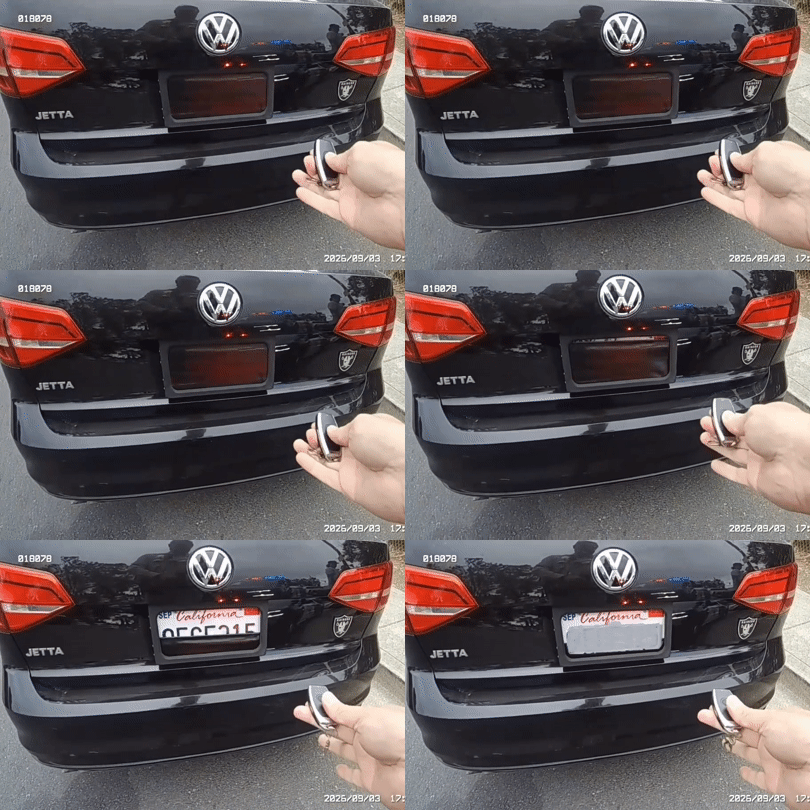
This cat-and-mouse dynamic recently materialized on a stretch of California freeway within the Solano County jurisdiction. Officers attached to the CHP Solano office intercepted a black Volkswagen Jetta equipped with a clandestine device capable of manipulating its license plate visibility on demand. The incident, which was subsequently documented and shared by law enforcement officials on social media platforms, highlights the lengths to which some motorists will go to bypass state infrastructure fees and evade accountability on public roadways. As transportation authorities increasingly rely on automated systems to manage traffic flow, fund infrastructure maintenance, and police highways, the proliferation of anti-surveillance hardware presents a significant challenge to the integrity of public transit systems.
Anatomy of an Evasion: How the Volkswagen Jetta Trick Worked
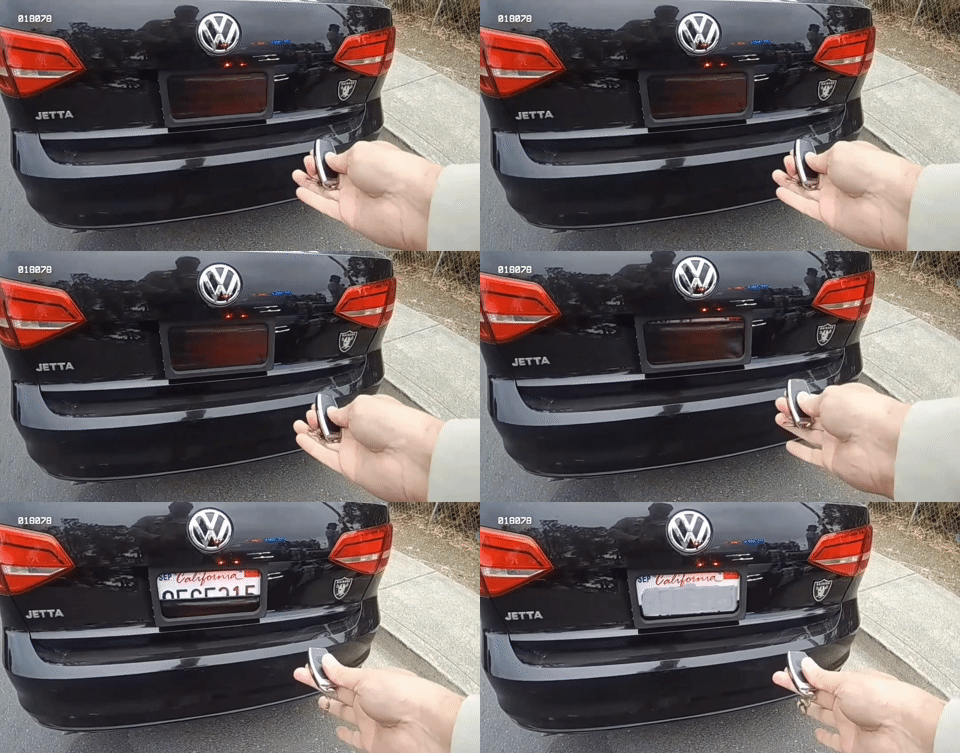
The enforcement action began during routine patrol duties when officers from the CHP Solano office crossed paths with a black Volkswagen Jetta. According to dashcam footage released by the agency, the vehicle appeared innocuous at first glance, blending seamlessly into the flow of commuter traffic. However, as the Jetta moved past the patrol vehicle’s forward-facing camera system, a striking anomaly occurred: the vehicle’s rear license plate was entirely obscured, rendered invisible to digital sensors and human eyes alike.
Within mere seconds of passing out of the immediate field of view and reappearing moments later, the license plate materialized once again, displaying its alphanumeric registration clearly. This abrupt transition captured the attention of the observing officers, who recognized the hallmark signature of an active concealment mechanism. The officers promptly initiated a traffic stop, pulling the Volkswagen Jetta over to conduct a thorough investigation of the vehicle and its operator.
During the subsequent roadside interview, the driver of the Volkswagen Jetta admitted to utilizing the specialized concealment device. According to statements released by the California Highway Patrol, the motorist confessed that the hardware was installed specifically to avoid paying high-occupancy tolls, highway fees, and bridge tolls levied throughout the bustling San Francisco Bay Area corridor. The sophisticated equipment—ranging from automated flippers and remote-controlled drop-down shades to electrochromic films that obscure characters when an electrical current is applied—allows drivers to selectively blind toll-collection cameras while appearing legal when parked or when interacting with manual enforcement officers.
Legal Framework and Penalties Under California Law
The deployment of license plate obscuration devices is far from a minor administrative oversight; under California law, it constitutes a deliberate and serious violation of the vehicle code. The state maintains strict statutes designed to ensure that every vehicle operating on public thoroughfares remains identifiable at all times.
Specifically, Section 5201 of the California Vehicle Code mandates that license plates must be securely fastened to the vehicle, maintained in a clearly legible condition, and displayed in a position that allows unobstructed viewing by law enforcement and electronic readers. The law explicitly prohibits any material, covering, frame, or device that obstructs, reflects, or alters the readability of the plate’s numbers and letters.
To combat the rising prevalence of these devices, lawmakers and traffic authorities have established strict financial penalties. Under Section 5201.1 of the California Vehicle Code, the baseline fine for operating a vehicle equipped with a mutable license plate frame, covering, or concealment device is set at $250 for a first-time offense. Crucially, this base penalty does not include additional state and county penalty assessments, court fees, or local surcharges, which can easily inflate the final financial burden to several hundred dollars per citation. Furthermore, repeat offenses can lead to steeper fines, mandatory court appearances, and potential misdemeanor charges depending on the severity and intent of the evasion.
In addition to provisions concerning plate visibility, the California Highway Patrol frequently cites violators under Section 23302(a)(1) of the vehicle code, which directly addresses the act of evading toll bridges and highways. Transport agencies emphasize that failing to pay tolls is not merely a minor traffic infraction; it is categorized as an evasion of public revenue that directly harms funding streams dedicated to bridge maintenance, seismic retrofitting, and highway expansion projects.
Broader Implications: The Digital Surveillance Dilemma on American Roads
The interception of the Volkswagen Jetta in Solano County occurs against a broader backdrop of mounting tension between law enforcement surveillance technologies and motorists’ desires for privacy. Modern policing relies heavily on automated infrastructure, including optical character recognition systems and AI-powered cameras deployed across major metropolitan areas and highway networks. These networks allow authorities to track vehicle movements in real-time, solve amber alerts, locate stolen vehicles, and enforce toll collections efficiently without requiring constant manual traffic stops.
However, the widespread deployment of such technology has sparked continuous legal and ethical debates regarding civil liberties and digital privacy. Incidents highlighting vulnerabilities in public surveillance systems underscore how contentious these technologies have become. For instance, security vulnerabilities and equipment thefts—such as the high-profile theft of an entire Automated License Plate Reader (ALPR) network in Winona, Minnesota, which resulted in thousands of dollars in losses—demonstrate that both the tools of surveillance and the tools of evasion are becoming increasingly sophisticated.
When motorists resort to mechanical countermeasures like the ones found on the Solano County Volkswagen Jetta, they undermine the delicate balance of trust required to maintain orderly public transit systems. Toll evasion and plate masking shift an unfair financial burden onto compliant taxpayers who dutifully pay their share for road usage and infrastructure upkeep. When a segment of the driving population successfully avoids tolls through technological trickery, public agencies face revenue shortfalls that can delay critical transportation projects and road repairs.
Enforcement Response and Future Outlook
The California Highway Patrol has issued stern warnings to the motoring public regarding the legal consequences of utilizing license plate concealment devices. Law enforcement agencies across the state are increasingly training officers to recognize the visual cues and mechanical signatures of anti-surveillance hardware. Dashcam technology, upgraded patrol vehicle sensors, and real-time toll-plaza alerts are equipping officers to identify anomalous vehicles more effectively than ever before.
Beyond immediate traffic citations and financial penalties, the CHP has highlighted that persistent toll evasion and the use of plate-masking devices can lead to civil judgments, administrative holds on vehicle registrations, and difficulties during annual vehicle renewals with the Department of Motor Vehicles (DMV). If a vehicle is flagged for habitual toll evasion, authorities possess the legal authority to impound the vehicle or deny registration renewals until all outstanding fines and fees are settled in full.
As transportation authorities continue to upgrade their technological capabilities, the cat-and-mouse game between highway agencies and motorists seeking to bypass the system is expected to persist. However, the decisive action taken by the CHP Solano office serves as a clear reminder that technological workarounds do not place drivers beyond the reach of the law. For the operator of the black Volkswagen Jetta, an attempt to save money on Bay Area tolls has culminated in steep fines, official scrutiny, and a public demonstration of the legal consequences awaiting those who attempt to outsmart California’s traffic enforcement network.