How Honda is Reinventing Quality Control as Modern Automotive Engineering Reaches New Levels of Complexity

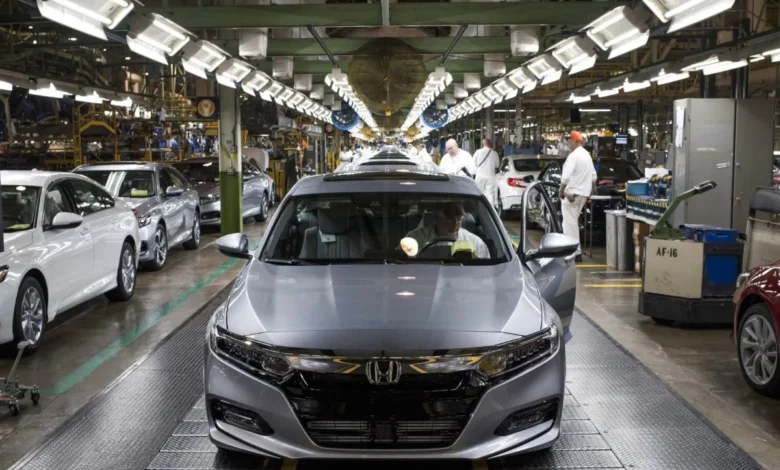
The modern automotive landscape is undergoing a profound transformation. As vehicles become increasingly digitized, autonomous, and electrified, the traditional benchmarks of mechanical engineering are colliding with unprecedented technological complexity. For legacy manufacturers, the ultimate industry challenge is no longer just innovating at a rapid pace, but figuring out how to accelerate development without compromising the legendary reliability that built their global reputations. Amid a shifting market where competitors from emerging automotive powerhouses are drastically shrinking product lifecycles, global brands are re-evaluating every step of their manufacturing processes. Honda Motor Co., witnessing the severe quality setbacks faced by its industry peers, has officially begun a comprehensive strategic overhaul of its quality control and engineering methodologies.
The Automotive Quality Crisis: A Wake-Up Call for Legacy Manufacturers
The impetus for Honda’s strategic shift does not exist in a vacuum. Across the global automotive sector, cracks are beginning to show in the armor of even the most trusted brands. According to reports from automotive publications like The Drive, Toyota’s newly developed twin-turbocharged 3.4-liter V6 engine has become the center of intense industry scrutiny following severe mechanical failures affecting several popular full-size trucks and body-on-frame SUVs, most notably the Tundra. Approximately 270,000 vehicles have been swept up in massive engine-related recalls. Despite multiple rounds of inspections, hardware fixes, and software recalibrations implemented by Toyota, reports of catastrophic engine failures have continued to surface.
For Toyota, a company whose multi-decade global reputation was meticulously constructed on the bedrock of bulletproof reliability, these setbacks served as a stark reminder of the risks tied to rapid powertrain redesigns. However, Honda is by no means an immune enterprise. Company leadership readily acknowledges that it has faced its own share of quality control hurdles over recent years. From mechanical transmission glitches and complex wiring harness faults to malfunctioning backup cameras and steering gear binding issues, Honda has had to issue numerous recalls across various global markets.
Rather than issuing hollow corporate declarations claiming that future vehicles will be entirely free of defects, Honda has adopted a much more pragmatic and transparent philosophy. The automaker’s ultimate objective is not the impossible elimination of all mistakes, but rather the early detection and immediate mitigation of errors long before vehicles reach dealership showrooms.

Shifting Quality Control Left: The New Engineering Paradigm
A pivotal development in Honda’s operational pivot is the philosophical shift in how quality control is defined. Historically, quality assurance was treated as a definitive checkpoint situated near the end of the product development cycle—a final barrier designed to catch manufacturing defects before mass production commenced. However, in an era where a single vehicle integrates multiple electronic control units (ECUs), advanced driver-assistance systems (ADAS), high-resolution cameras, ultrasonic sensors, and millions of lines of software code, treating quality control as an afterthought is no longer viable.
According to Noriya Kaihara, Executive Vice President of Honda Motor, the company’s quality assurance protocols are now being executed in direct parallel with foundational research, design, and product development. This approach, widely known in modern engineering as "shifting left," aims to drastically reduce the risk of discovering critical flaws late in the manufacturing pipeline.
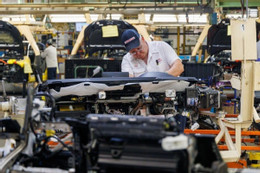
A contemporary vehicle is essentially a rolling supercomputer, often housing forced-induction engines or complex hybrid powertrains alongside a sprawling network of digital architecture. A single line of faulty code can instantly cripple vehicle dynamics, compromise driver-assistance functions, or degrade the overall user experience. Recognizing this reality, Honda is aggressively expanding its testing protocols from traditional hardware stress tests to deep software validation, utilizing advanced digital simulations to replicate extreme real-world operating environments.
By identifying software glitches and hardware incompatibilities during the conceptual and design phases, Honda significantly reduces repair costs, mitigates safety risks, and protects its brand equity. This proactive framework prevents vehicles from experiencing debilitating failures after commercial launch, sparing the company and its customers from the painful and costly cycle of post-production safety recalls.
Balancing Speed and Reliability in an Era of Disruption
One of the most daunting operational challenges facing Japanese automotive manufacturers today is the sheer velocity of technological advancement. Honda has openly conceded that the speed at which new technologies are brought to market has become a critical survival metric. This pressure has intensified significantly as automakers from China and India drastically compress vehicle development cycles—particularly in the domains of high-density battery technology, electric vehicle architecture, ADAS platforms, and in-car software ecosystems.
Yet, accelerating development cycles is a delicate balancing act. Faster development inherently means that physical testing windows are compressed, while the underlying technologies being integrated exhibit vastly higher rates of variation. Eiji Fujimura, President and CEO of Honda North America, noted that while the company intends to harness modern technological efficiencies, it refuses to completely sacrifice foundational quality control on the altar of speed. Honda is actively leveraging its decades of institutional knowledge and traditional manufacturing rigor, merging them with agile digital development tools to maintain structural integrity.
Software has undeniably emerged as the new battleground for automotive supremacy. From engine management maps and autonomous steering algorithms to infotainment processing and over-the-air update security, modern vehicles rely heavily on software stability. Consequently, comprehensive software-in-the-loop (SIL) and hardware-in-the-loop (HIL) testing has become a non-negotiable cornerstone of Honda’s updated quality assurance framework.
Strategic Powertrain Diversification: The V6 Naturally Aspirated Commitment
Beyond software and manufacturing pipelines, Honda’s product strategy diverges sharply from industry norms in terms of mechanical powertrain development. While a large portion of the global automotive industry has aggressively transitioned toward small-displacement, forced-induction engines to maximize power outputs while meeting stringent fuel economy regulations, Honda is charting a distinct path for its larger vehicle segments.
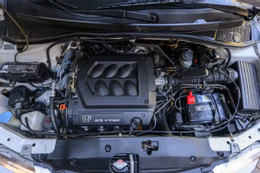
For the foreseeable future, Honda remains committed to utilizing newly developed naturally aspirated V6 engines paired with advanced hybrid systems for its larger vehicle lineup. Models such as the Honda Odyssey minivan, Pilot mid-size SUV, Passport adventure SUV, Ridgeline pickup truck, and their luxury counterparts under the Acura brand, including the MDX, are slated to feature these robust, naturally aspirated V6 hybrid configurations. Meanwhile, smaller volume-sellers like the Honda Civic and CR-V continue to offer diversified powertrain choices, including turbocharged inline-four engines and efficient hybrid variants.
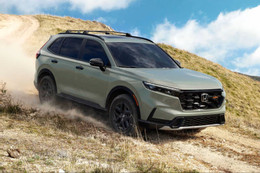
This bifurcated strategy demonstrates that Honda is tailoring its technological deployment to the specific demands of each vehicle segment rather than enforcing a blanket rollout of forced-induction engines across its entire portfolio. This approach stands in stark contrast to competitors like Toyota, which has broadly transitioned many of its larger truck and SUV platforms to turbocharged V4 and V6 powerplants.
Furthermore, Honda’s innovative two-motor hybrid system—successfully integrated into vehicles like the CR-V Hybrid and the upcoming Prelude—represents a sophisticated yet highly efficient powertrain architecture. While structurally complex, this system delivers exceptional fuel economy and responsive power delivery without relying on the mechanical stress factors commonly associated with high-boost turbochargers.
The Reality of Long-Term Durability and Industry-Wide Implications
Despite structural changes to its quality control protocols, Honda’s leadership readily admits that no manufacturer can completely eliminate the possibility of human or technical error. Advanced hybrid systems and electrified powertrains currently deployed across global markets require extensive real-world mileage accumulation before their long-term durability can be definitively cataloged. As the first generation of modern Honda hybrid vehicles accumulates hundreds of thousands of miles under diverse climatic and operational conditions, real-world telemetry data will provide the ultimate stress test for these complex drivetrain architectures.
The central message emerging from Honda’s corporate offices is clear: uncompromising quality does not mean a product will never experience a mechanical or digital anomaly. Even the most reputable brands can stumble as automotive technology ventures into uncharted territory. The defining differentiator for modern automakers is not the absence of failure, but the speed, transparency, and effectiveness of their response when unexpected issues arise.
For Honda, this response strategy centers on a three-pronged approach: immediate operational intervention, targeted engineering countermeasures, and seamless field implementation. As the automotive industry navigates the turbulent transition into the era of electrification, software-defined vehicles, and advanced autonomy, the traditional rivalry among legacy manufacturers is evolving beyond sheer horsepower figures, styling aesthetics, or basic manufacturing output.
Ultimately, long-term brand equity now relies on a delicate synthesis of hardware resilience, software reliability, rigorous multi-stage testing protocols, and rapid crisis management. By confronting these engineering realities head-on and reforming its development pipeline from the ground up, Honda is positioning itself to protect its hard-earned legacy of trust before its next-generation vehicles and powertrain systems officially roll onto global roads.