Bangkok Submerged: Hundreds of Cars Stranded and Damaged as Historic Floods Paralysis Thailand’s Capital

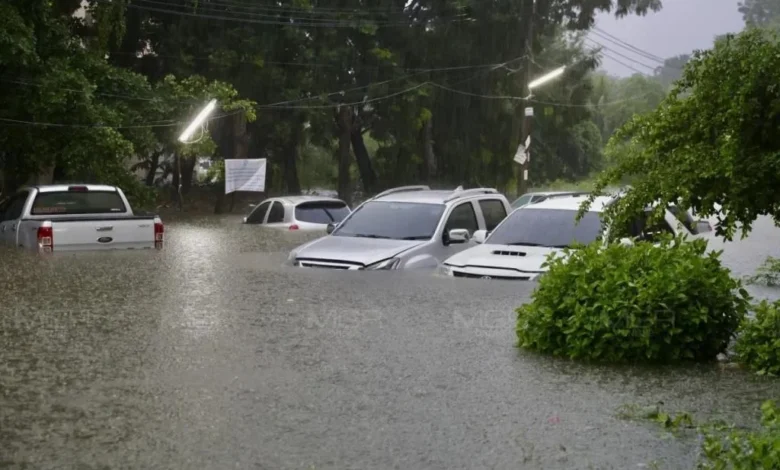
The bustling metropolis of Bangkok and surrounding Thai provinces have been thrown into a state of severe crisis following days of relentless, torrential downpours that began in the late hours of September 24 and extended into the morning of September 26. The extreme weather event, which delivered nearly 300 millimeters of cumulative rainfall within a 48-hour window, has transformed major urban thoroughfares, residential communities, and parking facilities into vast bodies of water. The sheer intensity of the precipitation has severely compromised the city’s drainage infrastructure, leaving municipal authorities scrambling to manage overflowing canals and widespread infrastructural paralysis.
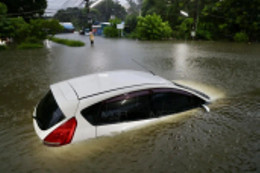
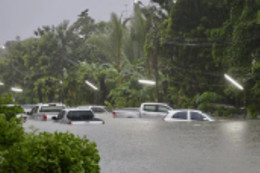
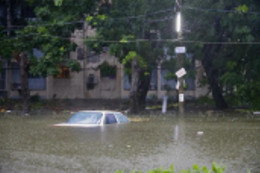
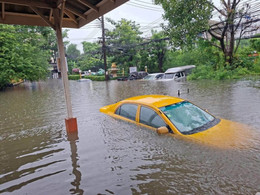
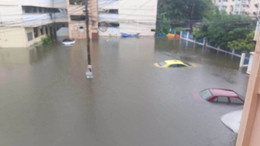
Visual documentation broadcast across major Thai media outlets, including Sondhi Talk, Matichon, Daily News, and Mgronline, has captured startling scenes of devastation. Hundreds of passenger vehicles—ranging from compact city hatchbacks to high-end sedans and SUVs—have been swallowed entirely by floodwaters in residential zones, apartment complexes, and parking lots. In the hardest-hit sectors, the rising tide caught vehicle owners entirely off guard, turning midnight rescues into frantic races against time to push cars to higher ground before electrical systems failed and engines seized permanently.
Anatomy of the Deluge: Epicenter at Bang Kapi
The situation reached critical proportions in the eastern districts of Bangkok, particularly within the Bang Kapi administrative zone. In the Khlong Chan residential area, specifically around Soi Seri Thai 5 through 7 and the Khlong Chan housing complex near Soi Nawamin 6, floodwaters surged aggressively, reaching unprecedented depths of up to 1.3 meters.
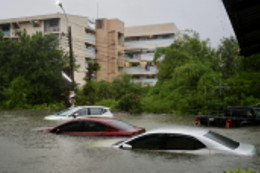
Residents recounted being jolted awake in the middle of the night by emergency water level warnings and the rapid encroachment of water into apartment courtyards and ground-level parking bays. Many vehicle owners rushed outside in the dark, wading through waist-high water to manually push their automobiles away from the lowest points of the compounds. Despite these desperate efforts, a vast number of cars were abandoned as the water rose too quickly, ultimately submerging vehicle bodies up to their windows and, in some extreme cases, covering entire roofs.
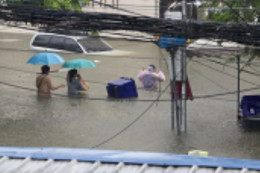
Similar catastrophic scenes unfolded beyond the capital. In the coastal resort city of Pattaya, located in the Bang Lamung district of Chonburi province, sudden flash floods originating from the early morning rains of September 24 inundated commercial streets and residential parking areas. Vehicles parked along low-lying coastal roads were instantly caught in the runoff, leaving drivers and local commuters stranded as murky brown water flooded interiors and rendered engines inoperable.
Chronology of the Weather Event
The sequence of events leading up to the September 26 crisis highlights the compounding nature of the heavy monsoon-season weather system that stalled over central Thailand:
- Late Night, September 24: Heavy, continuous downpours commence across Bangkok and neighboring eastern provinces, triggering localized flash floods in low-lying areas of Pattaya and outer Bangkok districts.
- September 25: Rainfall intensifies throughout the day. Accumulations approach critical thresholds as major urban canals begin to reach maximum capacity. Municipal drainage pumps are deployed at full capacity.
- Early Morning, September 26: A peak surge in precipitation pushes 48-hour cumulative rainfall totals near the 300 mm mark, according to data from Thai PBS. Canals overflow their banks, causing catastrophic inundation in Bang Kapi, Khlong Chan, and surrounding communities. Hundreds of vehicles are submerged before owners can relocate them.
- Daytime, September 26: Emergency agencies issue urgent travel advisories. The Mass Rapid Transit Authority of Thailand (MRTA) opens free parking at metro stations to safeguard remaining vehicles, while municipal pumps maintain a continuous drainage effort of approximately 1,200 cubic meters per second.
Infrastructure Strain and Drainage Challenges
According to reports from Thai PBS and municipal engineering departments, the primary driver behind the extensive flooding is the severe volume of water overwhelming Bangkok’s canal network. Key waterways traversing the urban landscape—including the Lat Phrao, Saen Saep, Prem Prachakorn, and Prawet Burirom canals—swelled rapidly beyond their structural containment capacity, spilling over into adjacent streets and alleyways.
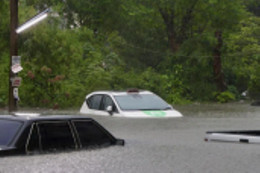
Bangkok’s drainage system, designed to handle normal seasonal rainfall through a combination of gravity flow and mechanical pumping stations, faced a severe bottleneck. To mitigate the crisis, city administrators operated the city’s network of large-scale drainage pumps at maximum capacity, moving approximately 1,200 cubic meters of water per second out toward the Gulf of Thailand. However, the sheer volume of water outpaced the mechanical discharge rate, creating prolonged stagnation in low-lying residential sectors and transport corridors.
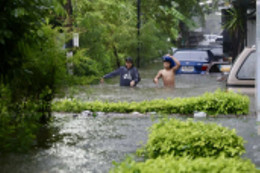
While official nationwide statistical data regarding the exact number of destroyed or severely damaged vehicles remains uncompiled by government agencies, local automotive associations and insurance adjusters estimate that the total number of affected cars runs well into the hundreds. This preliminary assessment is derived from the density of vehicles parked within the flooded residential complexes of Bang Kapi, Lat Phrao, and Ramkhamhaeng, where entire parking lots were inundated.
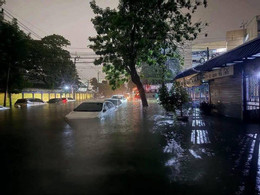
Official Warnings and Emergency Response
In response to the escalating crisis, the Bangkok Flood Prevention Center issued strict public safety warnings, identifying at least seven major thoroughfares and districts where floodwaters pose an immediate danger to motorists and property. The high-risk zones include sections of Vibhavadi Rangsit Road, Ramkhamhaeng Road, Lat Krabang, Sena Nikhom, Chaeng Watthana, and Sukhumvit Soi 63 (Ekkamai).

Authorities emphasized that floodwaters of this depth not only cause catastrophic mechanical and electrical failure in modern automobiles but also create hazardous driving conditions where motorists lose directional control due to hidden road defects, open manholes, and strong undercurrents. Citizens have been strongly advised to avoid unnecessary travel and strictly refrain from driving through deep water.
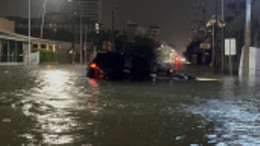
To assist residents in safeguarding their personal property, the Mass Rapid Transit Authority of Thailand (MRTA) implemented an emergency relief measure. The agency opened 11 "Park & Ride" facilities free of charge across various urban rail transit stations in Bangkok and its metropolitan periphery. This initiative provided vehicle owners with secure, elevated multi-story parking structures to shelter their cars from rising floodwaters over the subsequent days of the weather event.
Broader Socioeconomic Implications and Outlook
The severe flooding in Bangkok and Pattaya highlights the ongoing vulnerability of Southeast Asian urban centers to extreme weather events driven by shifting climate patterns and rapid urbanization. Beyond the immediate property damage inflicted upon hundreds of private vehicles, the incident underscores the heavy financial burden placed on individual households, many of which face costly insurance claims, engine overhauls, or total write-offs of their primary modes of transportation.
Furthermore, the disruption to major transit corridors and commercial districts temporarily hobbled economic activity within the capital, halting daily commutes and delaying logistics operations. As municipal authorities continue to clear blocked drainage grates and monitor canal levels, urban planners face renewed pressure to accelerate long-term climate adaptation strategies, upgrade stormwater retention basins, and enhance early-warning systems to protect densely populated urban centers from future meteorological shocks.