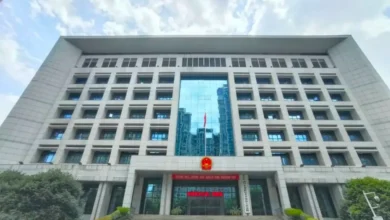
Customs Urgently Demands Same-Day Agricultural Clearance to Safeguard Foreign Currency Earnings

The General Department of Customs has issued a formal administrative directive mandating expedited, same-day customs clearance for fresh agricultural products, aimed at preventing logistical bottlenecks, mitigating financial loss, and protecting foreign exchange inflows. This decisive regulatory intervention comes in direct response to urgent policy recommendations submitted by the Vietnam Fruit and Vegetable Association, highlighting mounting pressures within the perishable goods supply chain as export volumes surge during the final fiscal quarters.
Under the newly reinforced protocols, customs offices across regional jurisdictions are required to optimize green-lane mechanisms, streamline documentary and physical inspections, and completely eliminate administrative friction, particularly during weekends and public holidays. This regulatory shift underscores a concerted government effort to align institutional frameworks with the practical demands of international trade, ensuring that Vietnam’s robust agricultural export sector continues to thrive amidst intensifying regional and global competition.
Regulatory Framework and the Mandate for Same-Day Clearance
According to the General Department of Customs, existing legislative frameworks already enshrine provisions designed to facilitate and prioritize clearance procedures for agricultural, forestry, and aquatic products destined for international markets. Historically, however, bureaucratic delays and inconsistent regional enforcement have occasionally introduced friction, creating unnecessary holding costs and threatening the commercial viability of highly perishable goods such as tropical fruits and fresh vegetables.
To address these vulnerabilities, the General Department of Customs instructed all regional branch offices starting mid-July to enforce maximum flexibility, mandating that clearance procedures for eligible fresh produce be completed within the exact calendar day of submission. Customs authorities are now legally and administratively obligated to waive non-essential administrative red tape and prioritize risk-management assessments that expedite passage without compromising regulatory oversight.
To operationalize this directive, customs units have been ordered to deploy dedicated personnel around the clock, ensuring that competent officers remain stationed to resolve physical inspections, verify documentation, and oversee cargo supervision during weekends, holidays, and outside standard administrative hours. These personnel are tasked with intervening immediately when procedural roadblocks arise, thereby neutralizing potential chokepoints before they can disrupt the export pipeline.
Managing Cross-Border Friction with Key Trading Partners
A significant focal point of the new customs directive involves the management of perishable exports destined for China, Vietnam’s largest single market for fruits and vegetables. Given the complex phytosanitary requirements, dynamic border policies, and occasional congestion at northern land ports, the General Department of Customs has stressed the critical importance of continuous, proactive communication between Vietnamese customs posts and their Chinese counterparts.
Local customs units are now required to maintain daily dialogues with foreign officials to preemptively address transit bottlenecks, synchronize border opening hours, and disseminate real-time policy updates directly to registered export enterprises. Furthermore, the directive introduces a highly responsive mechanism for goods that have already cleared Vietnamese territory but subsequently fail to meet strict Chinese import criteria. In such instances, if a business formally requests the repatriation or re-importation of the consignment, customs authorities are mandated to prioritize and expedite the administrative paperwork, minimizing additional financial distress for the affected growers and exporters.
To enforce these standards rigorously, the General Department of Customs has issued a strict zero-tolerance warning against any corrupt practices, intentional delays, or harassment by customs officials. Officers found creating artificial complexities, demanding unauthorized informal fees, or unnecessarily prolonging clearance times will face severe disciplinary action. This stern warning reflects a broader administrative commitment to lowering logistics costs—which have historically weighed heavily on Vietnamese agricultural competitiveness—and ensuring a transparent, predictable trade ecosystem.
Macroeconomic Performance: Surging Exports and Imports in 2026
The urgency behind these administrative reforms is underscored by official macroeconomic data covering the first ten months of the year. During this period, Vietnam’s export turnover for fruits and vegetables achieved a remarkable milestone, reaching approximately $8.29 billion, representing a robust 17% increase compared to the corresponding period in the previous year. This consistent upward trajectory cements the agricultural sector as one of the country’s primary economic growth engines, driven by expanding international market access, improved product quality, and rising consumer demand in key Asian and global economies.
Conversely, the data reveals a simultaneous expansion in import activities. Over the same ten-month timeframe, Vietnam imported fruits and vegetables valued at approximately $2.82 billion, marking a significant increase of 30.8% year-over-year. Analysts attribute this surge in imports to growing domestic demand for diverse agricultural varieties, inputs for domestic food processing industries, and complementary seasonal produce. While the widening import bill reflects vibrant domestic consumer markets, it simultaneously amplifies the necessity for domestic producers to maintain high quality standards, cost efficiency, and rapid supply chain execution to defend their market share both domestically and internationally.
Local Administrative Innovations: Lao Cai Pilots Socialist Commune Model
Complementing national trade facilitation efforts, local governance models across Vietnam are undergoing ambitious structural transformations to enhance grassroots administration and socio-economic development. In Lao Cai province, the Party Committee of Tran Yen commune officially convened a high-profile conference to roll out a comprehensive scheme and implementation plan for building a pilot model designated as the "Socialist Commune" within its jurisdiction. Tran Yen has been selected as the pioneering locality in Lao Cai province to test this innovative administrative and social framework.

Tran Anh Tuan, Secretary of the Party Committee and Chairman of the People’s Council of Tran Yen commune, emphasized that selection for this pilot project is both a profound political honor and a significant responsibility for the local leadership, party cadres, and residents. He noted that the initiative transcends a conventional socio-economic development plan; it represents a comprehensive renewal of leadership, management, and grassroots organizational methodologies. The overarching objective is to elevate local living standards, maximize community satisfaction, and foster an environment of genuine social well-being and happiness.
Building upon a baseline of 60 province-wide criteria, Tran Yen commune has meticulously researched and integrated eight localized criteria tailored to its unique geographic and economic context. The local administration has identified 85 core tasks and selected 15 specific pilot models for immediate execution. To ensure rigorous accountability, the commune established a dedicated steering committee and operational support teams, governed by the operational philosophy of "clear people, clear tasks, clear responsibilities, clear progress, clear results, and clear authority."
Prior to the formal launch of this pilot project, Tran Yen proactively instituted foundational socio-economic measures. The commune prioritized social welfare by successfully supporting the construction of permanent housing for 32 vulnerable households facing severe housing instability. Furthermore, the local government has fostered cooperative economic models, including the establishment of inter-family collective farming groups and the expansion of key agricultural value chains such as sericulture (silk production), fruit cultivation, and livestock breeding. Parallel to these agricultural advancements, the locality is actively accelerating economic restructuring toward digitalization, steadily laying the groundwork for the establishment of "Digital Villages" and "Smart Villages" at the community level.
Concluding the conference, the Tran Yen commune Party Committee launched a sweeping emulation movement centered around the motto: "Solidarity, innovation, creativity, joining hands to build Tran Yen into a rapidly developing, sustainable, civilized, and happy commune, successfully meeting the criteria of the Socialist Commune model by 2030."
Ho Chi Minh City Restructures Local Governance and Professionalizes Civil Service
In a parallel administrative modernization effort, the People’s Committee of Ho Chi Minh City has officially promulgated a comprehensive implementation plan aimed at refining and optimizing the structural organization of its political system and its two-tier local government model. This strategic roadmap is designed to ensure that the municipal administrative apparatus operates with maximum synchronization, fluidity, structural leanness, effectiveness, and high operational efficiency.
A core pillar of the Ho Chi Minh City plan is the aggressive decentralization and delegation of administrative powers, closely tied to the rationalized allocation of financial resources. By empowering local authorities—particularly at the grassroots commune and district levels—the city aims to elevate the accountability of institutional heads and fundamentally improve the quality of public service delivery for both citizens and business enterprises.
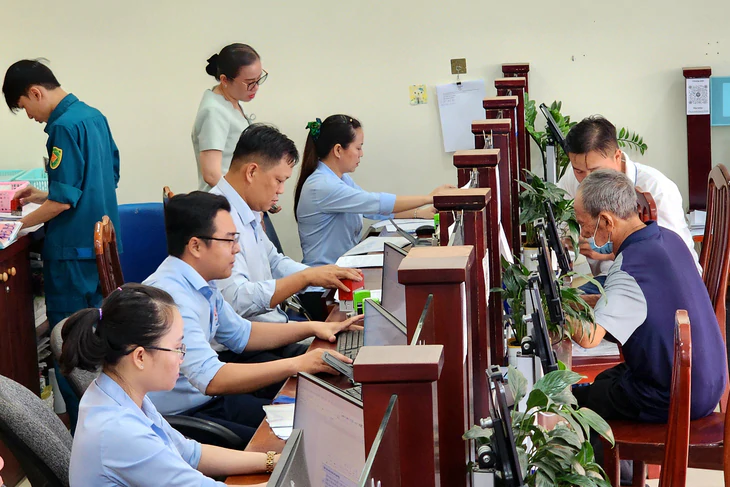
To achieve these systemic outcomes, the municipal government is currently executing a rigorous review and refinement of the functional mandates assigned to various departments and agencies. This process is engineered to eliminate systemic overlaps, eradicate jurisdictional blind spots, and streamline organizational charts. Concurrently, Ho Chi Minh City is focusing heavily on upgrading the professional capacity, ethical standards, and operational competencies of its civil servants and public employees, placing special emphasis on grassroots personnel who interface directly with the public daily.
Furthermore, the municipal administration is tightening institutional discipline and administrative enforcement by transitioning toward a performance-based management culture. Performance evaluations will no longer rely merely on procedural compliance but will be measured strictly by tangible work outputs, project deliverables, and citizen satisfaction indices. By streamlining administrative procedures, optimizing public asset management, and guaranteeing robust operational conditions for grassroots governments, Ho Chi Minh City seeks to create an unyielding administrative foundation capable of supporting its massive urban and economic ambitions.
Advancing Traditional Medicine Integration at Western Gateway Hospital
Strengthening healthcare infrastructure to match its broader modernization initiatives, Ho Chi Minh City continues to expand specialized medical capabilities across its regional healthcare networks. On November 10, the Ho Chi Minh City Institute of Traditional Medicine and the Cu Chi Regional General Hospital formally signed a comprehensive professional cooperation agreement, marking a milestone in regional medical integration.
This strategic partnership provides a vital structural framework for both institutions to pool intellectual resources, exchange clinical expertise, and leverage mutual strengths—particularly in the integration of traditional oriental medicine with advanced modern clinical practices. Through this collaborative framework, the medical units aim to refine specialized treatment protocols, enhance diagnostic precision, and elevate the overall quality of patient care. The partnership is expected to expand the therapeutic options available to patients in peripheral districts, ensuring equitable access to safe, diverse, and highly effective healthcare modalities.
Leadership from the Cu Chi Regional General Hospital noted that the agreement embodies the institution’s unwavering commitment to continuous clinical innovation. Situated strategically at the western gateway of Ho Chi Minh City, the hospital was officially inaugurated in April 2025 following a substantial public investment totaling nearly VND 2,000 billion. Built as a premier healthcare project for the southern metropolis, the modern facility was designed to directly alleviate overcrowding in inner-city medical centers while fulfilling the long-standing healthcare expectations of residents residing in Cu Chi and neighboring suburban provinces.
By simultaneously reforming agricultural trade logistics, upgrading grassroots socialist governance models, streamlining municipal public administration, and expanding advanced regional healthcare networks, administrative bodies across Vietnam continue to demonstrate a synchronized drive toward institutional efficiency, economic resilience, and enhanced societal well-being.