Japanese Businesses from Gunma Prefecture Explore Automotive Supply Chain Opportunities in Hai Phong

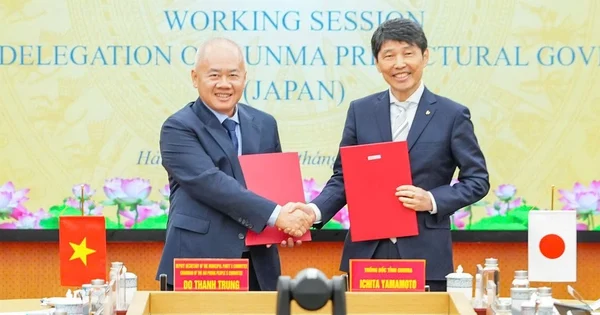
On November 9, 2026, the People’s Committee of Hai Phong City and the regional government of Gunma Prefecture, Japan, officially signed a comprehensive memorandum of understanding (MOU) to establish a formal framework for bilateral cooperation. The partnership places primary emphasis on mechanical manufacturing, supporting industries, technical workforce training, and digital transformation.
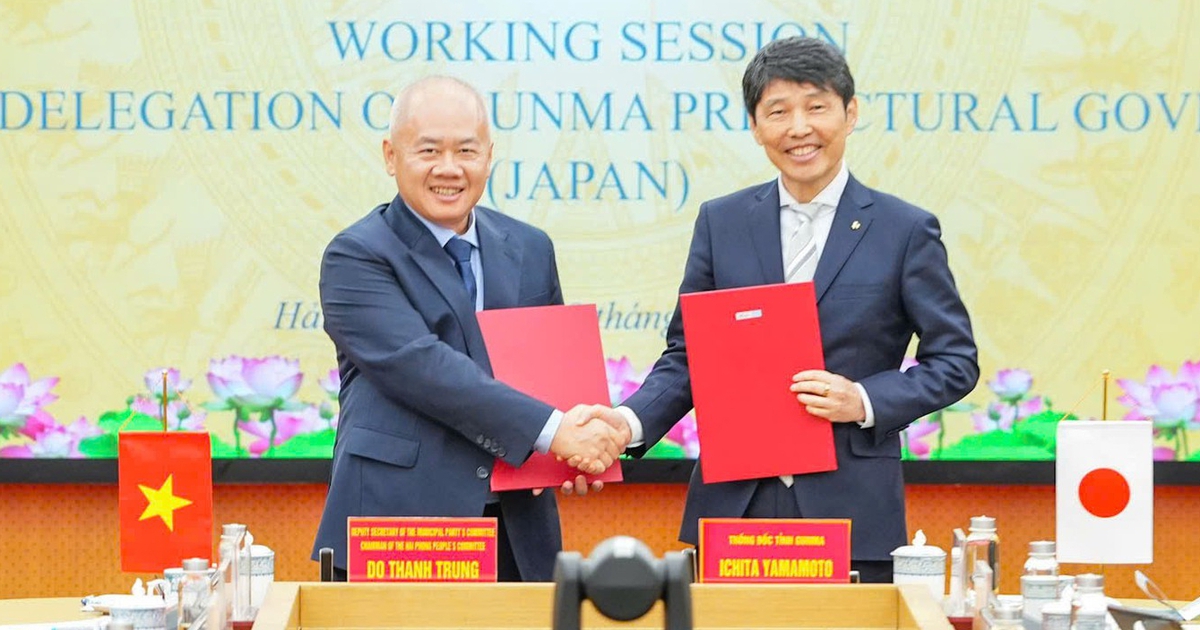
The high-profile signing ceremony took place during an official working visit to the northern Vietnamese port city by a delegation representing the Gunma prefectural government and nearly 30 enterprises. The delegation was personally led by Gunma Governor Ichita Yamamoto. On the Vietnamese side, Chairman of the Hai Phong People’s Committee Do Thanh Trung directly signed the cooperative agreement alongside Governor Yamamoto, marking a significant milestone in regional economic diplomacy between Vietnam and Japan.
Strategic Delegation Visit and Industrial Field Surveys
The business delegation accompanying Governor Yamamoto comprises prominent Japanese enterprises specializing in automotive manufacturing, precision mechanics, automation, electrical and electronics, as well as international trade and specialized commercial services. These sectors represent the core economic strengths of Gunma Prefecture, an industrial hub located in the Kanto region of Japan known for its robust manufacturing ecosystem.
As part of their itinerary in Hai Phong, the Japanese business delegation conducted comprehensive field surveys at key industrial and manufacturing facilities. These included visits to the VinFast automotive manufacturing complex and the Nam Dinh Vu Industrial Park. The primary objective of these site visits was to allow the visiting enterprises to evaluate the local investment climate firsthand, identify potential domestic business partners, and explore concrete opportunities to integrate into the robust supply chains of major industrial corporations operating in Hai Phong.
During discussions with local authorities, Governor Yamamoto expressed strong admiration for Hai Phong’s strategic geographic advantages, including its advanced deep-water seaport system, modern logistics infrastructure, and well-developed industrial parks. The Governor emphasized that Gunma enterprises are increasingly looking outward to diversify their international supply chains and view Hai Phong as an ideal strategic gateway. He articulated a clear desire to deepen bilateral cooperation, specifically targeting automotive manufacturing, supporting industries, and the cultivation of a highly skilled technical labor force to meet the rigorous demands of modern advanced manufacturing.
Hai Phong’s Economic Landscape and Strong FDI Footprint
Responding to the visiting delegation, Chairman Do Thanh Trung provided a comprehensive overview of Hai Phong’s socioeconomic development and its longstanding economic ties with Japan. According to local administration data, Japan currently maintains a robust foreign direct investment (FDI) footprint in the port city, accounting for 211 active projects with a total registered capital of approximately $6.5 billion USD. These Japanese ventures have historically played a critical catalytic role in modernizing Hai Phong’s industrial infrastructure and generating thousands of stable, high-paying jobs for the local workforce.
Hai Phong has experienced remarkable economic expansion in recent years. Following comprehensive administrative and economic updates, the city boasts a thriving gross regional domestic product (GRDP) scale approaching $30 billion USD. To maintain this rapid growth trajectory and further enhance its competitive edge, the municipal government is actively developing a massive Free Trade Zone spanning approximately 6,300 hectares. This ambitious project is designed to create an unprecedented policy environment and spatial momentum to attract next-generation global capital, high-tech industries, and value-added manufacturing enterprises.
Core Pillars of the New Bilateral Agreement
The newly signed memorandum of understanding outlines several distinct, actionable pillars of cooperation intended to bridge the economic ecosystems of Hai Phong and Gunma Prefecture over the coming years:
-
Supply Chain Integration: Both local governments committed to actively promoting and facilitating industrial supply chain connectivity, specifically focusing on precision engineering, automotive component manufacturing, and the broader supporting industry ecosystem. By fostering direct business-to-business linkages, the initiative aims to reduce import dependencies for local assemblers while integrating Japanese tier-1 and tier-2 suppliers directly into Vietnam’s domestic production networks.
-
Technical Workforce Development: Recognizing that advanced manufacturing requires specialized competencies, the agreement emphasizes collaborative workforce training programs. These initiatives will seek to align local vocational and higher education curricula with the stringent technical standards demanded by Japanese precision engineering firms.
-
Digital Transformation and Innovation: The partners agreed to foster cooperative exchanges in digital transformation, industrial innovation, and technological research and development. This pillar encourages joint ventures and knowledge transfer in automation and smart manufacturing practices.

-
People-to-People Diplomacy: Beyond economic metrics, the agreement highlights the importance of enhancing cultural exchanges, tourism, and interpersonal interactions between the citizens of Hai Phong and Gunma Prefecture to ensure a strong social foundation for long-term economic cooperation.
Broader Economic Implications and Future Outlook
The strengthening of ties between Hai Phong and Gunma Prefecture reflects a broader, ongoing structural evolution in foreign direct investment across Southeast Asia. As multinational corporations increasingly prioritize supply chain resilience, geographic diversification, and operational sustainability, regional-level diplomacy—often referred to as subnational diplomacy—has emerged as a vital mechanism for matching specific industrial clusters with complementary international partners.
For Hai Phong, the active engagement of nearly 30 specialized Japanese manufacturing enterprises validates the city’s long-term infrastructure strategy. By combining its world-class logistics network, anchored by international deep-water ports, with ambitious special economic zone initiatives like the 6,300-hectare Free Trade Zone, the city is strategically positioning itself as Northern Vietnam’s preeminent capital for advanced manufacturing and automotive production.
Conversely, for Gunma Prefecture, partnering with a high-growth industrial municipality like Hai Phong offers its small and medium-sized enterprises (SMEs) a viable pathway to sustain global competitiveness amidst domestic demographic shifts and rising operational costs in Japan. By establishing early operational footprints within Vietnam’s dynamic domestic market and leveraging the country’s extensive network of international free trade agreements, Gunma-based manufacturers can effectively secure their long-term market share across the broader Asia-Pacific region.
Municipal leaders from both sides have instructed their respective departments and investment promotion agencies to establish a dedicated joint working group. This task force will be responsible for translating the high-level commitments outlined in the memorandum of understanding into concrete, measurable business outcomes, with regular progress reviews scheduled to monitor the onboarding of interested Japanese enterprises into Hai Phong’s industrial parks.