Argentina’s Scaloni Grapples with Final World Cup Lineup Decisions Amidst Stormy Preparations as Spain Stands Firm


As the highly anticipated World Cup 2026 final approaches, Argentina’s head coach Lionel Scaloni finds himself in a complex predicament, meticulously weighing his final lineup decisions against Spain. This delicate balance of tactical calculation and raw intuition, a hallmark of major tournament football, is further complicated by adverse weather conditions disrupting the Albiceleste’s crucial pre-match preparations. In stark contrast, Spain, under the guidance of coach Luis de la Fuente, appears to have largely solidified their starting XI, exuding a quiet confidence forged through a consistent run of dominant performances. The stage is set for a monumental clash at MetLife Stadium in New Jersey, a match imbued with immense historical significance and personal stakes, particularly for Argentina’s captain, Lionel Messi, who may be gracing the World Cup stage for the final time.
Argentina’s Pre-Match Turmoil: A Stormy Buildup
The path to the final has been anything but smooth for the defending champions. A severe storm sweeping through New Jersey has significantly hampered Argentina’s final training sessions, forcing Scaloni to adapt on the fly. The initial plan for an intense, short-sided scrimmage – a common method for fine-tuning tactics and fostering match sharpness – was abandoned due to the inclement weather. Instead, the team was restricted to a limited session focusing on ball work at the Red Bulls Performance Center, located outside the city, where heavy rain and thunderstorms made full-scale drills impossible. This unforeseen disruption undoubtedly adds a layer of complexity to Scaloni’s already challenging task, potentially impacting player rhythm and tactical cohesion just hours before the biggest game of their careers.

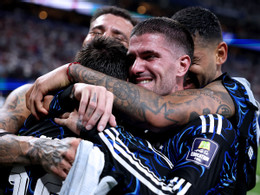
Scaloni’s coaching philosophy often blends rigorous tactical planning with an acute reliance on "gut feeling," especially in high-stakes encounters. This internal struggle is palpable as he navigates the choices for his starting eleven. A central point of contention revolves around the inclusion of midfielder Rodrigo De Paul. The article indicates a strong possibility of De Paul returning to the starting lineup, a decision that Scaloni himself candidly admitted caused him "great pain" when De Paul was previously benched for the semi-final. De Paul, a tenacious and tireless box-to-box midfielder, is a vital cog in Argentina’s engine room, providing defensive cover, linking play, and injecting relentless energy. His potential return would signal Scaloni’s preference for experience and proven combativeness in the midfield, especially against a technically proficient Spanish side. The alternative options, such as the dynamic Giuliano Simeone or the creative Giovani Lo Celso, offer different attributes, but De Paul’s combative spirit and understanding with Messi might prove irresistible. Simeone, for instance, has impressed with his pressing and pace, but the final stage demands a certain temperament and experience that De Paul embodies.
Further down the defensive line, another significant adjustment is anticipated. Gonzalo Montiel is tipped to start at right-back, replacing Nahuel Molina. Montiel, known for his defensive solidity and composure under pressure, offers a more robust option against Spain’s dangerous wide players. His inclusion could be a tactical move to fortify Argentina’s defense against the likes of Dani Olmo or Alex Baena. In the heart of the defense, Cristian "Cuti" Romero, despite showing signs of fatigue, is expected to retain his place alongside Lisandro Martinez, highlighting his indispensable role in anchoring Argentina’s backline. Goalkeeper Emiliano "Dibu" Martinez, a pivotal figure in their World Cup 2022 triumph, remains an undisputed starter.
Upfront, the formidable partnership of Lionel Messi and Julian Alvarez is set to lead Argentina’s attack. Messi, the undisputed maestro, continues to defy expectations with his unparalleled vision, dribbling, and goal-scoring prowess. This final carries profound weight for him, widely speculated to be his last appearance in a World Cup. His performance will be under immense scrutiny, not just for its immediate impact on the match but for its implications on his already legendary career. Scaloni’s previous comments about Messi’s ability to impact games, even when not starting, underscore the captain’s enduring influence, exemplified by moments where he has come off the bench to galvanize the team, as he reportedly did in a past fixture against England (likely a general reference to his impact, rather than a specific World Cup 2026 knockout match). The midfield trio of Enzo Fernandez, Leandro Paredes, and Alexis Mac Allister, all confirmed starters, will be tasked with controlling the tempo, winning possession, and supplying service to the front two, forming a robust and balanced central quartet alongside the likely returning De Paul.
Spain’s Steadfast Approach: Confidence in Consistency
In stark contrast to Argentina’s last-minute deliberations, Spain’s head coach Luis de la Fuente appears to have largely settled on his starting lineup. This stability stems from a remarkably consistent and dominant run through the knockout stages of the tournament. Spain’s path to the final saw them overcome formidable opponents, notably defeating Belgium in the quarter-finals and delivering an impressive 2-0 victory over France in the semi-finals. These performances showcased a blend of their traditional possession-based football with a newfound directness and defensive solidity that has made them incredibly difficult to break down.
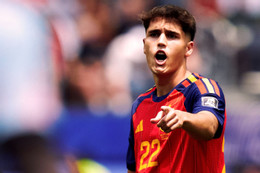
De la Fuente’s confidence in his established squad is evident in his projected lineup, which is expected to largely mirror the team that dispatched France. The Spanish tactical setup, typically a 4-2-3-1, emphasizes control in midfield, dynamic wing play, and a solid defensive foundation. Unai Simon will guard the goal, protected by a back four comprising Pedro Porro, the revelation Pau Cubarsi, Aymeric Laporte, and Marc Cucurella. The inclusion of Cubarsi, a young defender who has been hailed as "ahead of his time" for his maturity and ball-playing ability, speaks volumes about Spain’s faith in their burgeoning talent.
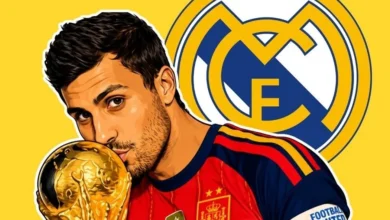
In the midfield, the formidable Rodri will anchor the pivot, providing crucial defensive screening and dictating play with his exceptional passing range. Alongside him, Fabian Ruiz is expected to get the nod over Pedri. This decision, if confirmed, highlights a preference for Ruiz’s physicality and goal-scoring threat from midfield, offering a slightly different profile than Pedri’s more intricate playmaking. This tactical choice might be aimed at countering Argentina’s robust midfield, bringing a more direct presence to the central areas.
The attacking trident behind the lone striker promises pace, creativity, and goal-scoring threat. Lamine Yamal, another prodigious talent who has lit up the tournament with his dazzling runs and fearless approach, will occupy the right wing. On the left, Alex Baena is favored to start, despite Nico Williams having trained without issue. Baena’s industriousness and ability to cut inside could provide a different dimension to Spain’s attack. Mikel Oyarzabal, a reliable and intelligent forward, is expected to lead the line as the central striker, tasked with holding up play and converting chances.
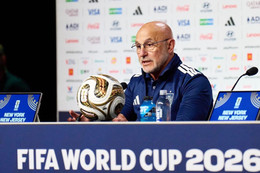
De la Fuente’s pre-match comments have also subtly set the tone for the final. Reports of him "warning the referee" against potential rule infringements by Argentina can be interpreted as a strategic move to emphasize fair play and ensure strict adherence to the laws of the game. This could be a pre-emptive measure to counter Argentina’s often physical and passionate style of play, ensuring the match is decided on skill rather than controversial decisions. Spain’s strong defensive record in the tournament, highlighted by their clean sheets, further underpins their confidence heading into this ultimate test.
Tactical Showdown: Argentina’s 4-4-2 vs. Spain’s 4-2-3-1
The final promises a fascinating tactical battle between two distinct footballing philosophies. Argentina’s likely 4-4-2 formation under Scaloni emphasizes defensive compactness, midfield industry, and swift counter-attacks spearheaded by Messi and Alvarez. The midfield quartet of De Paul, Mac Allister, Fernandez, and Paredes will be crucial in disrupting Spain’s rhythm, winning second balls, and transitioning quickly from defense to attack. Their ability to press high and then drop back into a disciplined shape will be key to stifling Spain’s intricate passing game. The full-backs, Montiel and Tagliafico, will need to balance their defensive duties with providing width on the flanks.
Spain’s 4-2-3-1, conversely, will aim to dominate possession and control the tempo of the game. Rodri’s central role as the deep-lying playmaker is paramount, orchestrating Spain’s build-up play and shielding the defense. The forward line of Yamal, Olmo, and Baena, supported by Fabian Ruiz’s runs from deep, will seek to exploit spaces in Argentina’s defense with their technical prowess, quick exchanges, and individual brilliance. The battle in midfield, specifically between Argentina’s energetic ball-winners and Spain’s technically gifted passers, will likely dictate the flow and outcome of the match. Spain’s defensive line, particularly the young Cubarsi alongside the experienced Laporte, will face their sternest test yet against Messi’s elusive movements and Alvarez’s predatory instincts.
Road to the Final: A Brief Retrospective
Both nations endured arduous journeys to reach this pinnacle of international football. Argentina, as the reigning champions, carried the immense pressure of defending their title. They navigated a challenging group stage, showcasing resilience and tactical adaptability. Their knockout stage performances, while not always flawless, demonstrated their championship mentality, with key players stepping up in crucial moments. Messi, as expected, was often the catalyst, producing moments of magic that turned the tide in tight encounters. The team’s strong collective spirit and defensive organization, often overlooked amidst Messi’s brilliance, were fundamental to their progression.
Spain, on the other hand, embarked on a campaign marked by the exciting emergence of a new generation. They topped their group with impressive displays, characterized by their fluid passing and incisive attacking play. In the knockout rounds, they demonstrated a maturity beyond their years, systematically dismantling opponents with a blend of youthful exuberance and tactical discipline. Their 2-0 victory over a formidable French side in the semi-finals, in particular, was a statement performance, highlighting their defensive solidity and clinical finishing. The seamless integration of talents like Yamal and Cubarsi into a seasoned squad has been a defining feature of their run.
Legacy on the Line: A Defining Moment
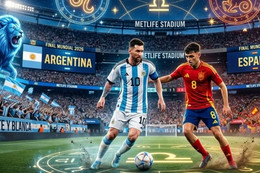
For Lionel Messi, this World Cup final carries an almost mythical weight. At this stage of his illustrious career, potentially his last World Cup match, a victory would further cement his status as arguably the greatest footballer of all time, adding another jewel to his already glittering crown and providing a fairytale ending to his international career. The narrative of the "last dance" adds an emotional layer to the contest, intensifying the global anticipation for his performance. Conversely, a defeat, while not diminishing his overall legacy, would deny him a final, triumphant farewell from the grandest stage.
For Spain, this final represents an opportunity for renewed glory and the validation of a new era. After a period of transition following their golden generation, a World Cup triumph would signify their re-establishment as a dominant force in international football. It would also be a monumental achievement for Luis de la Fuente, solidifying his tenure and rewarding his faith in a blend of experienced stalwarts and breathtaking young talents. The likes of Lamine Yamal and Pau Cubarsi, who have already captivated audiences with their performances, would see their burgeoning careers propelled to stratospheric heights with a World Cup winner’s medal.
Expert Predictions and Public Sentiment
The footballing world is buzzing with predictions, which, according to various media reports, are remarkably divided. While some "prophecies" lean towards a dramatic victory for Messi and Argentina, others suggest a shocking outcome where a significant majority of experts (reportedly over 80%) predict Spain to triumph. This divergence in opinion underscores the finely balanced nature of the contest, highlighting the strengths and vulnerabilities of both teams. The anticipation for a "world-class feast" is palpable, as fans globally prepare for what promises to be an unforgettable encounter. The clash of styles, the individual brilliance on display, and the immense stakes involved guarantee a spectacle worthy of a World Cup final.

As the countdown to kick-off intensifies, both coaches face immense pressure to make the right calls. Scaloni’s tactical tightrope walk and De la Fuente’s quiet conviction set the stage for a final that will not only determine the champions of the world but also etch new chapters into the annals of footballing history. The world watches with bated breath to see whether Argentina can defend their crown or if Spain’s new generation will rise to claim global supremacy.