Thủ tướng tiếp Chủ tịch tập đoàn đang cung cấp 230 máy bay cho Việt Nam, đề nghị điều đặc biệt tại 2 siêu Cảng hàng không Long Thành và Gia Bình

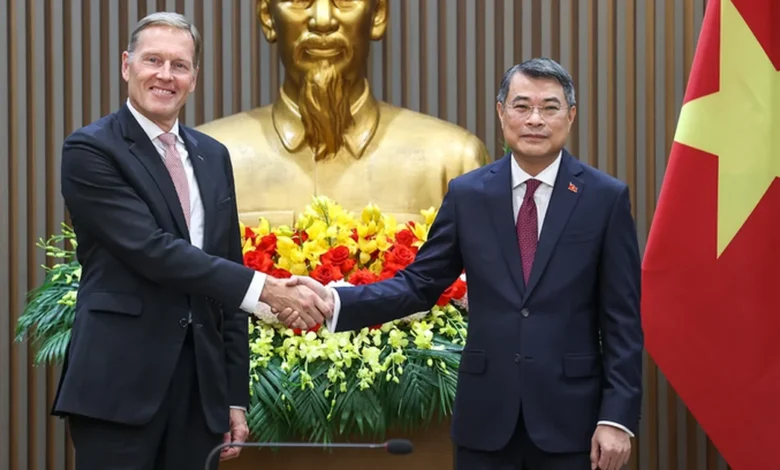
In a high-level meeting held on November 4, Prime Minister Pham Minh Chinh welcomed Wouter van Wersch, Executive Vice President of Airbus, to celebrate a significant milestone: 40 years of formal engagement between the European aerospace giant and Vietnam. The discussion centered on transitioning from a traditional buyer-seller relationship toward a comprehensive strategic partnership that encompasses industrial manufacturing, technology transfer, and the development of a robust aviation ecosystem. This dialogue occurs at a pivotal moment for Vietnam, as the nation prepares to scale its infrastructure capabilities through major projects like the Long Thanh and Gia Binh International Airports.
A Legacy of Four Decades
The relationship between Vietnam and Airbus dates back to the mid-1980s, a period when Vietnam was just beginning to integrate into the global aviation market. Over the past 40 years, Airbus has evolved from a supplier of aircraft into a foundational pillar of Vietnam’s commercial aviation sector. The partnership has been characterized by steady growth, with Airbus providing the vast majority of the fleets for major Vietnamese carriers.
This cooperation was further solidified following the official state visit to France by General Secretary and President To Lam on September 10-11, 2026. That visit acted as a catalyst, accelerating bilateral ties and creating a roadmap for deepened economic integration. The current discussions in Hanoi serve as the operational follow-up to the high-level agreements reached during that state visit, aiming to translate political consensus into tangible industrial outcomes.
Strategic Infrastructure and Industrial Expansion
The Vietnamese government, under the leadership of Prime Minister Chinh, has prioritized the modernization of transport infrastructure as a primary driver for economic growth. With a population exceeding 100 million and a rapidly expanding middle class, the demand for both domestic and international air travel is projected to grow exponentially.
Prime Minister Chinh highlighted that the construction of the Long Thanh International Airport—a massive hub designed to handle tens of millions of passengers annually—and the development of the Gia Binh airport represent a new era for the country. He explicitly invited Airbus to explore the establishment of maintenance, repair, and overhaul (MRO) centers at these locations. Such an investment would not only support the operational efficiency of the airports but also position Vietnam as a regional hub for aircraft maintenance, a sector currently dominated by other markets in the Asia-Pacific region.
Data-Driven Growth: The Airbus Footprint in Vietnam
The scale of the current cooperation is significant. Airbus currently has 230 aircraft in active service with Vietnamese airlines. Looking forward, the company has projected the delivery of an additional 220 aircraft to the country in the coming years. This backlog reflects the sustained optimism of aviation investors in the Vietnamese market.
Beyond commercial aviation, the collaboration extends into space and satellite technology. Airbus has played an instrumental role in providing observation satellite systems that are critical for national security, environmental monitoring, and disaster management. This dual-focus—aviation and aerospace—positions the company as a uniquely qualified partner for Vietnam’s long-term modernization goals.
Official Responses and Strategic Realignment
Wouter van Wersch expressed his gratitude for the warm reception and noted that Vietnam remains one of the top priorities for Airbus globally. He acknowledged that the country’s proactive investment in aviation infrastructure provides a "compelling business case" for deeper integration.
"Vietnam is not just a market; it is a strategic partner," van Wersch stated during the meeting. He emphasized that Airbus is prepared to move beyond simply selling aircraft. The company is actively looking at ways to enhance the capabilities of local Vietnamese firms, improve safety monitoring, and support the digital transformation of the aviation industry. He specifically mentioned the potential for integrating artificial intelligence (AI) into flight operations and maintenance systems, which would represent a significant technological leap for the local aviation sector.
Broader Economic Implications
The call for Airbus to increase its footprint in Vietnam comes in the context of the EU-Vietnam Free Trade Agreement (EVFTA) and the ongoing efforts to ratify the EU-Vietnam Investment Protection Agreement (EVIPA). Prime Minister Chinh emphasized that the Vietnamese government is committed to refining its regulatory environment to ensure it is as investor-friendly as possible for European firms.
The implications of this closer cooperation are three-fold:
- Supply Chain Integration: By encouraging Airbus to engage in local manufacturing or localized assembly components, Vietnam hopes to climb the value chain, moving from a consumer of aviation technology to a participant in the global aerospace supply chain.
- Human Capital Development: A core requirement of the partnership is the transfer of knowledge. Airbus has committed to supporting the training of high-quality human resources, including pilots, technicians, and aerospace engineers, which will foster a sustainable workforce capable of managing sophisticated aviation technologies.
- Logistics and Economic Zones: The development of the aviation sector is intrinsically linked to the government’s plan for specialized economic zones. By clustering logistics services around the new international airports, Vietnam aims to lower costs for the import and export of high-value goods, thereby increasing the competitiveness of the national economy.
Future Outlook: A New Phase of Partnership
As the 40-year anniversary celebration unfolds, both parties have signaled that the next four decades will look very different from the last. The focus is shifting from "fleet acquisition" to "ecosystem development."
Prime Minister Chinh specifically urged Airbus to collaborate closely with the Ministry of Transport and other Vietnamese agencies to streamline the implementation of aviation-space projects. He also called on the French aerospace giant to act as a bridge for further European investment, leveraging the EVIPA to secure more robust trade protections and investment guarantees.
In response, Airbus has reaffirmed its commitment to long-term cooperation. The focus will be on transferring advanced technologies, developing high-quality training programs, and ensuring that the expansion of Vietnam’s aviation sector remains safe, efficient, and aligned with global environmental standards.
This partnership, deeply rooted in the broader strategic alliance between Vietnam and France, is set to become a benchmark for how emerging economies can work with global industry leaders to transform national infrastructure. As Vietnam accelerates its efforts to become a major aviation hub in Southeast Asia, the synergy with Airbus is expected to play a decisive role in achieving those national ambitions.
The upcoming period will be critical, as the parties move to formalize specific investment projects at the Long Thanh and Gia Binh hubs, marking a tangible transition from high-level dialogue to large-scale industrial execution.