Ho Chi Minh City Tax Department Surpasses 77% of its 1 Trillion Dong Budget Target as Branch 12 Achieves Full-Year Plan Two Months Ahead of Schedule


Ho Chi Minh City’s fiscal administration has achieved a milestone in its ongoing economic calendar as total state budget collections reached 77.6% of the ambitious 1 trillion dong target set for the fiscal year. Highlighting this broader financial momentum, Tax Branch 12 officially announced that it has already fulfilled its 2026 statutory budget mandate, crossing the finish line a full two months ahead of the calendar year’s conclusion.
The developments were formally unveiled during a comprehensive review conference held at the end of the first week of November 2026. The meeting brought together key leadership figures within Ho Chi Minh City’s taxation apparatus to evaluate performance metrics across the first ten months of the year and to strategize for the critical final quarter. While city-wide figures demonstrate a robust recovery and strong compliance environments, the early success achieved by localized units like Tax Branch 12 sets a high benchmark for municipal revenue collection.
Ten-Month Performance Review Highlights Exceptional Regional Gains
During the conference summarizing the January-through-October period, Mr. Tran Minh Nhan, Head of Tax Branch 12, delivered a detailed breakdown of the unit’s financial accomplishments. According to the data presented, Tax Branch 12 accumulated over 7,800 billion dong in total state budget revenue during the first ten months of 2026. This figure translates to 102.2% of the statutory budget mandated by the central government for the entire year, and 84.5% of the more aggressive internal target assigned by municipal authorities.
A deeper analysis of these earnings reveals significant strength within the local enterprise sector. Collections from the business community within Tax Branch 12’s jurisdiction crossed the 4,500 billion dong threshold, representing 122% of the yearly statutory budget and 100.8% of the targeted administrative goals. Notably, revenue generated from land-use rights registered the highest surge among all categories, recording a dramatic 145.5% increase compared to the same period in 2025.
Mr. Nhan attributed this stellar performance to a multifaceted operational strategy that emphasized aggressive monitoring, enhanced compliance checks, and rigorous arrears recovery. Throughout the ten-month timeframe, the branch intensified its oversight of corporate tax declarations, payment timeliness, and the processing of newly generated tax liabilities. Field inspections conducted at corporate headquarters served as an additional catalyst for revenue generation. Tax Branch 12 completed 1,189 business audits during this period, resulting in total retrofitted tax assessments and penalties amounting to 312.8 billion dong. Of that total, 268.044 billion dong—or roughly 86%—has already been successfully remitted to the state treasury.
Proactive Measures Target E-Commerce and Household Business Compliance
Beyond corporate audits, Tax Branch 12 expanded its supervisory scope to address emerging commercial trends, particularly the rapidly growing digital economy. The branch implemented systematic reviews to identify and penalize irregularities within e-commerce transactions, addressing discrepancies in input-output invoices and rigorously cross-referencing input purchases against output sales data.
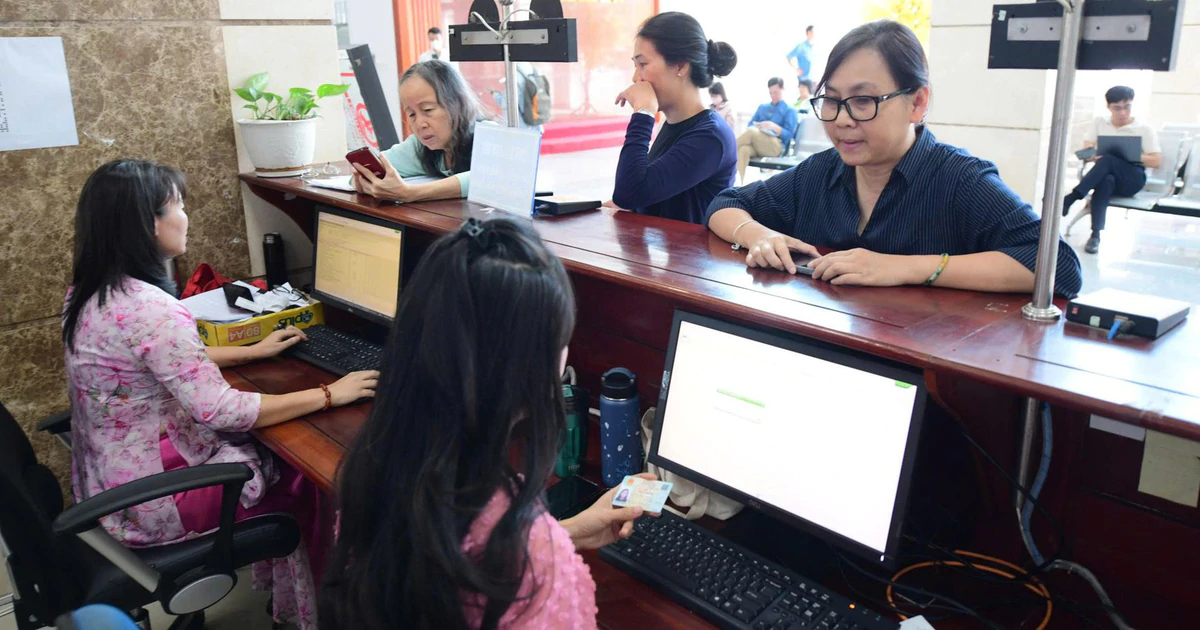
For individual household businesses, the unit undertook a comprehensive overhaul of its database management systems. Officials cross-verified business registration information against tax management profiles and actual operational statuses. This granular review helped identify entities that had registered for tax codes but failed to file declarations, while simultaneously verifying the status of businesses that had temporarily suspended operations, relocated, or shifted their commercial scope.
Special attention was directed toward high-risk sectors characterized by historically low declared revenues, unusual fluctuations, or commercial scales disproportionate to their reported financial turnover. Commercial segments with high cash-flow potential—such as food and beverage services, retail trade, construction, transportation, and digital commerce—faced heightened regulatory oversight. By focusing enforcement resources on these vulnerable points, the branch successfully mitigated tax leakage and secured a reliable stream of supplementary revenue.
City-Wide Context: Reaching 77.6% of the 1 Trillion Dong Benchmark
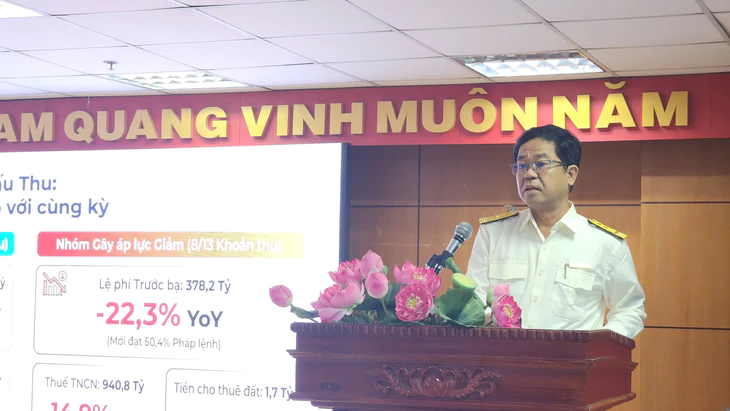
While Tax Branch 12’s early completion of its statutory mandate provides a significant morale boost, municipal leaders maintain a vigilant focus on the broader provincial ledger. Delivering a keynote address at the conference, Mr. Giang Van Hien, Deputy Head of the Ho Chi Minh City Tax Department, outlined the overarching financial picture for the entire metropolis.
Taking into account the aggregate data through October, Ho Chi Minh City’s cumulative state budget collection reached 620,810 billion dong. This performance equates to 99% of the statutory budget allocated by the central government and represents a robust 21.7% increase year-over-year. Measured against the ambitious 800,000 billion dong benchmark assigned to the municipal tax sector as part of the broader 1 trillion dong regional economic objective, current collections represent 77.6% of completion.
Despite the positive trajectory, Mr. Hien emphasized that the workload remaining for the final two months of the year remains substantial. To fully realize the 800,000 billion dong objective, the municipal tax apparatus must collect approximately 179,000 billion dong across November and December, averaging nearly 90,000 billion dong per month.
"For Tax Branch 12, the internal striving target associated with the broader 1 trillion dong regional goal stands at 9,259 billion dong," Mr. Hien noted. "Having already collected 7,821 billion dong over the first ten months, the unit must secure an additional 1,438 billion dong throughout November and December, averaging 719 billion dong monthly. While this is an exceptionally demanding assignment, the structural foundation and historical performance of the branch indicate that it is entirely achievable."
To support this final push, Mr. Hien recommended that Tax Branch 12 thoroughly evaluate all viable revenue sources with legal backing to elevate its striving targets, aiming to reach or exceed the symbolic milestone of 10,000 billion dong in local contributions.
Broader Implications and Strategic Outlook for Year-End Fiscal Operations
The ability of localized tax units like Branch 12 to outperform expectations underscores a broader trend of administrative modernization and tightening compliance protocols across Vietnam’s economic hubs. As Ho Chi Minh City navigates the final stretch of the fiscal calendar, the emphasis has shifted from broad-based collection to targeted enforcement, data integration, and the reduction of administrative bottlenecks.
The implications of these collection figures extend beyond mere statistical success. Consistent budgetary inflows provide the municipal government with the necessary fiscal space to maintain vital public infrastructure investments, support ongoing urban development projects, and honor social welfare commitments without resorting to excessive deficit financing.
Furthermore, the aggressive management of e-commerce transactions and household business revenues signals a structural shift in how emerging economic sectors are integrated into the formal tax architecture. By closing loopholes associated with digital marketplaces and unverified retail activities, tax authorities are establishing a more level playing field for traditional and corporate enterprises alike.
As tax officials across
Ho Chi Minh City enter the final quarter of 2026, the coordinated focus on data analytics, localized accountability, and rigorous auditing will remain the cornerstone of their strategy. With foundational units already meeting their primary statutory obligations ahead of schedule, the municipal tax sector remains well-positioned to meet its overarching annual commitments, reinforcing Ho Chi Minh City’s status as the leading economic engine of the nation.