Hanoi College of Commerce and Tourism Honors 19-Year-Old Student in Deeply Emotional Organ Donation Ceremony


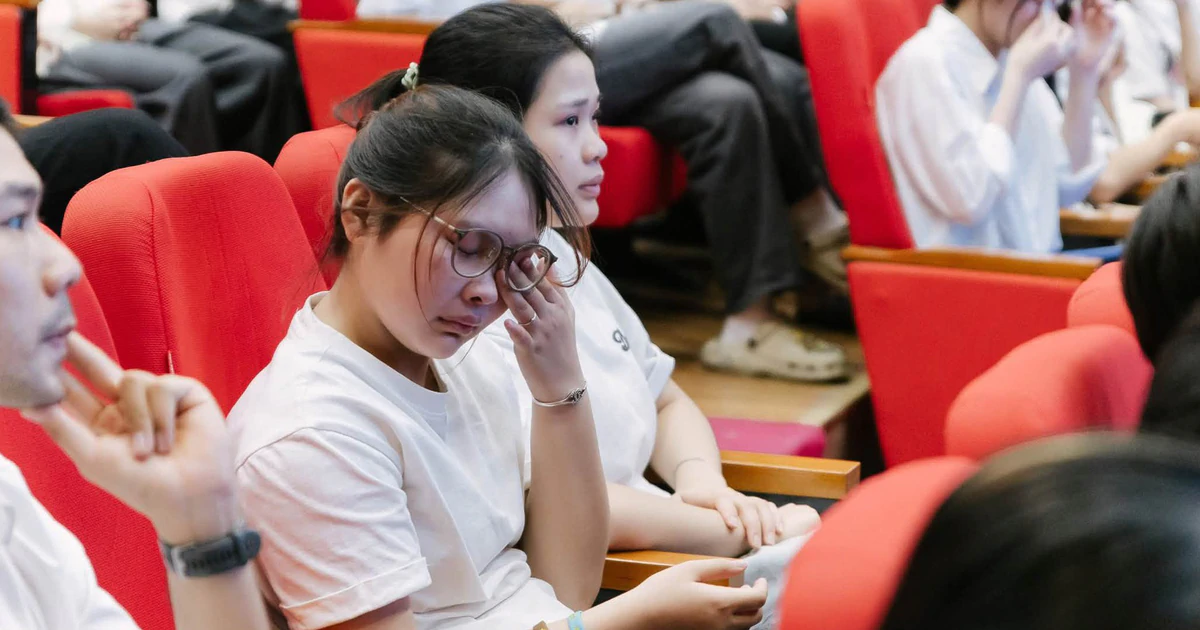
The auditorium at the Hanoi College of Commerce and Tourism fell into a profound, suffocating silence on September 10, broken only by the muffled sobs of hundreds of students and faculty members. They had gathered not for a routine academic assembly or a celebratory milestone, but to pay a solemn final tribute to one of their own: N.H.N., a 19-year-old student whose bright future was cut short by a tragic traffic accident.
In a moment of unimaginable grief, N.’s family made a decision that would transcend their personal tragedy. Faced with the irreversible loss of their only son, they chose to donate his organs, offering the ultimate gift of life to critically ill patients who were running out of time. This profound act of altruism not only saved multiple lives but also transformed a family’s darkest hour into a beacon of hope, sparking an outpouring of grief, respect, and admiration across the academic community and beyond.
The commemorative event, jointly organized by the Hanoi College of Commerce and Tourism (HCCT) and Viet Duc Friendship Hospital, served as a formal platform to honor the extraordinary courage of young N. and his grieving family. By recognizing a life cut short at the threshold of adulthood, the ceremony highlighted the deep humanitarian impact of organ donation and immortalized a young man whose final act embodied the highest ideals of selflessness and community.
A Tragedy That Unfolded Too Soon
At just 19 years old, N.H.N. was standing at the threshold of his adult life. As an enrolled student at the Hanoi College of Commerce and Tourism, located in the bustling Tay Ho district of Hanoi, he was navigating the foundational years of his higher education with aspirations of building a meaningful career in commerce and tourism. Friends and instructors remember him as a diligent learner, a reliable classmate, and a young man with a gentle spirit who was well-liked by everyone around him.
However, the trajectory of his youth was abruptly shattered when he was involved in a severe traffic accident on the streets of Hanoi. The impact of the collision resulted in critical, life-threatening injuries. Emergency responders rushed N. to the Viet Duc Friendship Hospital—one of Vietnam’s premier surgical and trauma centers—where a dedicated team of specialists worked tirelessly around the clock to reverse the damage and save his life.
Despite the exhaustive efforts of the medical staff, the trauma to N.’s brain and body proved too catastrophic to overcome. Medical evaluations eventually confirmed brain death, plunging his family into an abyss of sorrow. In traditional Vietnamese culture, the passing of an only child, particularly under such sudden and violent circumstances, represents a devastating psychological blow that is nearly impossible to bear.
Turning Despair Into a Lifeline
When the reality of N.’s passing set in, his parents faced the most difficult decision any family could confront. Rather than retreating entirely into their grief, they engaged in discussions with the transplant coordinators at Viet Duc Friendship Hospital and arrived at a monumental conclusion. They consented to donate N.’s viable organs, including his kidneys, liver, and corneas, to patients on waiting lists whose survival depended on the generosity of a donor.
For N.’s father, speaking at the memorial tribute, the decision was rooted in a profound desire to find meaning within an incomprehensible loss. Addressing the hundreds of students in attendance, he shared that while the physical absence of his son left an unfillable void in their home, the knowledge that parts of N. continued to live on in other human beings offered a fragile yet enduring source of comfort.
"The pain of losing our only son is a burden that can never truly be lifted," N.’s father said, his voice trembling with emotion as he addressed the auditorium. "Yet, our family found solace in the thought that his departure need not be entirely an end. By allowing his organs to give life to others, we believe that a part of him remains with us in this world, walking among us, and offering a second chance to families who might otherwise have faced the same grief we now endure."
This selfless choice allowed multiple recipients—individuals suffering from end-stage organ failure—to receive life-saving transplants. While medical confidentiality prevents the public disclosure of the specific recipients’ identities, the medical team at Viet Duc Friendship Hospital confirmed that N.’s tissues and organs were successfully integrated, immediately altering the prognoses of several critically ill patients and allowing them to return to their families.
An Unforgettable Campus Memorial
The joint tribute ceremony organized by HCCT and Viet Duc Friendship Hospital on September 10 was designed to reflect the gravity of the family’s decision while celebrating N.’s enduring legacy. The atmosphere inside the main hall was heavy with sorrow yet illuminated by a collective sense of profound reverence.
The event was attended by hospital representatives, institutional leaders, and nearly the entire student body of the college. Among the key dignitaries present was Dr. Trinh Thi Thu Ha, Secretary of the Party Committee and Principal of the Hanoi College of Commerce and Tourism, who played a central role in guiding the campus community through the emotional landscape of the day.
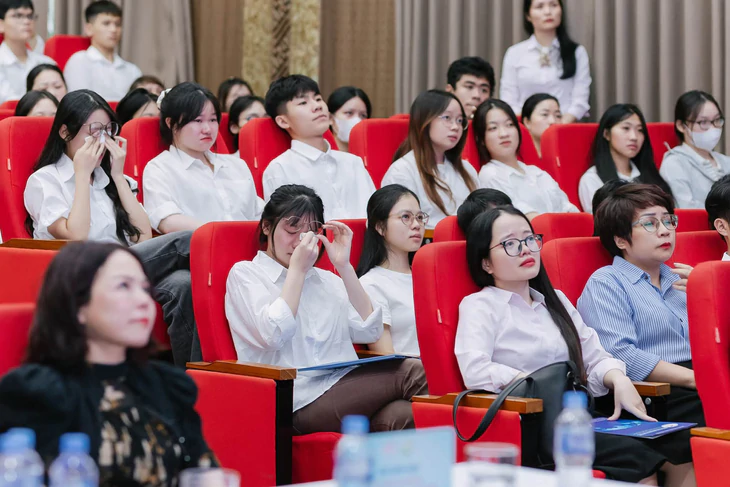
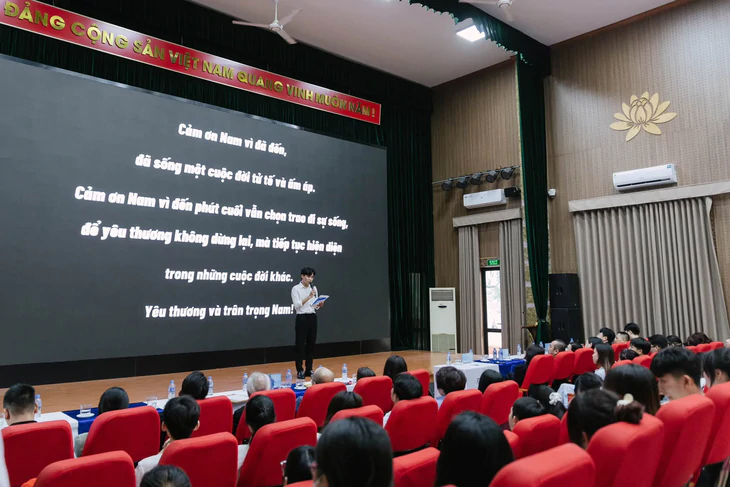
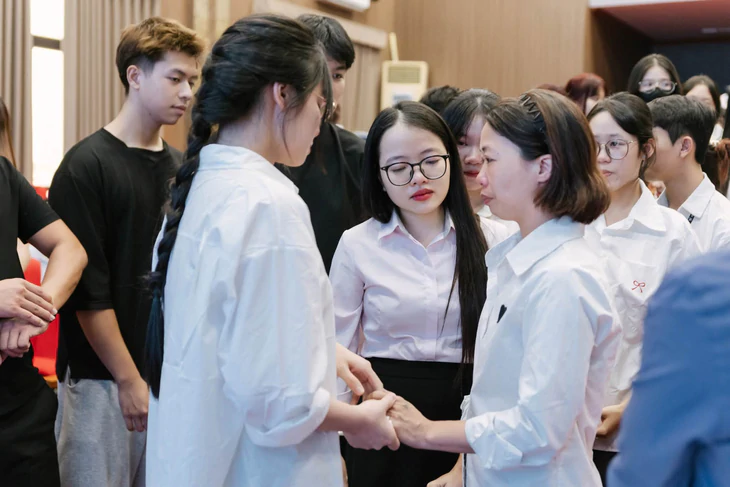
The proceedings began with the screening of a documentary film detailing N.’s final days, the emergency interventions attempted by the hospital staff, and the quiet, courageous dialogue between the medical coordinators and the grieving family that preceded the organ harvest. As the documentary flickered across the screen, depicting the fragile intersection of death and renewed life, many students and faculty members openly wept. The collective grief was palpable, transforming the large auditorium into a unified space of shared mourning and reflection.
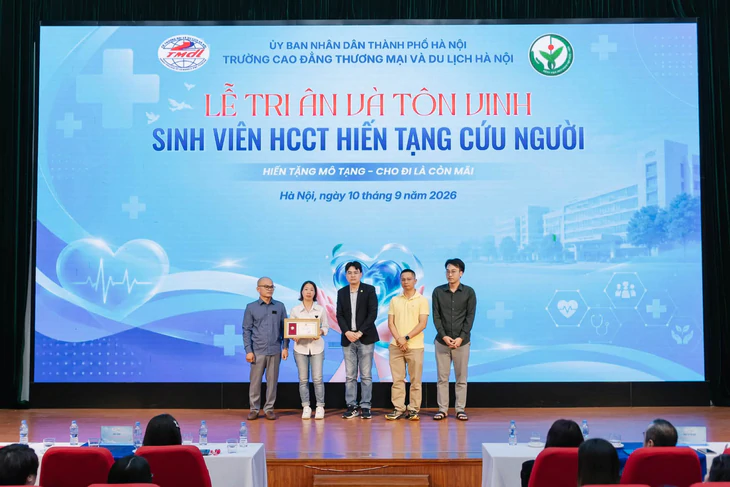
Following the film screening, institutional and health authorities formally recognized the extraordinary humanitarian contribution made by the student and his family. In a deeply symbolic moment, representatives from Viet Duc Friendship Hospital, alongside Principal Trinh Thi Thu Ha, presented the prestigious Memorial Medal for the Cause of People’s Health—awarded posthumously by the Ministry of Health—to N.’s grieving father. Additionally, the college presented a special Certificate of Merit to the family, honoring N. not only as an exemplary student but as a hero of the human spirit.
Faculty and Student Reflections
The emotional resonance of the ceremony extended far beyond the formal presentations, touching the core of the academic community’s identity. N.’s academic advisor took the podium to share personal recollections of the young student, describing him as a quiet achiever who consistently demonstrated kindness and integrity.
"N. will forever remain an esteemed member of our academic family," his advisor remarked, struggling to maintain composure. "His passing leaves an enormous gap in our classrooms and hearts. However, the decision made by him and his family redefines how we understand love and legacy. Through this act, the love we harbored for N. is perpetuated in a different form. Patients who received his organs now possess the opportunity to heal, to return to their daily routines, and to embrace their loved ones once more. Although his life was tragically brief, its impact has been exponentially magnified."
For the student body, many of whom were seeing the realities of organ donation articulated through such a close peer for the first time, the event served as a profound civic and moral lesson. Conversations in the hallways following the ceremony centered on the fragility of life and the immense power of altruism. Student representatives noted that N. had taught them a final, unforgettable lesson—one that transcended any textbook curriculum offered by the college.
Broader Implications and the State of Organ Donation in Vietnam
Beyond the emotional boundaries of the campus memorial, N.’s story highlights a critical and evolving narrative within Vietnam’s public health sector: the ongoing cultural and logistical evolution of organ donation.
Historically, organ donation rates in Vietnam have lagged behind those of many regional and global counterparts. Deeply ingrained cultural beliefs regarding bodily integrity after death, coupled with a general lack of public awareness and bureaucratic hurdles, have traditionally made families hesitant to consent to post-mortem organ recovery, even in cases of confirmed brain death. However, high-profile cases involving young donors like N. have begun to shift public perception, serving as powerful catalysts for national dialogue.
Medical ethicists and healthcare advocates emphasize that public storytelling—specifically highlighting the tangible impact of donation on recipients—is the most effective tool in overcoming traditional reluctance. When families like N.’s step forward to share their grief and their rationale publicly, they humanize a medical procedure that is frequently misunderstood or viewed with apprehension.
Viet Duc Friendship Hospital, where N. received his final care, stands at the vanguard of transplant medicine in Vietnam. As one of the nation’s leading facilities for organ retrieval and transplantation, the hospital has witnessed a gradual increase in voluntary donor registrations and family-consented post-mortem donations in recent years. Institutional partnerships with universities, corporate entities, and civil society organizations—such as the collaborative memorial held at HCCT—are increasingly recognized as vital strategies for normalizing organ donation as a noble, life-affirming civic duty.
A Legacy That Endures
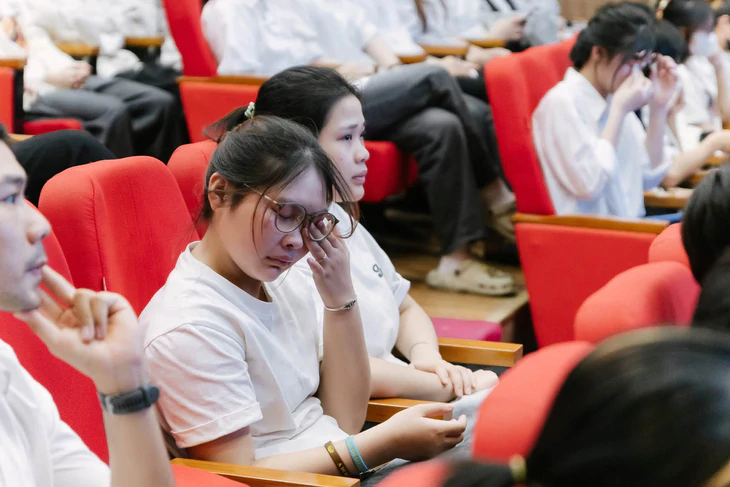
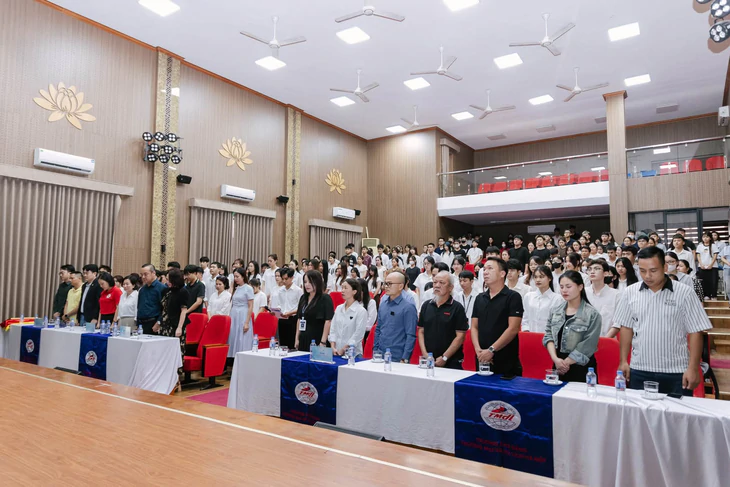
As the memorial service drew to a close, attendees observed a solemn minute of silence, bowing their heads in collective remembrance of a young man who entered the world quietly and departed it leaving an indelible mark on society. The auditorium lights slowly rose, but the mood remained reflective and subdued.
The story of N.H.N. is ultimately one of profound contrast: the abrupt, senseless devastation of a traffic accident set against the deliberate, life-giving generosity of a family acting in the depths of despair. It reinforces the ancient philosophical truth that to give of oneself—even at the end—is to achieve a form of permanence.
In honoring N., the Hanoi College of Commerce and Tourism and Viet Duc Friendship Hospital did more than mark the passing of a 19-year-old student. They validated a philosophy of compassion that reaches across the divide between life and death, reminding the broader public that in the architecture of human existence, the truest measure of a life is not found in the number of years lived, but in the depth of the light it leaves behind for others.