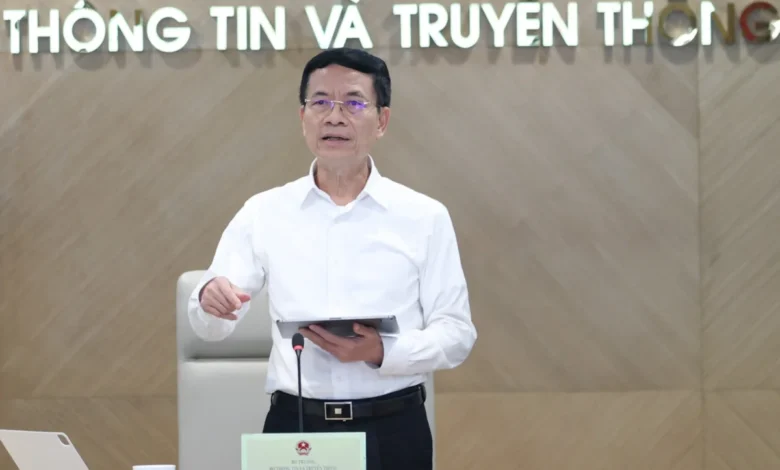
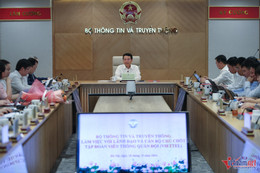
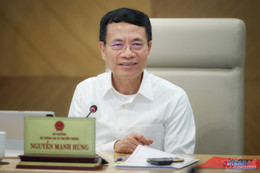
On the afternoon of October 18, Minister of Information and Communications Nguyen Manh Hung presided over a strategic working session with the leadership and key personnel of the Military Industry-Telecoms Group (Viettel). This meeting, attended by Deputy Ministers Phan Tam, Pham Duc Long, and Bui Hoang Phuong, as well as representatives from various ministerial departments, served as a critical milestone for Vietnam’s leading telecommunications enterprise. The session was not merely a routine progress review but a high-level directive to align Viettel’s trajectory with the national mandate for digital transformation and technological sovereignty.
The Strategic Imperative of Digital Transformation
Minister Nguyen Manh Hung opened the discussion by emphasizing the indispensable role of the state-owned telecommunications giants in realizing Vietnam’s national development goals. He underscored that digital transformation is the primary engine for national growth. The Ministry of Information and Communications (MIC) has elevated digital infrastructure to a strategic tier, placing it on par with physical infrastructure such as transportation and energy grids.
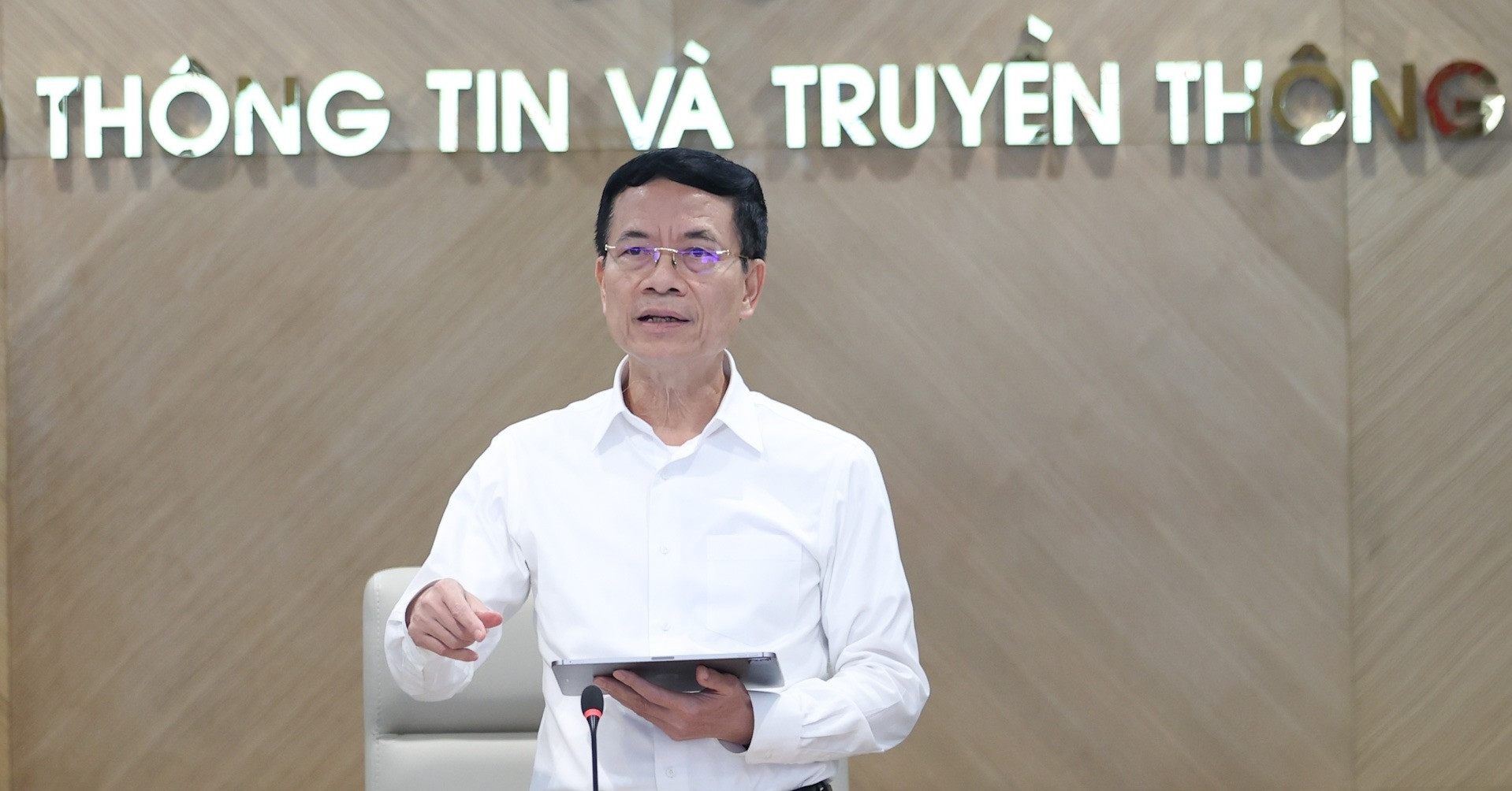
The Minister’s message to the leaders of VNPT, MobiFone, and Viettel—with whom he has held successive meetings since mid-September—was clear: without the robust development of these three core enterprises, the telecommunications sector cannot thrive, and the broader national goal of achieving two centuries of development progress within a single generation will remain elusive.
For Viettel, the context is particularly significant. Having completed three distinct decade-long cycles focused on construction, telecommunications, and industrial development, the group is now entering a fourth, critical phase. Minister Hung urged the current generation of leaders to shed the "follower" mentality. The directive is to transition from being a market participant to a national champion capable of tackling complex, large-scale challenges that define the nation’s technological future.
Historical Context and the New Growth Trajectory
Since its inception, Viettel has been the vanguard of Vietnam’s modernization. Its expansion into international markets and its role in universalizing telecommunications services have been well-documented. However, the current global landscape requires a paradigm shift. Drawing on insights from his recent working visit to Finland—a nation that successfully transitioned from a resource-dependent economy to a global technology powerhouse—Minister Hung challenged Viettel to rethink its core operating philosophy.
The Minister proposed that Viettel must actively seek out "difficult problems" and solve them through global cooperation. This involves not only domestic innovation but also leveraging partnerships with advanced nations to leapfrog existing technological barriers. By aligning its objectives with national interests, Viettel is expected to aim for a spot among the top 30 to 40 global digital technology enterprises.
Detailed Directives for the Next Decade
To reach these ambitious goals, the Ministry outlined specific requirements for the group’s internal restructuring and investment priorities:
- R&D and Infrastructure Investment: Viettel is directed to significantly increase its investment ratio in digital infrastructure and digital research. The Ministry has mandated that 50% of the staff in technology-focused units and 30% in non-technology units must be dedicated to digital transformation, science, and innovation.
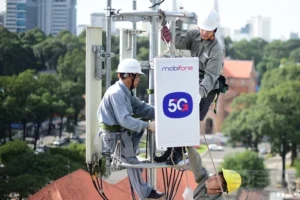
- Technological Sovereignty: A key pillar of the new strategy is the mastery of critical technologies, including 5G, semiconductor chips, AI, and Cloud computing. Minister Hung explicitly stated that Viettel must aim for its own manufactured 5G equipment to capture at least 20% of the domestic market share. Failure to set high, audacious targets, he warned, would lead to corporate stagnation.
- Revenue Diversification: The group must aggressively reduce its reliance on traditional telecommunications services, targeting a revenue contribution from these services of less than 30%. This shift is essential to ensure long-term, sustainable growth in a digital-first economy.
- Operational Efficiency: The Ministry urged a overhaul of internal governance, including decentralized decision-making, performance-based evaluation systems, and the application of AI in all internal business processes. This is designed to liberate human resources and foster a culture of agility.
Addressing Operational Bottlenecks
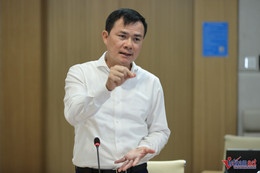
During the session, Chairman and General Director of Viettel, Tao Duc Thang, reported on the group’s performance over the first nine months of 2024 and outlined the challenges facing the organization. These include regulatory hurdles in the auctioning of radio frequency rights for the 700MHz band, which is crucial for extending coverage to remote and rural areas.
Furthermore, Viettel highlighted difficulties in deploying new Base Transceiver Stations (BTS) due to local community opposition and bureaucratic hurdles in submarine fiber optic cable investments. In response, Minister Hung pledged the Ministry’s full support. He confirmed that the MIC would work closely with relevant authorities, including the Ministry of Public Security, to streamline administrative procedures and address local concerns regarding infrastructure deployment. The Ministry is pushing to ensure the auction of the 700MHz frequency band is completed by January 2025.
The Role of Leadership and Governance
Minister Hung highlighted that leadership within Viettel must mirror the national approach to the "Project 06" digital transformation initiative, which has been directly championed by high-ranking state officials. He called for a robust reward and recognition system for those individuals within the group who lead the charge in digital transformation.
Regarding the question of whether the group should maintain a unified strategy or allow individual units to pursue their own paths, the Minister provided a nuanced perspective. He noted that while a large corporation must have a shared vision, individual units must retain the agility to innovate. "Technology must serve the human element," he remarked, emphasizing that all technological advancements—whether in AI or semiconductor manufacturing—must be measured by their contribution to national development and societal progress.

Broader Implications for Vietnam’s Digital Economy
The directives issued to Viettel reflect a broader, more aggressive strategy by the Vietnamese government to move up the global value chain. By focusing on semiconductor research, AI-driven healthcare, and the national expansion of 5G, the state is effectively positioning Viettel as the engine of the country’s "Digital Vietnam" vision.
The implications for the domestic market are profound. As Viettel accelerates the rollout of 5G and deepens its integration into the global semiconductor supply chain, other players in the industry are likely to face increased pressure to modernize. This competitive dynamic is exactly what the Ministry intends to foster to ensure that Vietnam does not fall into the middle-income trap.
Future Outlook: A Call to Action
The session concluded on a note of high expectation. The Ministry of Information and Communications reaffirmed its commitment to viewing the industry’s enterprises as partners. "The Ministry always considers the enterprises in the sector as family," Minister Hung stated. "The success of these enterprises is our success."
As Viettel moves into this next phase, the focus will be on the execution of these high-level mandates. The shift from a telecommunications-centric business to a comprehensive digital technology group is not merely a branding exercise; it is a fundamental transformation in the group’s DNA. With the support of the Ministry and a clear strategic roadmap, the stage is set for Viettel to solidify its position as the primary architect of Vietnam’s digital future, bridging the gap between national ambition and global technological leadership.
In the coming months, the industry will be watching closely as Viettel translates these directives into actionable projects—particularly the construction of semiconductor production facilities and the scaling of AI applications in public services. These initiatives will serve as the litmus test for the group’s ability to pivot toward a new, high-growth, and innovation-driven era.
Related posts: