Canada Eyes Highest Level of Bilateral Ties as General Secretary and President To Lam Undertakes Historic Visit

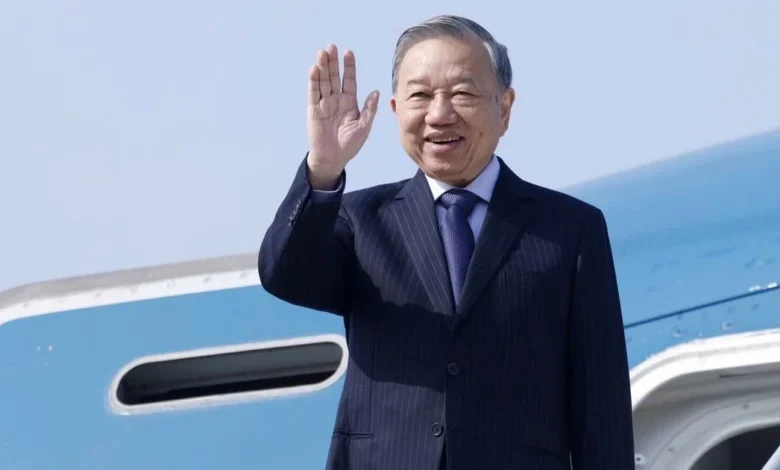
Canada is preparing to roll out the red carpet for a diplomatic milestone of historic proportions as General Secretary and President To Lam embarks on an official visit to the North American nation in 2026. In the lead-up to this landmark event, Canadian Ambassador to Vietnam Jim Nickel shared insights into Ottawa’s strategic ambitions, highlighting a mutual desire to elevate bilateral relations to their highest possible echelon.
This upcoming state visit marks the first time a top Vietnamese leader has traveled to Canada since the establishment of diplomatic ties between the two countries over fifty years ago. Ambassador Nickel emphasized the weight of the occasion, noting that Ottawa intends to leverage this high-level engagement to forge a deeply interconnected future with Vietnam. The visit represents not only a celebration of five decades of diplomatic endurance but also a strategic springboard designed to transition existing collaborative frameworks into tangible, high-impact projects.
The Evolution of Vietnam-Canada Relations
Diplomatic ties between Vietnam and Canada have evolved significantly since their formal inception in 1973. However, the foundational turning point in modern bilateral cooperation occurred in 2017, when both nations officially established a Comprehensive Partnership. This framework successfully diversified bilateral interactions, weaving a complex web of cooperation across traditional and emerging sectors, including trade, investment, defense, security, culture, education, science, technology, and innovation.
Over the past decade, this partnership has proven to be exceptionally practical and efficient, yet both capitals acknowledge that immense untapped potential remains. Ambassador Nickel noted that General Secretary and President To Lam’s visit is expected to generate the decisive political momentum required to bridge the gap between diplomatic ambitions and actionable economic outcomes. While specific bilateral agreements and deliverables have been kept under wraps prior to the formal meetings, diplomats suggest that the primary focus will center on practical cooperation in agriculture, energy transition, innovation, defense and security, law enforcement, multilateral affairs, and cultural-educational exchanges.
Vietnam as a Strategic Anchor in Southeast Asia
From a broader geopolitical and economic perspective, Canada views Vietnam as far more than just a bilateral partner. Ambassador Nickel repeatedly underscored that Vietnam stands as Canada’s top bilateral partner within the Association of Southeast Asian Nations (ASEAN) and serves as a vital gateway for Canadian commercial expansion throughout the broader Indo-Pacific region.
This strategic valuation is intrinsically linked to Vietnam’s increasingly prominent role in global supply chains. Driven by rapid manufacturing development, robust gross domestic product (GDP) growth rates, and a clear national ambition to ascend the value chain into high-technology industries, Vietnam has cemented its status as a critical node in international trade. For Canada, partnering with Vietnam is a cornerstone of its broader Indo-Pacific strategy, which aims to diversify trade markets, reduce over-reliance on single economies, and enhance national economic resilience against global disruptions.
Economic Synergy and Trade Expansion
Economic cooperation currently shines as the brightest beacon in the Vietnam-Canada bilateral relationship. Recent trade data illustrates a remarkable trajectory: bilateral trade has nearly doubled over a five-year period, jumping significantly between 2024 and 2025 from 15.7 billion Canadian dollars to 20.6 billion Canadian dollars (approximately 11.22 billion to 14.72 billion USD).
Building on this impressive momentum, Canadian authorities have set an ambitious target to double bilateral trade and investment volumes once again over the next five years. Achieving this target, according to Ambassador Nickel, requires more than simply opening new market sectors; it necessitates a transparent, predictable investment climate supported by robust legal frameworks and international-standard jurisprudence that builds lasting confidence among foreign investors.
Canada is actively encouraging its domestic enterprises to participate in large-scale infrastructure, clean energy, and agricultural projects across Vietnam, as well as emerging initiatives such as the international financial centers currently developing in Ho Chi Minh City and Da Nang. Conversely, Ottawa has expressed a strong readiness to welcome investment capital flowing outward from Vietnam.
"Canada is fully prepared to share our experience in regulatory reform and the establishment of robust legal frameworks for financial institutions and judicial systems," Ambassador Nickel stated. "Given Vietnam’s absolute political stability, transparency in governance, and commitment to regulatory reform, the nation is poised to become a powerful magnet for the highest-quality investment capital from Canada and beyond."
Green Energy Transition and Climate Cooperation
Both Vietnam and Canada share steadfast national commitments to achieving net-zero carbon emissions, positioning environmental cooperation as a critical pillar of future bilateral talks. Canada currently operates as an established clean energy powerhouse, with approximately 82 percent of its domestic electricity generation derived from renewable sources, and certain provinces operating entirely on 100 percent green energy grids.
During pre-visit briefings, Ambassador Nickel affirmed that Canada is fully prepared to share its advanced technological expertise regarding smart electricity grids, renewable energy infrastructure, and civil nuclear technology to support Vietnam’s complex energy transition. Furthermore, Ottawa has signaled a welcoming stance toward Vietnamese investments in Canada’s domestic energy sector, suggesting that mutual equity participation in long-term energy projects represents an optimal strategy for securing sovereign energy futures for both nations.
Innovation, Aerospace, and Multilateral Coordination
Beyond traditional trade and energy, science, technology, and aerospace are emerging as transformative sectors for both economies. Canada maintains world-class capabilities in artificial intelligence (AI), telecommunications, and semiconductor design—fields that align directly with Vietnam’s national development priorities. Simultaneously, the rapid expansion of Vietnam’s commercial aviation sector has opened lucrative avenues for deep cooperation with Canadian aerospace manufacturers and precision-engineering firms.
The diplomatic significance of the visit also extends to multilateral platforms. Ambassador Nickel highlighted Vietnam’s upcoming role as host of APEC 2027 in Phu Quoc Island as a phenomenal opportunity for the nation to showcase its leadership on defining global issues such as climate transition and food security. Canada has expressed full support for Vietnam’s preparations and noted its intention to consult Vietnamese administrative strategies as Ottawa prepares for its own upcoming leadership roles.
Furthermore, within the framework of the Comprehensive and Progressive Agreement for Trans-Pacific Partnership (CPTPP) and ongoing negotiations for the ASEAN-Canada Free Trade Agreement (ACAFTA), Vietnam remains a steadfast and proactive partner. This multilateral integration not only mitigates the vulnerability of individual national economies to external shocks but also actively drives collective prosperity across the entire Indo-Pacific region.
As General Secretary and President To Lam arrives in Canada, the historic journey is widely anticipated to transcend protocol, establishing a new benchmark for trans-Pacific diplomacy. Through strategic alignment, mutual economic trust, and shared visions for a sustainable future, Vietnam and Canada are poised to unlock unprecedented achievements on the global stage.