Vietnam Urges Global Partnership at Autumn Economic Forum 2026 to Shape New Industrial and Financial Hubs

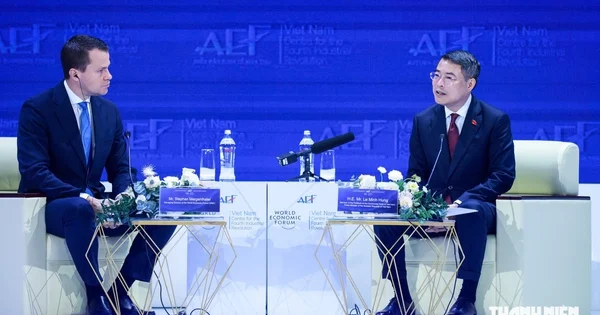
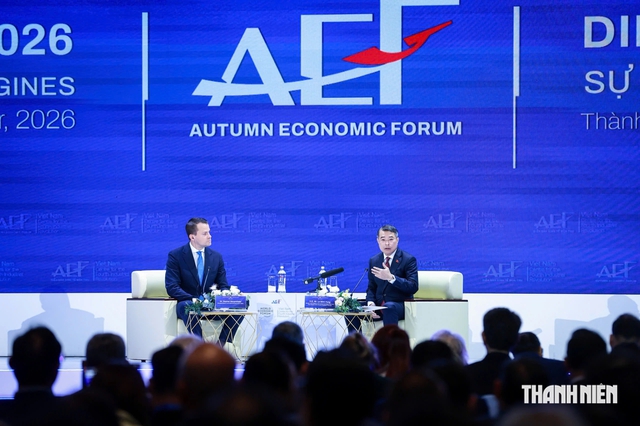
Vietnam stands at a critical juncture in its socio-economic development, actively pivoting toward advanced manufacturing, green energy, and international financial integration. This strategic vision was prominently articulated by Prime Minister Le Minh Hung during the Autumn Economic Forum 2026 (AEF 2026), which convened in Ho Chi Minh City on October 28, 2026. Gathering over 1,800 domestic and international delegates—including nearly 100 foreign delegations from more than 30 countries and territories—the high-level forum served as a vital platform for dialogue between the Vietnamese government and global investors.
The gathering underscored Vietnam’s unwavering commitment to fostering innovation, enhancing supply chain resilience, and cementing its status as an indispensable anchor in regional and global economic networks. As the global landscape undergoes profound structural transformations, the nation’s leadership is implementing forward-looking strategies designed to transition the country from a traditional manufacturing destination into a multifaceted hub for high-tech industry, clean energy, and modern financial services.
Strategic Resilience and Long-Term Vision in a Fragmented Global Economy
The global economy of 2026 continues to grapple with deep-seated geopolitical volatility, supply chain disruptions, energy market fluctuations, and the mounting pressures of climate change. Recent logistical and supply chain strains—exemplified by maritime risks near the Strait of Hormuz that have driven up fuel, electricity, and transportation costs across Southeast Asia—highlight the vulnerability of uncoordinated economies.
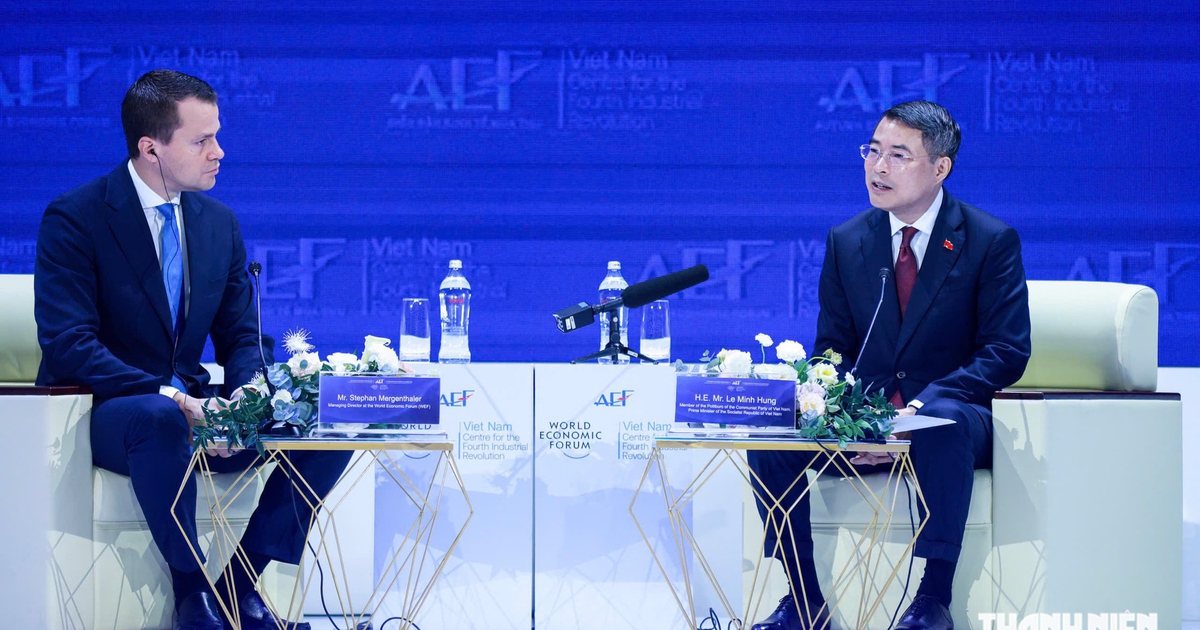
Addressing the plenary session, Prime Minister Le Minh Hung emphasized that in an increasingly uncertain world, national resilience extends far beyond the mere ability to absorb external economic shocks. True resilience requires proactive adaptation, robust recovery mechanisms, and the capacity for continuous self-innovation.
To navigate these global headwinds, Vietnam has firmly anchored its development path on long-term structural strategies rather than short-term fixes. The nation’s strategic roadmap remains anchored to ambitious dual centenary targets: striving to become a developing country with modern industry and high average income by 2030, and a developed, high-income nation by 2045. Achieving these milestones requires a profound overhaul of traditional growth drivers, replacing them with models centered on science, technology, innovation, and digital transformation.
Furthermore, the government recognizes that political and macroeconomic stability serves as the absolute prerequisite for sustainable growth. By prioritizing fiscal discipline, enhancing early-warning policy mechanisms, and maintaining deep institutional reforms, Vietnam aims to continuously reinforce the confidence of its citizens, domestic enterprises, and international partners.
Elevating International Partnerships: From "Invest in Vietnam" to "Invest with Vietnam"
A core message delivered by the Vietnamese leadership during AEF 2026 was the evolution of the country’s international economic cooperation model. Vietnam is actively encouraging its foreign partners to move beyond traditional paradigms of capital allocation and low-cost assembly.
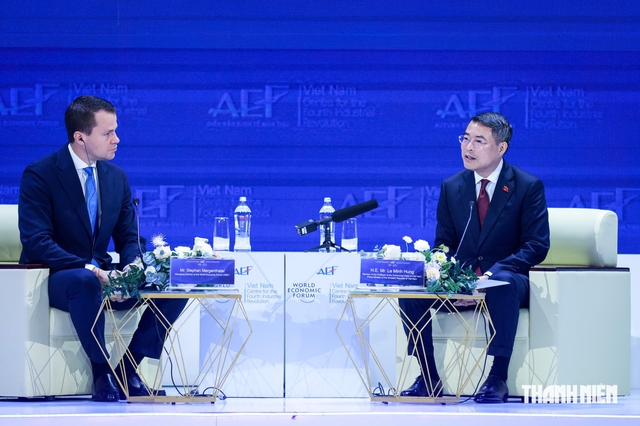
"We are calling on our global partners not merely to invest in Vietnam, but to invest with Vietnam," Prime Minister Le Minh Hung stated. This philosophy entails transitioning from localized manufacturing to comprehensive Research and Development (R&D), fostering collaborative innovation, and codeveloping new regional and global value chains that command high competitiveness.
As an open economy deeply integrated into global trade agreements—including the Comprehensive and Progressive Agreement for Trans-Pacific Partnership (CPTPP) and various bilateral free trade agreements—Vietnam is uniquely positioned to absorb and contribute to new growth networks. The country’s strategy centers on three distinct competitive advantages:
- Strategic Geographic Position and Macro Stability: Sustained political stability and resilient macroeconomic indicators make Vietnam a consistent bright spot for regional and global growth.
- Strategic Timing: The nation’s decisive economic restructuring aligns with a period when the global economic architecture is undergoing massive recalibration.
- Expanding Internal Capacity: A growing pool of high-skilled labor, robust institutional frameworks, and a thriving entrepreneurial ecosystem provide a strong foundation for absorbing advanced technologies.
The government has committed to maintaining continuous, constructive dialogue with the business community. Through institutional mechanisms designed to listen, review, and promptly resolve investor grievances, administrative bottlenecks, and regulatory challenges, Vietnam seeks to ensure that its policy commitments are matched by decisive, transparent enforcement.
Institutional Commitments and International Endorsements
The collaborative spirit of AEF 2026 was met with strong endorsements from major multilateral organizations and key global partners, who expressed readiness to support Vietnam’s transition toward a green, digital, and sustainable economy.
European Union: Strengthening Regulatory Alignment and Circular Economy
Julien Guerrier, Ambassador and Head of the Delegation of the European Union to Vietnam, highlighted that Vietnam’s next phase of development will demand substantial financial resources, particularly from the private sector and foreign investors. European enterprises—ranging from multinational corporations to small and medium-sized enterprises (SMEs)—stand ready to contribute to Vietnam’s technological ecosystem. The EU strongly supports Vietnam’s ongoing efforts to enhance policy transparency, bridge public and private capital, and accelerate the transition toward a circular economy, viewing Vietnam as a crucial and trusted partner in sustainable growth.
United Kingdom: Deepening Collaboration in Finance, Technology, and Green Growth
Baroness Winterton, the United Kingdom’s Trade Envoy for Asia-Pacific, underscored the depth of the UK-Vietnam Strategic Partnership, noting that bilateral merchandise and services trade has climbed to £10.5 billion annually—nearly double the volume recorded in 2020.
Highlighting economic security as a shared priority, Baroness Winterton outlined three pillars of future UK-Vietnam cooperation: finance, technology, and green growth. Notably, the UK government is actively supporting the development of the Vietnam International Financial Centre in Ho Chi Minh City (VIFC-HCMC), launched in February of this year. As part of this support, the UK High Court is assisting in the establishment of a specialized international financial court in Ho Chi Minh City. Furthermore, the UK aims to connect its world-class technology sector—valued at approximately £1,200 billion—with Vietnam’s expanding capabilities in artificial intelligence (AI), cybersecurity, financial technology, healthcare tech, and semiconductors.
United Nations: Fostering Smart, Inclusive, and Sustainable Development
Pauline Tamesis, the United Nations Resident Coordinator in Vietnam, reflected on the country’s remarkable economic trajectory since the launch of Doi Moi in 1986. Emphasizing the rapid acceleration of artificial intelligence and digital disruption, the UN reaffirmed its commitment to helping Vietnam connect with global partners, improve quality of life, and build a smart, inclusive, and green economy aligned with the 2045 vision.
World Economic Forum: Navigating Global Supply Chain Shifts
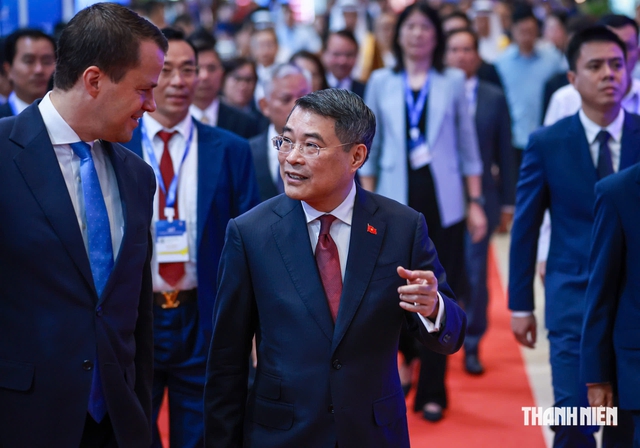
Stephan Mergenthaler, Managing Director of the World Economic Forum (WEF), pointed out that geopolitical realignment, supply chain fragmentation, and energy transitions are fundamentally reshaping the global economy. These shifts pose distinct challenges but also extraordinary opportunities for agile, innovation-driven economies. Mergenthaler praised Vietnam and Ho Chi Minh City for their entrepreneurial spirit, industrial capacity, and international outlook, which position them exceptionally well to connect domestic enterprises with global technology partners.
Ho Chi Minh City as a Catalyst for Regional and Global Integration
As Vietnam’s economic locomotive, Ho Chi Minh City played a central role during AEF 2026, unveiling major initiatives designed to expand its development space, mobilize international capital, and elevate its competitive edge.
Expanding Development Horizons
Opening the high-level leadership plenary session, Chairman of the Ho Chi Minh City People’s Committee Nguyen Van Duoc emphasized that the city is stepping into a vastly expanded development space. By fostering closer integration between urban centers, industrial zones, and scientific innovation hubs, Ho Chi Minh City is establishing new governance frameworks and institutional platforms.
These include the official operationalization of the Vietnam International Financial Centre in Ho Chi Minh City (VIFC-HCMC), plans for a dynamic free trade zone, and the strengthening of strategic infrastructure such as deep-water ports, logistics networks, and urban transit systems linked directly to international financial flows.
Major Investment Approvals and Capital Mobilization
A defining highlight of AEF 2026 was the official presentation of investment policy decisions and registration certificates for 12 major strategic projects in Ho Chi Minh City. Spanning infrastructure, maritime logistics, urban development, advanced manufacturing, and high-tech industries, these projects represent a combined investment capital of approximately $13 billion.
Notable initiatives include:
- Can Gio International Transshipment Port: A landmark maritime infrastructure project with an estimated investment of approximately $4.9 billion, designed to position southern Vietnam as a primary maritime logistics node.
- International University Urban Area: A major educational and urban development project with an adjusted investment capital of roughly $6.6 billion.
Additionally, the municipal government and the WEF released a Joint Statement on Cooperation Directions, formalizing frameworks to integrate the city deeper into global expert and institutional networks.
Launching the First Members of VIFC-HCMC
In a decisive push to attract international capital and establish a robust financial ecosystem, VIFC-HCMC officially announced its first 10 foundational members. These pioneering entities have committed to driving strategic investment projects across education, maritime infrastructure, logistics, green energy, financial technology, and commodity trading.
Key commitments announced during the forum include:
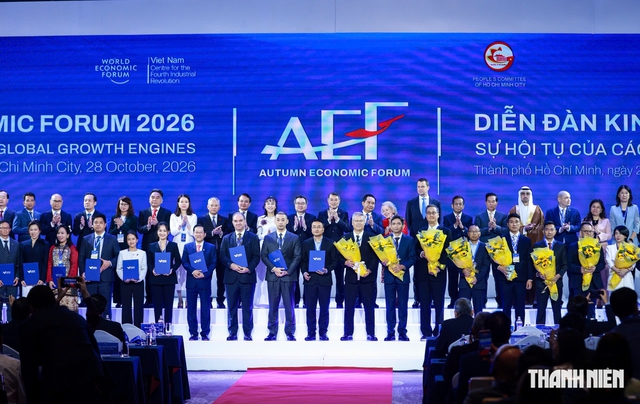
- Saigon Marina IFC: Mobilizing $816 million for advanced financial and urban infrastructure development.
- AG&P Holding Vietnam: Committing between $425 million (for the initial 2026–2027 LNG, power, and data center value chain phase) and $1 billion (for the 2027–2030 expansion phase) toward clean fuel infrastructure.
- EQuest Capital: Raising $325 million to develop educational infrastructure alongside investments in renewable energy, maritime logistics, and financial services.
- Sain Kim Capital IFC: Committing approximately $275 million toward infrastructure development within VIFC-HCMC.
These initiatives mark the foundational phase of creating an integrated, high-standard financial and investment ecosystem in southern Vietnam.
Conclusion: Translating Partnerships into Long-Term Growth Dynamics
The success of the Autumn Economic Forum 2026 illustrates that Vietnam’s appeal to the international community extends far beyond traditional trade and manufacturing. By systematically bridging financial capital, technological know-how, and modern market access, Vietnam is successfully transforming global cooperation opportunities into tangible industrial capacity and long-term economic momentum.
As the nation continues to execute its structural reforms, deepen its integration into high-tech and green value chains, and empower economic engines like Ho Chi Minh City, Vietnam is well on its way to fulfilling its strategic destiny as a trusted, resilient, and dynamic cornerstone of the global economy.