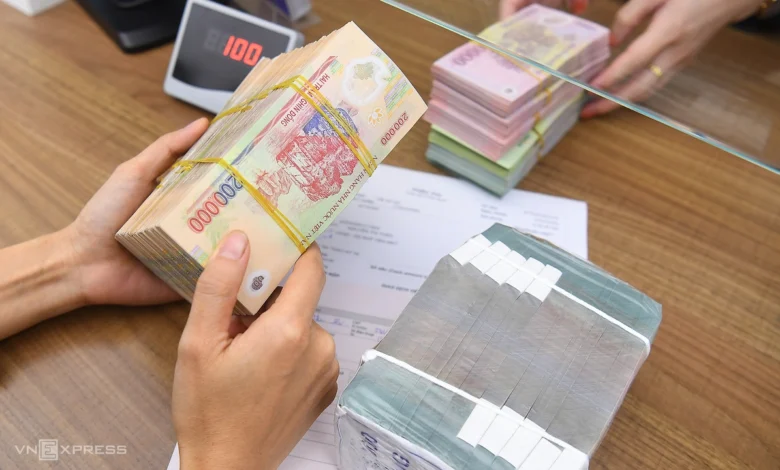
The Ministry of Finance has officially proposed a significant debt relief initiative aimed at clearing outstanding license tax (lệ phí môn bài) obligations and associated late payment interest for businesses currently undergoing dissolution or those that have effectively ceased operations. This policy, included in a draft resolution currently under review by the National Assembly, seeks to address the administrative bottlenecks that have long prevented thousands of "zombie" companies from formally exiting the market.
Addressing the Burden of Inactive Businesses
For years, the Vietnamese tax landscape has been cluttered with thousands of entities that have ceased all economic activities but remain technically "active" in the national tax registry. Because these companies never completed the formal dissolution process—often due to financial insolvency or the disappearance of legal representatives—they continue to accrue annual license tax obligations.
The license tax typically ranges from 1 million to 3 million VND per year, depending on the registered charter capital or investment capital. While these amounts may seem modest individually, the cumulative effect over five to ten years—combined with penalties for late payments—often reaches tens of millions of VND. For a defunct business, this debt becomes a insurmountable barrier to formal closure. The Ministry of Finance reports that as of the end of the previous fiscal year, approximately 764,000 taxpayers still carried outstanding license tax liabilities, totaling roughly 1.45 trillion VND.
Chronology and Legislative Context
The legal framework surrounding license tax has evolved significantly. Under Resolution 198/2025 passed by the National Assembly, the collection of license tax was effectively discontinued as of January 1, 2026. However, the legislation did not automatically absolve the debts accumulated prior to this date. Consequently, tax authorities have continued to track and attempt to recover these historical arrears, creating a paradoxical situation where the government is chasing payments from entities that are functionally non-existent.
The proposed draft resolution aims to rectify this by providing a mechanism to write off these debts. According to the proposal, the tax authorities expect to complete the processing of these write-offs within six months from the date the resolution takes effect. The objective is to clear the books of these uncollectible debts by utilizing existing tax management data, thereby sparing taxpayers the burden of submitting formal requests for relief.
Detailed Breakdown of the Debt Relief Proposal
The Ministry of Finance’s proposal categorizes the debt relief into two primary components: the principal license tax and the associated late payment interest.
- License Tax Arrears: For businesses that have ceased operations or are currently undergoing the dissolution process, the government plans to write off outstanding license tax debts accrued up to the end of 2025. This is intended to facilitate a "clean exit" for these companies.
- Late Payment Interest: The Ministry has also proposed a conditional waiver of late payment interest for taxpayers in specific statuses:
- Status 03: Entities that have ceased operations but have not yet finalized the closure of their tax identification number.
- Status 06: Entities that are no longer operating at their registered business address.
To qualify for the waiver of late payment interest, taxpayers must settle the principal debt amount. Furthermore, the taxpayer must submit a request to restore their operations or finalize the closure of their tax identification number, with a deadline for such submissions set for June 30, 2028. If the taxpayer has no remaining principal debt, tax authorities will verify the records against the tax management database to finalize the clearance.

Data Analysis and Economic Implications
The total debt associated with businesses waiting for dissolution is estimated at approximately 27.8 trillion VND. This figure comprises 18.09 trillion VND in principal debt and 9.715 trillion VND in late payment interest.
The Ministry of Finance has acknowledged that the cost of enforcement—including the administrative resources required to track down representatives, issue notices, and pursue legal action—often far exceeds the amount that could realistically be recovered. Many of these companies possess no remaining assets, and their legal representatives have often relocated or are unreachable. By removing this "dead weight" from the tax system, the government aims to achieve several objectives:
- Administrative Efficiency: Clearing the tax registry allows authorities to focus resources on active, tax-compliant businesses rather than maintaining records for defunct entities.
- Improving the Business Environment: Reducing the barriers to formal dissolution encourages entrepreneurs to close failing ventures cleanly, which provides more accurate data on the health of the national economy.
- Fairness: The policy provides a one-time resolution for long-standing issues, acknowledging that continuing to carry these debts on the books serves no productive fiscal purpose.
Official Stance and Safeguards
The Ministry of Finance emphasizes that this is a "one-time" policy intervention designed to address historical issues. To ensure the integrity of the process, the Ministry has established strict conditions. The relief is not an automatic "blanket" forgiveness; it is contingent on the taxpayer meeting specific criteria and is subject to verification against the central tax management system.
"This is a targeted measure to handle long-standing debt," a representative from the Ministry noted. "The identification of the taxpayer and the debt to be processed must be based on objective tax management data, ensuring transparency and public accountability."
Furthermore, the government has included a "clawback" provision. If it is later discovered that a debt was written off in error—either because the taxpayer did not meet the eligibility requirements or provided false information—tax authorities are mandated to recover the amount, restore the debt, and handle the case in accordance with existing tax laws.
Future Outlook
The proposal is currently awaiting final deliberation by the National Assembly. If approved, the policy will be active until June 30, 2028, providing a three-year window for affected businesses to regularize their status.
Industry analysts suggest that this move reflects a more pragmatic approach by the Vietnamese government toward corporate insolvency. By lowering the cost of "failure," the policy may paradoxically encourage more risk-taking among entrepreneurs, as the fear of being permanently trapped in a cycle of mounting tax debt for a failed business is mitigated.
For the thousands of micro, small, and medium-sized enterprises (MSMEs) that have been caught in this regulatory limbo, the resolution represents a potential lifeline, allowing them to close their books, settle their final obligations, and move on to new economic endeavors without the shadow of legacy debt.