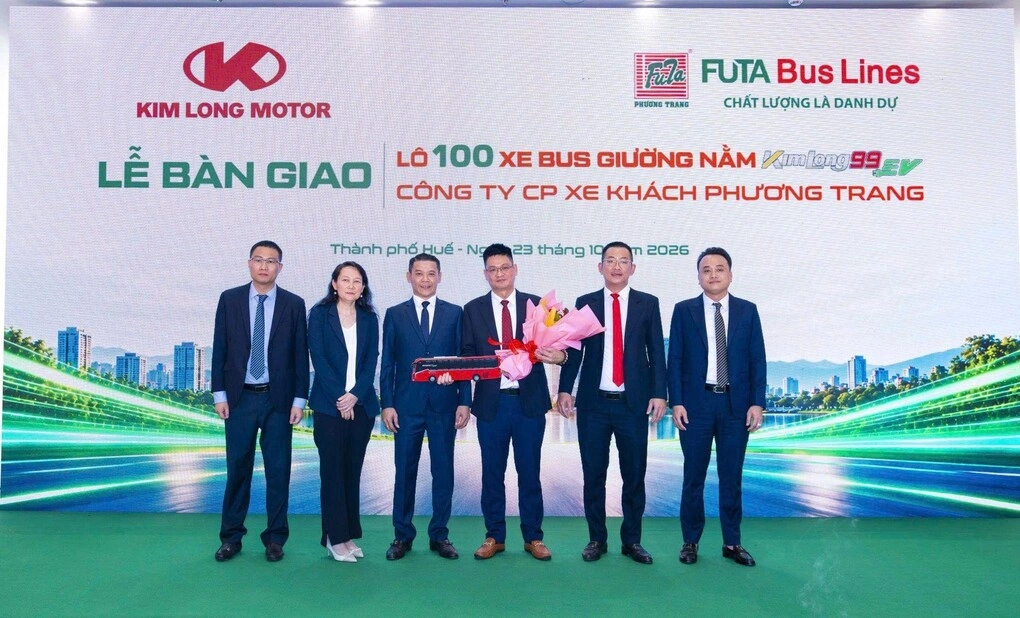
Phương Trang (Futa Bus Lines), one of Vietnam’s leading passenger transportation companies, is officially ushering in a new era of sustainable mobility by introducing a fleet of 100 pure electric sleeper buses on inter-provincial routes. The historic handover ceremony, which took place on October 23, marks a significant milestone in Vietnam’s public transit transformation, as heavy commercial electric vehicles transition from urban pilot programs to mainstream long-distance corridors.
The deployment of these eco-friendly vehicles represents a concerted effort by both transport operators and domestic manufacturers to reduce carbon emissions, curb urban and highway noise pollution, and align Vietnam with global climate commitments. As the nation accelerates its roadmap toward net-zero emissions, the large-scale integration of electric sleeper buses on inter-city networks sets a precedent for sustainable passenger logistics across Southeast Asia.
State-of-the-Art Electric Fleet Engineered in Vietnam
The newly introduced vehicles belong to the Kim Long 99 EV-G34 series, a cutting-edge model meticulously researched, developed, and manufactured by Kim Long Motor at its sprawling production facility in Hue. Designed specifically to endure the demands of long-distance passenger transport, these electric sleeper buses boast an operating range of approximately 400 kilometers on a single charge, making them highly viable for medium-to-long inter-provincial journeys.
Underneath the sleek exterior, the Kim Long 99 EV-G34 is powered by advanced BYD lithium iron phosphate batteries with a substantial energy capacity of 357 kWh. To minimize downtime during operational hours, the vehicles are equipped with dual CCS2 standard charging ports, ensuring seamless compatibility with high-power DC fast chargers capable of delivering up to 240 kW. This charging infrastructure allows the battery packs to replenish from low to full capacity in roughly 90 minutes.
Logistically, the fast-charging capability is strategically integrated into the buses’ schedules. Fleet operators can utilize scheduled driver rest stops and terminal layovers to top off the batteries, ensuring that the vehicles remain charged and ready for subsequent legs of their journeys without disrupting passenger timetables.

Premium Passenger Comfort and Advanced Safety Architecture
Beyond their green credentials, the Kim Long 99 EV-G34 buses prioritize passenger comfort and safety, matching or exceeding the standards of traditional diesel-powered sleeper coaches. The passenger cabin features 34 private, ergonomically designed sleeping berths. Each berth is outfitted with individual privacy curtains, dedicated air-conditioning vents, reading lights, and call buttons. Additional onboard amenities include a compact refrigerator and a high-fidelity sound system, ensuring a pleasant and restful travel experience over long distances.
Structurally, the buses are built upon a full monocoque (integral) chassis, which enhances structural rigidity while reducing overall vehicle weight. Safety systems are comprehensive, integrating an Anti-lock Braking System (ABS), Anti-Slip Regulation (ASR), and regenerative braking technology to capture kinetic energy during deceleration and feed it back into the battery pack.
Furthermore, safety engineering has been given paramount importance. The vehicles feature a dual-compartment fire suppression system and an intelligent active battery thermal management system. These technologies continuously monitor temperature fluctuations within the battery packs, drastically mitigating the risk of thermal runaway and ensuring maximum safety for passengers and crew members alike.
Scaling Up Domestic Production and Localization
The partnership between Phuong Trang and Kim Long Motor underscores a broader national push toward industrial self-reliance and technological localization. According to representatives from Kim Long Motor, the current localization rate for the Kim Long 99 EV-G34 model stands at approximately 60 percent. However, aggressive localization roadmaps are already underway, with the manufacturer targeting a localization rate of up to 90 percent by the end of the year.
To achieve this ambitious target, Kim Long Motor has established strategic joint ventures and partnerships, most notably collaborating with BYD Battery to manufacture and rigorously test battery systems directly inside the Kim Long Motor Hue automotive production complex. This localized manufacturing ecosystem not only secures supply chain resilience but also guarantees rapid access to replacement parts and maintenance components, which are critical for the uninterrupted operation of commercial transport fleets.
Mr. Dao Viet Anh, General Director of Kim Long Motor, emphasized that mastering the manufacturing technology and securing a stable domestic supply chain empowers the company to provide prompt after-sales support and technical assistance. "We are committed to delivering 24/7 technical backup to ensure that our fleet partners can maintain safe, stable, and continuous operations on the road," Mr. Anh stated.
Strategic Infrastructure: The Futa EV Power Network
Operating a massive fleet of long-distance electric buses requires robust charging infrastructure distributed strategically across major transport corridors. To support the deployment of the 100 new electric sleeper buses, Phuong Trang is leveraging its proprietary Futa EV Power network.
This charging network has been methodically planned along major national highways, key bus terminals, and designated highway rest stops. By placing high-capacity chargers at strategic nodes where buses naturally pause for maintenance, driver relief, or passenger boarding, Phuong Trang can seamlessly integrate charging routines into existing logistical frameworks. This infrastructure-first approach minimizes range anxiety and ensures that the transition from fossil fuels to electricity does not compromise the efficiency and punctuality of passenger services.
Mr. Nguyen Van Tri Nhan, Vice Chairman of Operations for Futa Bus Lines, highlighted that introducing pure electric sleeper buses is a vital milestone in the company’s broader corporate strategy to expand its green vehicle fleet.
"The combination of high-quality vehicles from Kim Long Motor and our comprehensive Futa EV Power infrastructure allows us to pioneer civilized, convenient travel solutions while aggressively scaling up our electric vehicle deployment," Mr. Nhan remarked. "We are building a future where inter-provincial travel is not only comfortable but fundamentally sustainable."
A Proven Partnership in Sustainable Public Transit
The delivery of these 100 inter-provincial sleeper buses is not an isolated initiative, but rather the continuation of a deep-seated partnership between Phuong Trang and Kim Long Motor. Prior to this milestone, the two enterprises successfully deployed 700 pure electric city buses to revolutionize public transportation networks in major metropolitan hubs, including Ho Chi Minh City and Da Nang.
These urban electric bus projects served as a crucial testing ground, providing invaluable real-world operational data regarding battery performance, energy consumption curves, and passenger feedback under high-frequency stop-and-go driving conditions.
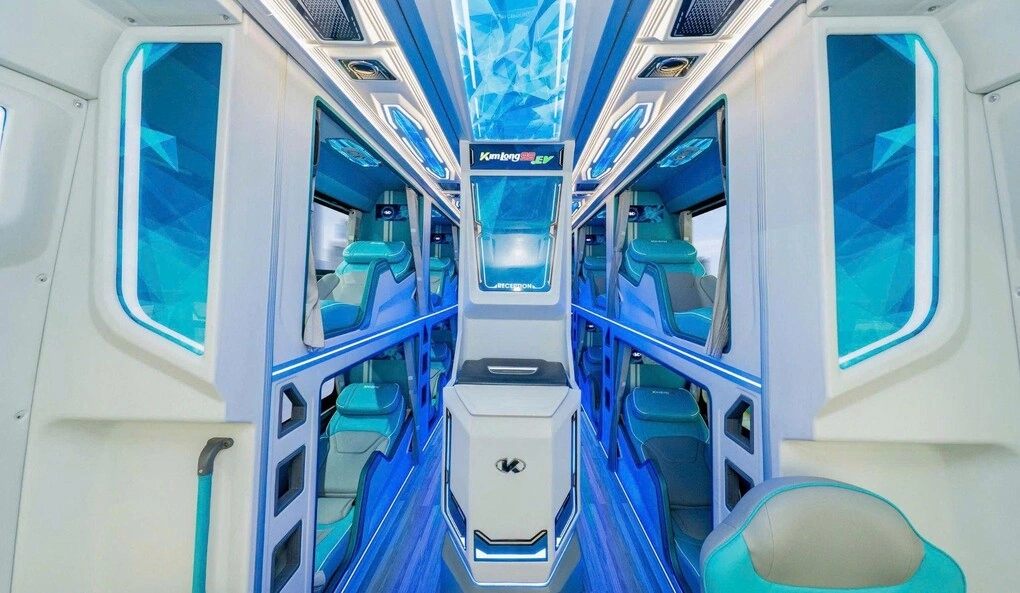
Kim Long Motor plans to utilize the real-world operational telemetry gathered from Phuong Trang’s new inter-provincial fleet to further evaluate energy efficiency, refine vehicle software, and perfect product designs. This data-driven feedback loop ensures that the technology continuously evolves to meet the rigorous demands of commercial transport operators.
Broader Implications for Vietnam’s Transportation Sector
The large-scale rollout of electric sleeper buses on inter-city routes carries profound implications for Vietnam’s broader economic and environmental landscape. The transportation sector is one of the leading contributors to national greenhouse gas emissions, with heavy commercial vehicles accounting for a disproportionate share of diesel consumption and particulate pollution.
By replacing traditional diesel coaches with zero-emission electric alternatives on major inter-provincial arteries—such as routes connecting Ho Chi Minh City to regional economic and tourism centers—Phuong Trang is helping to drastically cut carbon footprints along vital commercial corridors. Furthermore, the reliance on domestically manufactured electric buses and locally produced battery systems stimulates high-tech manufacturing, creates specialized engineering jobs, and positions Vietnam as a burgeoning hub for electric vehicle innovation within Southeast Asia.
As these 100 state-of-the-art electric sleeper buses officially hit the open road, they carry more than just passengers; they bear witness to Vietnam’s decisive pivot toward a greener, cleaner, and technologically advanced transportation future.