Apple Faces Major Quality Control Crisis as iPhone Duo Foldable Fails Durability Tests Over Hinge Design Flaws


The release of Apple’s inaugural foldable smartphone, widely referred to as the iPhone Duo, has encountered a severe engineering controversy following widespread user reports and rigorous independent stress testing. The device, which represents Apple’s highly anticipated entry into the lucrative foldable market, has drawn intense scrutiny after multiple units experienced critical hardware failures linked directly to its mechanical hinge architecture. Observers and industry experts have noted that foreign debris, specifically dust and small particles, can easily infiltrate the internal hinge mechanism during standard daily use, leading to catastrophic screen failures and structural jamming.
This unexpected hardware vulnerability has immediately drawn historical parallels to the tumultuous launch of the original Samsung Galaxy Fold in 2019, reviving industry-wide discussions regarding the immense engineering challenges associated with foldable device manufacturing. As consumer advocacy groups and tech analysts dissect the implications of these design flaws, questions are mounting regarding Apple’s quality assurance protocols and whether late-to-market entrants can bypass foundational hardware hurdles without encountering similar pitfalls.
The Anatomy of the iPhone Duo Hinge Failure
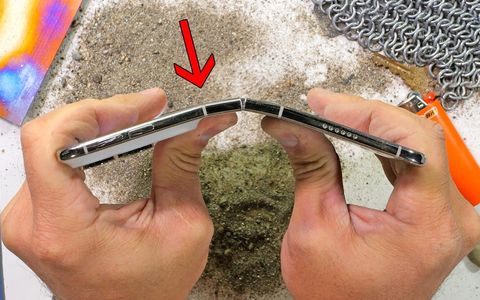
The controversy intensified following a detailed durability assessment published by prominent technology content creator Zack Nelson, operating under the YouTube channel JerryRigEverything. In the stress-test video, the iPhone Duo was subjected to standard environmental and physical durability trials, mirroring conditions the device might encounter in the hands of an average consumer.
The results revealed a critical vulnerability: fine particulate matter, such as dust and sand, successfully penetrated the protective barriers of the folding mechanism. Once inside, this debris interfered with the internal tension cables and support plates, causing the folding display to malfunction structurally. Upon attempting to flex the device or reverse the folding motion under these obstructed conditions, the internal OLED panel suffered irreparable damage, rendering the primary screen entirely unusable.
Initial speculation suggested that user mishandling might be the primary catalyst for the damage. However, subsequent reports from early adopters across various global forums indicate a widespread pattern of identical hinge-related failures. Industry analysts argue that if testing facilities failed to detect this vulnerability during pre-production stress trials, the issue stems from a fundamental design oversight rather than consumer negligence. Given the precision required to engineer a seamless folding crease while maintaining structural rigidity, microscopic tolerances within the hinge cavity appear to have left the device uniquely susceptible to environmental contamination.

Historical Parallels: The 2019 Samsung Galaxy Fold Crisis
The current predicament faced by Apple bears a striking resemblance to the initial market rollout of Samsung’s pioneering Galaxy Fold in April 2019. At that time, Samsung distributed initial review units to select media outlets and content creators in anticipation of a high-profile commercial launch. Within days of distribution, numerous reviewers reported catastrophic display failures.
A primary contributor to the early Samsung failures was confusion surrounding a protective polymer layer on the screen, which some reviewers attempted to peel off, mistakenly identifying it as a standard temporary shipping film. However, even among reviewers who left the protective layer intact, structural design flaws allowed dust and particulate debris to infiltrate the housing through gaps at the top and bottom of the hinge. This intrusion exerted localized pressure underneath the flexible display, causing severe screen distortion and permanent dead pixels.
Faced with mounting criticism and potential reputational damage, Samsung took the unprecedented step of halting the commercial release just days before it was scheduled to begin. The South Korean manufacturer spent approximately five months recalling, redesigning, and reinforcing the Galaxy Fold hardware.
During this five-month hiatus, Samsung’s engineering teams completely overhauled the hinge architecture. Modifications included sealing the hinge gaps with newly integrated protective caps, extending the top and bottom protective layers beneath the bezels to block debris entry, and tightening the overall mechanical tolerances of the folding apparatus. Samsung officially resumed sales of the revised Galaxy Fold in September 2019, backed by explicit consumer care instructions and extended warranty support.
Although the initial launch is widely regarded as one of the most significant public relations and engineering missteps in modern smartphone history, Samsung’s persistence paid off. Subsequent iterations of the Galaxy Z Fold and Galaxy Z Flip series established industry benchmarks for foldable durability, paving the way for successful foldable ecosystems developed by competing manufacturers including Huawei, Oppo, Xiaomi, Vivo, and Honor—none of which experienced structural hinge failures of a similar magnitude.
Implications for Apple’s Market Position and Engineering Reputation
The emergence of critical hardware defects in the iPhone Duo represents a significant departure from Apple’s historically rigorous quality assurance standards. As a company that traditionally adopts emerging technologies later than its competitors to ensure polished execution and flawless user experiences, Apple’s stumble in the foldable sector has surprised industry observers.
Priced at the pinnacle of the ultra-premium smartphone segment, the iPhone Duo demands exceptional mechanical reliability. User interface feedback collected since the device’s release indicates that consumers have encountered unexpected software responsiveness issues alongside the hardware failures, suggesting that software optimization may have been rushed to meet aggressive commercial deadlines.
The financial and operational implications of a hardware recall or widespread repair program are substantial. Industry analysts estimate that if the hinge vulnerability affects a significant percentage of deployed units, Apple may be forced to implement extensive engineering revisions similar to Samsung’s 2019 playbook. Such a move would not only incur considerable warranty service costs but could also temporarily disrupt supply chains already strained by complex manufacturing demands.
Furthermore, the psychological impact on consumer confidence should not be underestimated. Apple has long cultivated an aura of infallible design and premium craftsmanship. When a flagship device command-pricing tier fails under basic environmental stress—such as exposure to everyday dust—it challenges the foundational consumer trust that underpins Apple’s pricing power and market dominance.
Industry Outlook and Future Remediation
As the technology sector awaits an official statement from Apple regarding the iPhone Duo durability concerns, independent engineering labs continue to analyze the physical limitations of current folding display architectures. The consensus among manufacturing experts is that foldable smartphones require multi-layered sealing technologies that actively repel particulate matter without compromising the smooth articulation of the crease.
Competitors in the Android ecosystem have largely solved the debris intrusion problem through the implementation of brush-based sweeping mechanisms inside the hinge and tighter microscopic tolerances between moving parts. Apple’s apparent failure to incorporate comparable preventative engineering into the iPhone Duo highlights the immense difficulty of balancing ultra-thin device profiles with rugged mechanical durability.
Whether Apple will implement a silent hardware revision for future production batches, issue a comprehensive recall, or offer enhanced warranty coverage remains to be seen. What is clear, however, is that the launch of the iPhone Duo has transformed from a triumphant milestone into a critical test of Apple’s crisis management capabilities and its long-term commitment to leading the next generation of mobile form factors.