Vietnam Officially Joins the Artemis Accords to Advance Peaceful and Sustainable Space Exploration

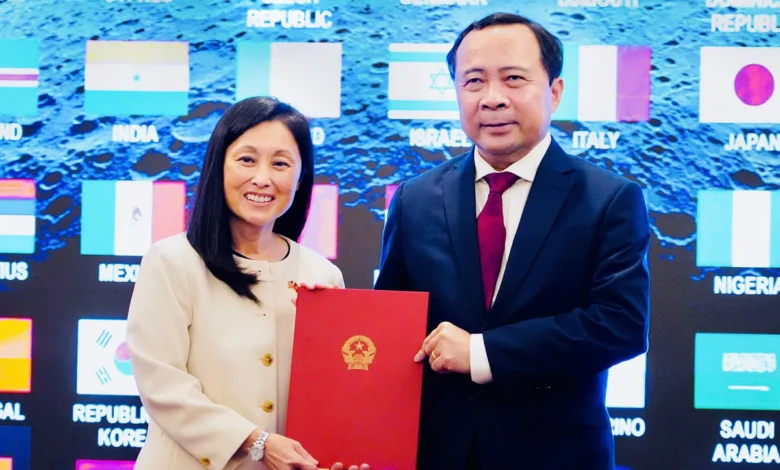
Vietnam has officially solidified its commitment to international cooperation in outer space by signing the Artemis Accords, marking a monumental step in the nation’s technological and scientific diplomacy. The formal handover ceremony took place on the morning of October 28, 2026, within the vibrant framework of the Vietnam International Science Week hosted in the coastal province of Quảng Ninh. The landmark agreement signals a new chapter for Vietnam as it expands its strategic horizons beyond Earth’s atmosphere, aligning itself with global leaders in space governance, exploration, and scientific transparency.
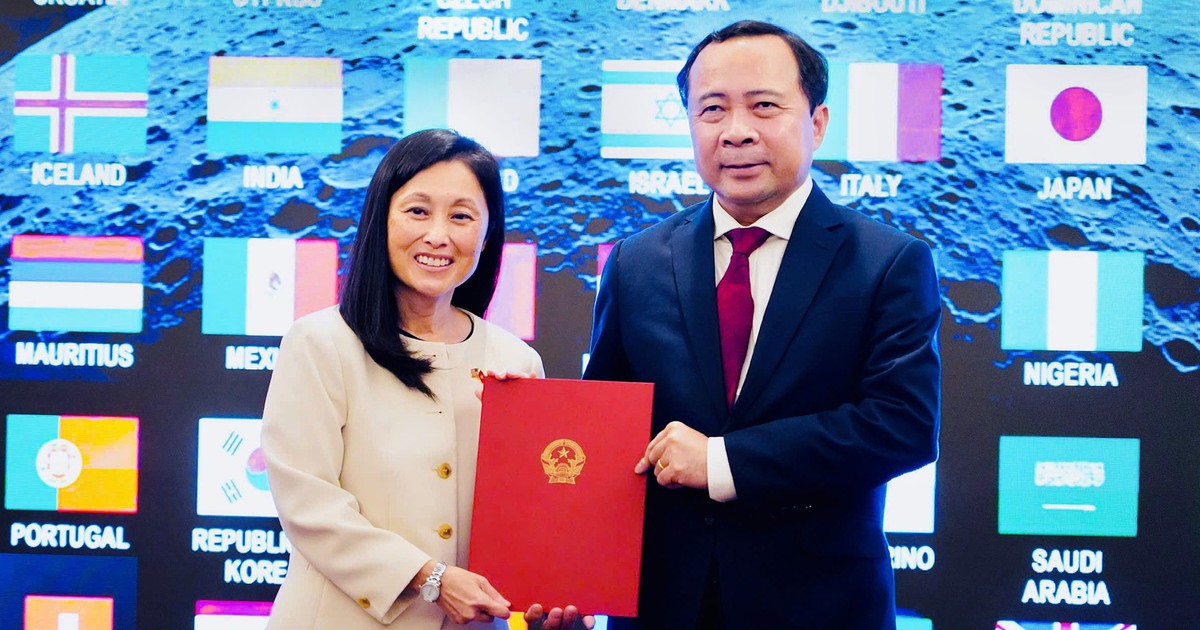
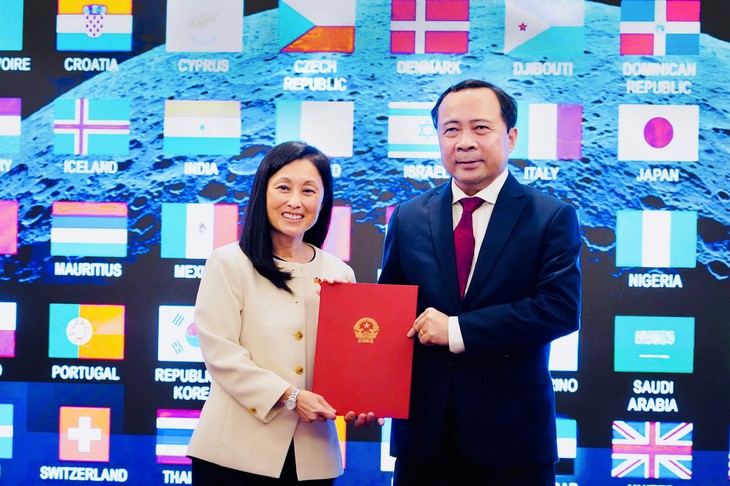
During the high-profile ceremony, the Deputy Minister of Science and Technology of Vietnam, authorized by the Prime Minister, formally handed over the instrument of accession to the Artemis Accords to the United States Ambassador to Vietnam, Jennifer Wicks. The event drew prominent figures from the scientific community, government officials, and international delegates, all gathering to witness a geopolitical and technological milestone that integrates Southeast Asia more deeply into the architecture of modern space exploration.
Core Principles of the Artemis Accords
The Artemis Accords, originally established in October 2020 by the United States Department of State alongside seven founding partner nations, are a non-binding set of principles designed to guide civil space exploration and use of the Moon, Mars, comets, and asteroids for peaceful purposes. Built upon the foundation of the 1967 Outer Space Treaty (the Treaty on Principles Governing the Activities of States in the Exploration and Use of Outer Space, Including the Moon and Other Celestial Bodies), the Accords provide a practical framework to operationalize international space law.
By endorsing the Accords, Vietnam joins a growing coalition of nations committed to transparent, safe, and sustainable space activities. The core tenets of the framework include:
- Peaceful Purposes: All activities conducted under the Accords must be exclusively for peaceful endeavors, reinforcing global stability and cooperation.
- Transparency: Signatories agree to publicly share their exploration plans and policies, fostering openness and reducing the risk of miscalculation or conflict.
- Interoperability: Promoting open standards for space systems enhances safety and enables nations to render emergency assistance to astronauts in distress.
- Emergency Assistance: Participating countries commit to rendering assistance to personnel in distress on celestial bodies or in orbit, mirroring maritime traditions of rescue at sea.
- Scientific Data Sharing: Signatories pledge to make scientific data publicly available, ensuring that the fruits of space exploration benefit the global community as a whole.
- Protection of Heritage: Preserving historic landing sites, artifacts, and spacecraft as part of humanity’s universal outer space heritage.
- Space Resource Utilization: Encouraging the safe and sustainable extraction and utilization of space resources in compliance with international treaties, particularly the Outer Space Treaty, without claiming sovereignty over celestial bodies.
- Deconfliction of Space Activities: Establishing "safety zones" around operations to prevent harmful interference and ensure operational safety on the lunar surface and beyond.
Strategic Vision for Vietnam’s Space Sector
Addressing the audience during the handover ceremony, the Deputy Minister emphasized that the Vietnamese government views science, technology, and space innovation as critical drivers of national capability, economic modernization, and sustainable development. By signing the Artemis Accords, Vietnam is not only signaling its readiness to participate in international space missions but is also laying the groundwork for domestic capacity building in high-technology fields.
The Deputy Minister highlighted several national priorities tied to space science and technology. Foremost among these is the development of autonomous capabilities in satellite manufacturing, spatial data analytics, and advanced telemetry. Vietnam aims to leverage space-based assets to address pressing domestic and regional challenges, including natural resource management, environmental protection, climate change adaptation, and disaster risk reduction.
In recent years, Vietnam has made notable strides in earth observation and satellite technology, launching programs such as VNREDSat-1 and various micro-satellites. Access to international frameworks like the Artemis Accords is expected to facilitate technology transfer, foster joint research initiatives, and open doors for Vietnamese engineers, scientists, and researchers to collaborate with space agencies and private aerospace firms worldwide. Furthermore, the integration into the Artemis community supports Vietnam’s broader objective of developing a robust space economy and modernizing its institutional frameworks for space governance.
International Reception and Diplomatic Significance
U.S. Ambassador Jennifer Wicks welcomed Vietnam to the growing roster of Artemis signatories, praising the nation’s proactive approach to international scientific cooperation. Ambassador Wicks noted that the inclusion of nations from Southeast Asia enriches the coalition, ensuring diverse perspectives in shaping the future norms of behavior in space.
The signing ceremony in Quảng Ninh underscores the deepening strategic partnership between the United States and Vietnam, which has expanded across multiple domains, including semiconductor manufacturing, clean energy transition, digital economy, and now, outer space cooperation. As humanity prepares to return to the Moon through NASA’s Artemis campaign—which aims to land the first woman and first person of color on the lunar surface, followed by sustainable lunar exploration—broad international consensus on responsible behavior becomes increasingly vital.
Diplomatic analysts point out that the Artemis Accords serve as a vital diplomatic instrument in preventing an unbridled space race or resource scramble on celestial bodies. By committing to the transparent and rules-based governance outlined in the Accords, emerging spacefaring nations like Vietnam secure a voice in international standard-setting while contributing to global security and stability.
The Broader Global Context of the Artemis Accords
Since its inception in 2020 with eight founding members, the Artemis Accords have expanded rapidly, incorporating dozens of countries spanning North America, Europe, Asia, South America, Africa, and Oceania. The addition of Vietnam reflects the accelerating pace at which Indo-Pacific nations are modernizing their space programs and forging multilateral partnerships.
The timing of Vietnam’s accession, occurring during the Vietnam International Science Week 2026, highlights the country’s deliberate effort to showcase its scientific advancements to the international community. Quảng Ninh province, traditionally known for its natural wonders and industrial development, served as an appropriate backdrop for discussions on frontier technologies, innovation, and sustainable future planning.
As space commercialization accelerates and government-led missions give way to increasingly complex public-private partnerships, the governance framework established by the Accords will face new tests. Issues such as orbital debris mitigation, radio frequency coordination, and the legal parameters of commercial resource extraction will require constant dialogue among member states.
Implications and Future Outlook
For Vietnam, the immediate aftermath of signing the Artemis Accords will involve translating high-level diplomatic commitments into concrete institutional and academic frameworks. Experts suggest that policymakers will need to focus on updating national space legislation, fostering public-private partnerships within the domestic technology sector, and strengthening STEM education pipelines to cultivate the next generation of aerospace engineers and space policy experts.
Moreover, regional cooperation within ASEAN is expected to benefit from Vietnam’s new status. As one of the most economically dynamic countries in Southeast Asia, Vietnam can serve as a regional hub for space-derived data applications, sharing insights on climate resilience and disaster management derived from advanced satellite Earth observation.
Ultimately, Vietnam’s formal entry into the Artemis Accords represents a transformative moment. It bridges domestic development goals with global aspirations, positioning the nation not merely as an observer of technological progress, but as an active participant in shaping the peaceful and sustainable exploration of the cosmos for the benefit of all humankind and planet Earth.