Can Tho Police Arrest Company Director for Fraudulently Renting and Selling Machinery Worth Over 6 Billion VND


The Investigation Agency of the Can Tho City Police has officially executed decisions to prosecute the accused and issue a temporary detention order against Tran Nhu Long, a 60-year-old resident of Binh Phu Dong Ward, Ho Chi Minh City. Long, who serves as the Director of P.T Vietnam Import-Export Company Limited—headquartered in Can Tho City—is facing serious legal scrutiny for his alleged involvement in criminal activity. According to law enforcement authorities, Long is being investigated for the crime of "Fraudulent Appropriation of Assets," a severe offense under the Vietnamese Penal Code. The case has drawn significant public attention due to the calculated nature of the deception, which targeted business partners under the guise of legitimate industrial expansion and regulatory compliance.
Background and Initial Deception
The sequence of events leading to the criminal prosecution began in May 2025. At that time, Tran Nhu Long approached a business associate in Ho Chi Minh City, specifically a deputy director of another enterprise operating within the commercial hub. Long presented a carefully constructed fabrication, claiming that his company required temporary access to specialized industrial machinery to install at a factory facility located in Can Tho City.
According to Long’s representations, this equipment was urgently needed to satisfy strict regulatory standards and secure the mandatory certificates of eligibility for production within the plastics manufacturing sector. In Vietnam, industrial facilities operating in specialized sectors such as plastics recycling and processing must meet rigorous environmental, safety, and operational criteria before receiving official authorization from local management boards and departments of industry and trade. By leveraging this administrative requirement, Long managed to establish an aura of legitimacy around his request, convincing his business counterpart that the machinery would be used strictly for inspection and compliance demonstration purposes.

Trusting Long’s professional standing and the ostensible validity of his business operations in Can Tho, the deputy director agreed to lease a comprehensive suite of industrial assets. The leased inventory notably included a high-value PET plastic bottle recycling system alongside advanced color-sorting machinery. These technical assets are crucial for modern, high-efficiency plastic processing facilities and represent a substantial capital investment. The total market value of the machinery, determined through subsequent professional evaluations, was estimated to be in excess of 6.2 billion VND (approximately 240,000 USD). Under the terms of the verbal and informal agreements typically found in such commercial arrangements, the machinery was handed over to Long with the clear understanding that it would be returned within a strict two-month window.
Chronology of the Crime and Asset Liquidation
Rather than transporting the high-value equipment to the designated factory site in Can Tho City for the stated purpose of securing production licenses, Long executed a premeditated plan to convert the assets for personal financial gain. Immediately upon taking physical possession of the PET recycling system and color-sorting machines, Long arranged for their logistics and transit to Can Tho City. However, once the equipment arrived at its destination, it was bypassed entirely for any industrial or manufacturing application.
Instead of setting up the machinery or incorporating it into a production line, Long initiated contact with various local scrap metal and industrial equipment salvage yards operating within the region. Displaying a complete disregard for commercial ethics and contractual obligations, he negotiated the sale of the borrowed assets to these secondary buyers. The heavy machinery, which had been entrusted to him for temporary operational use, was systematically dismantled or sold off piece by piece as scrap or secondhand industrial hardware.
Long collected the proceeds from these illicit transactions in cash and bank transfers, subsequently using the substantial funds to cover personal expenses, lifestyle costs, and other private financial obligations. The systematic liquidation of the machinery effectively stripped the rightful owners of their capital assets within weeks of the initial handover, catching the victimized company off guard as the agreed-upon two-month return window began to close without communication from Long.

Investigation, Evidence Gathering, and Legal Evaluation
The fraud came to light when representatives of the victimized Ho Chi Minh City-based company attempted to inspect the machinery and coordinate its return at the conclusion of the rental period. Confronted with evasive responses and an inability to access the Can Tho facility where the equipment was supposedly housed, company executives formally filed criminal complaints with the local authorities.
Upon receiving the reports, the Investigation Police Agency of Can Tho City initiated a comprehensive inquiry, gathering documentation, bank records, transportation logs, and witness testimonies. Investigators tracked the movement of the machinery from Ho Chi Minh City to Can Tho and subsequently traced its dispersion among local scrap and industrial buyers. To establish the exact legal gravity of the offense, the investigative body formally convened the Asset Valuation Council within the framework of criminal proceedings. Following a detailed technical and market appraisal, the council confirmed that the collective value of the misappropriated PET recycling system and color-sorting equipment exceeded 6.2 billion VND, placing the crime well within the threshold for severe asset appropriation under Vietnamese criminal law.
Based on the accumulated evidence, witness statements, and the official asset valuation results, the Can Tho City Police determined that Tran Nhu Long’s actions exhibited all the constituent elements of the crime of "Fraudulent Appropriation of Assets," as stipulated by the Penal Code. Consequently, the investigative authorities issued the formal decisions to prosecute the accused and execute the detention order, ensuring that Long is held accountable while the broader network of buyers and any potential accomplices are further scrutinized.
Broader Context of Commercial Fraud in Can Tho
This high-profile case is part of a broader, sustained enforcement campaign by law enforcement agencies in Can Tho City and the wider Mekong Delta region to crack down on white-collar crime, commercial fraud, and corporate malpractice. In recent months, local authorities have intensified their oversight of business operations, supply chains, and financial transactions to protect investors and maintain a stable economic environment.

The Can Tho City Police have consistently demonstrated a proactive stance in addressing corporate misconduct, ranging from tax evasion and illicit invoice trading to complex contractual fraud. Notable recent enforcement actions in the locality underscore this rigorous judicial approach:
- In late 2026, the director of a civil construction and mechanical engineering firm based in Can Tho was prosecuted and investigated for procuring illicit value-added tax (VAT) invoices, resulting in state budget losses exceeding 2 billion VND.
- Earlier in the year, local authorities targeted retail sector violations, prosecuting the owner of a prominent commercial establishment in downtown Can Tho for trafficking over 1,500 pairs of counterfeit shoes and footwear bearing globally protected luxury trademarks.
- Additionally, the police pursued supplementary prosecutions against former regional commercial leaders, such as a former regional business director for Dong Tam Company, who faced charges of fraudulent appropriation tied to deceptive promotional schemes that compromised customer funds.
These sequential legal actions reflect an increasingly vigilant regulatory landscape in Can Tho, where commercial disputes involving bad faith and deceptive asset concealment are rapidly elevated from civil matters to criminal investigations when elements of deceit and unlawful conversion are proven.
Implications and Future Outlook
The arrest and prosecution of Tran Nhu Long serve as a stark warning to corporate executives and business owners regarding the legal risks of misusing entrusted assets and engaging in deceptive commercial practices. In an economy increasingly reliant on inter-provincial trade and industrial leasing, trust between enterprises in major commercial centers like Ho Chi Minh City and emerging industrial hubs like Can Tho is paramount.
When individuals exploit professional relationships, fabricate compliance requirements, and liquidate leased capital goods for personal enrichment, it damages the broader business ecosystem. Such actions not only inflict severe financial losses on victimized companies—potentially destabilizing smaller enterprises—but also deter businesses from engaging in flexible asset-sharing agreements that are vital for modern industrial growth.
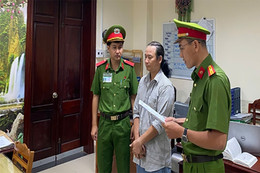
As the legal proceedings against Tran Nhu Long advance, the Can Tho City Police are continuing their investigative efforts to recover as much of the dispersed machinery or equivalent monetary value as possible to restitute the victims. The case will ultimately be forwarded to the People’s Procuracy of Can Tho City for indictment, paving the way for a public trial that will determine the final judicial penalty for Long’s actions. The strict handling of this case reaffirms the local government’s commitment to upholding the rule of law, protecting corporate property rights, and maintaining transparency and accountability within the regional commercial sector.