US Establishes Specialized Task Force and Pressures Iraq to Sever Border Crossings with Iran Amid Escalating Gulf Tensions

WASHINGTON — In a significant escalation of its ongoing maximum-pressure campaign against Tehran, the United States military has announced the formation of a specialized maritime and border enforcement task force aimed at choking off Iran’s illicit supply lines, advanced weaponry transfers, and revenue streams. Concurrently, Washington has escalated diplomatic and economic pressure on neighboring Iraq, demanding the closure of virtually all land border crossings connecting the two sovereign nations.
The developments, confirmed by senior defense officials and regional governments in early November, underscore a tightening economic and military noose around Iran. The strategic moves coincide with heightened naval friction in the vital Strait of Hormuz, sporadic kinetic exchanges, and complex, multi-track diplomatic initiatives mediated by regional powers such as Qatar.
Formation of the Counter-Smuggling Task Force
According to statements
made by Vice Admiral Brad Cooper, Deputy Commander of the United States Central Command (CENTCOM), the newly formed law enforcement and military hybrid task force is designed to systematically reinforce the maritime and terrestrial blockades currently enforced by Washington against Iranian ports and transit routes.
Headquartered at MacDill Air Force Base in Tampa, Florida, the specialized unit comprises approximately 20 civilian and military personnel. Despite its relatively small administrative footprint, the task force carries an extensive mandate: intercepting the transit of advanced weaponry components, dual-use technology, missile guidance systems, propellant materials, and illicit financial resources moving across Iran’s southern maritime boundaries as well as the Caspian Sea basin.
CENTCOM officials emphasized that the unit will operate in close coordination with various branches of the U.S. government, including intelligence agencies, the Department of the Treasury, and the Department of Homeland Security, to track and dismantle complex sanctions-evasion networks operating across international borders.
Diplomatic and Economic Pressure on Baghdad
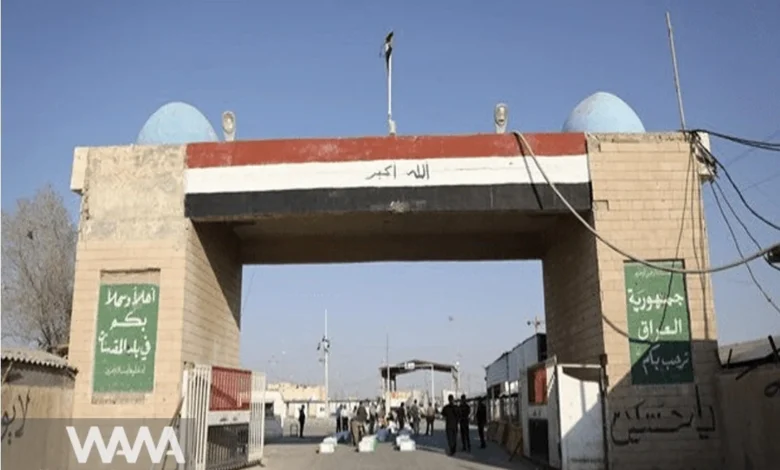
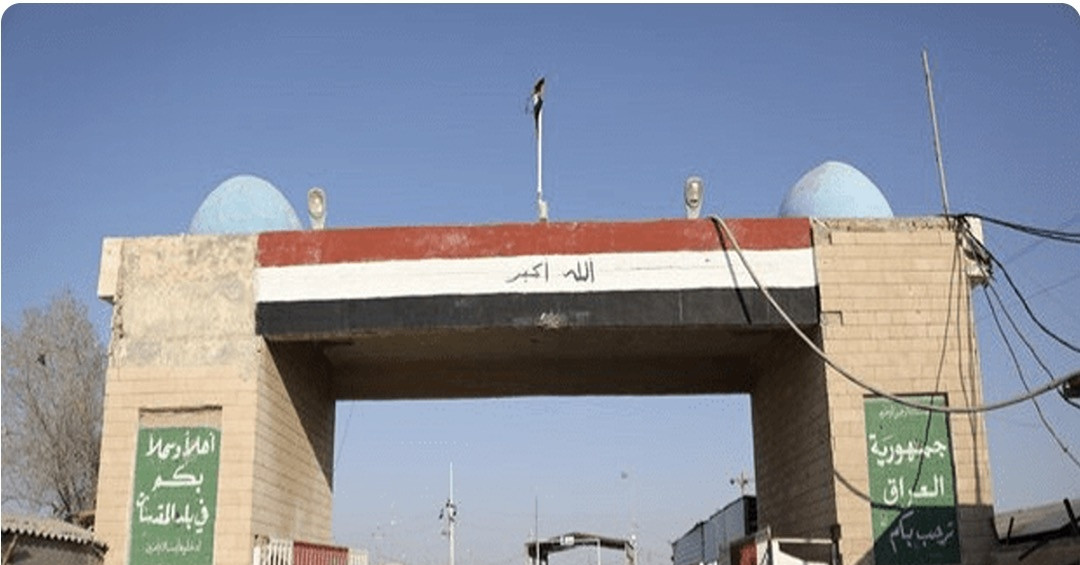
As part of the broader strategy to isolate Tehran economically, Washington has leaned heavily on the government in Baghdad. According to statements from Iraqi Foreign Minister Fuad Hussein, the United States formally requested that Iraq shutter the vast majority of its official border crossings with Iran, leaving only two operational.
The demand places the Iraqi government in a delicate geopolitical balancing act. Iraq shares deep religious, cultural, and economic ties with its eastern neighbor, importing billions of dollars in electricity, natural gas, consumer goods, and food products from Iran annually. Complete or near-total closure of the border threatens to create severe domestic shortages and economic disruption within Iraq, which has long sought to position itself as a diplomatic bridge between Western powers and Tehran.
U.S. officials maintain that cutting off land-based trade routes is vital for depriving the Iranian government of hard currency and preventing the covert movement of military hardware and sanctioned materials that bypass maritime restrictions.
Geopolitical Context and the Strait of Hormuz Flashpoint
The intensification of the blockade is inextricably linked to the ongoing crisis surrounding the Strait of Hormuz, a critical maritime chokepoint through which approximately 20% of the world’s petroleum passes.
For months, the unhindered flow of commercial shipping through the Persian Gulf has been subjected to heightened security risks, naval standoffs, and reciprocal threats. Tehran has repeatedly insisted that the complete cessation of maritime blockades and sanctions targeting its oil exports is a non-negotiable prerequisite for resolving the broader geopolitical conflict and restoring normal commercial navigation through the Strait of Hormuz.
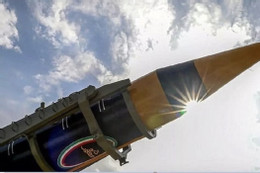
The standoff has also drawn kinetic responses. U.S. President Donald Trump confirmed that American forces executed precision military strikes targeting Iranian air defense systems situated on Qeshm Island, located strategically within the vicinity of the Strait of Hormuz. The military action was described by Washington as a calibrated response to provocations and a measure to protect regional shipping lanes and coalition assets.
Despite the military friction, diplomatic backchannels remain active. President Trump acknowledged that indirect negotiations between Washington and Tehran, facilitated by Qatar, have achieved "much headway" and "many promising developments," even as both sides maintain an posture of strategic deterrence.
Regional and International Reactions
The escalating campaign has elicited sharp reactions from international stakeholders. Moscow has categorically rejected Western allegations that it has been supplying advanced weaponry or military hardware to Iran. Russian Foreign Minister Sergey Lavrov dismissed the claims, stating that the mere allegations defy basic logic and understanding. Similarly, the General Staff of the Armed Forces of Iran issued a strongly worded statement denouncing foreign acquisitions and military trade, emphasizing that reliance on external security hardware remains heavily restricted and tightly scrutinized under domestic defense doctrines.
Meanwhile, internal political dynamics in the United States continue to cast a long shadow over foreign policy execution. Recent midterm election outcomes in the U.S. reflected voter weariness regarding prolonged foreign entanglements and military escalations in the Middle East. Analysts suggest that the shifting domestic political landscape adds urgency to the White House’s desire to secure tangible diplomatic breakthroughs or strategic wins in the Persian Gulf without triggering a wider regional war.
Gulf states, which have borne the economic and security anxieties of the persistent U.S.-Iran friction, have expressed cautious optimism that ongoing diplomatic mediations could eventually defuse tensions, though many remain on high alert as the maritime and border blockades enter a more aggressive phase.
Broader Implications and Outlook
The establishment of the new CENTCOM task force and the pressure exerted on Iraq signal a structural entrenchment of Washington’s containment policy toward Iran. By systematically targeting secondary supply lines, land borders, and financial conduits alongside maritime routes, the United States aims to increase the economic cost of Tehran’s regional posture.
However, analysts caution that such measures carry significant risks. Prolonged economic strangulation could diminish the incentives for compromise in ongoing Qatari-mediated talks, potentially driving Tehran toward harder-line domestic postures, increased asymmetric maritime activities, or accelerated technological advancements in its missile and defense programs.
As the situation develops, the international community will closely monitor whether the combination of heightened enforcement and backchannel diplomacy can yield a durable framework for stability in the Persian Gulf, or whether the region is headed toward a deeper cycle of confrontation.
Related posts: