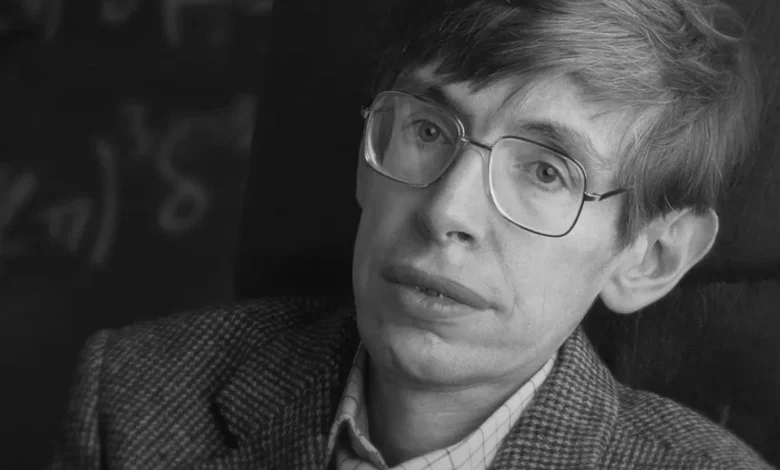
The legacy of Professor Stephen Hawking, a figure whose intellectual reach spanned the farthest corners of the cosmos, has recently been subjected to a nuanced re-examination. A new biography authored by Graham Farmelo, scheduled for release in late September, challenges the prevailing hagiographic narrative that has defined public perception of the physicist since his rise to global stardom. While history will undoubtedly remember Hawking as one of the most brilliant minds to grapple with the mysteries of black holes and the origins of the universe, this latest work offers a more intimate and, at times, polarizing portrait of the man behind the scientific breakthroughs.
In a comprehensive review for The Guardian, writer Philip Ball notes that Farmelo’s work moves beyond the simplified image of a martyr for science, instead painting a complex picture of a man who possessed both extraordinary resilience and significant personal failings. These character flaws, often obscured by the sheer magnitude of his scientific contributions and his legendary battle with motor neurone disease, are brought to the forefront, providing a humanizing—if at times uncomfortable—look at one of the 20th century’s most iconic figures.
A Scientific Titan Under the Lens
Stephen Hawking’s professional trajectory is nothing short of miraculous when viewed against the backdrop of his physical decline. Diagnosed with amyotrophic lateral sclerosis (ALS) in 1963 at the age of 21, he was initially given a prognosis of only two years to live. That he survived for more than five decades, becoming the Lucasian Professor of Mathematics at the University of Cambridge, remains one of the most compelling narratives in modern science.
Under the mentorship of Dennis Sciama at Cambridge, Hawking’s latent genius began to flourish. His collaboration with Roger Penrose in the late 1960s, specifically regarding singularity theorems, provided the first robust mathematical framework to explain the Big Bang. This work fundamentally altered the trajectory of cosmology, moving it from speculative philosophy to a rigorous branch of mathematical physics.
By 1974, Hawking proposed the revolutionary theory of “Hawking Radiation,” suggesting that black holes are not truly black but emit radiation that eventually causes them to evaporate. This discovery was a watershed moment, bridging the gap between general relativity and quantum mechanics. Farmelo’s biography highlights these achievements not just as feats of intellect, but as victories of an indomitable will. "It was his sheer tenacity, his capacity for recovery, and his extraordinary resilience that were the most crucial factors in his career," Farmelo writes, suggesting that Hawking’s physical limitations were inextricably linked to his singular focus.
The Duality of Character: A Closer Look
The most contentious aspects of the new biography involve the testimonies of those who knew Hawking intimately. While colleagues often speak of him with profound reverence, his personal relationships paint a picture of a man who could be emotionally detached and, in the words of some, "arrogant to a fault."
His first wife, Jane Wilde, endured a marriage characterized by profound tension and, according to the accounts detailed in the book, a lack of acknowledgment for the immense sacrifices she made to sustain his life and career. Similarly, his foster brother, Edward, described a sense of distance, stating, "I never really felt close to Stephen… there was a coldness about him."
These revelations are not merely tabloid gossip; they provide necessary context for the professional dynamics Hawking maintained. The book notes that Hawking was often criticized for failing to credit the work of his collaborators, most notably his omission of Roger Penrose’s contributions in certain contexts. Such professional slights led some peers to conclude that his public lectures were, at times, self-aggrandizing rather than purely educational.
Chronology of a Scientific Life
- 1942: Born in Oxford, England, on January 8.
- 1963: Diagnosed with motor neurone disease (ALS) while at Cambridge.
- 1966: Earns his PhD, focusing on the nature of singularities in the universe.
- 1970: Publishes seminal work with Roger Penrose on the singularity of the universe.
- 1974: Proposes the theory of Hawking Radiation, revolutionizing the understanding of black holes.
- 1979: Appointed the Lucasian Professor of Mathematics at Cambridge, a position held by Isaac Newton.
- 1988: Releases "A Brief History of Time," which becomes a global phenomenon.
- 2013: Receives the Breakthrough Prize in Fundamental Physics.
- 2018: Passes away at age 76.
The Human Cost of Greatness
The process of writing this biography involved unprecedented access to the Hawking family archives. Lucy, Robert, and Tim Hawking, the physicist’s children, provided Farmelo with access to private correspondence, journals, and unpublished documentation. This access has allowed for a level of detail that surpasses previous biographical attempts.
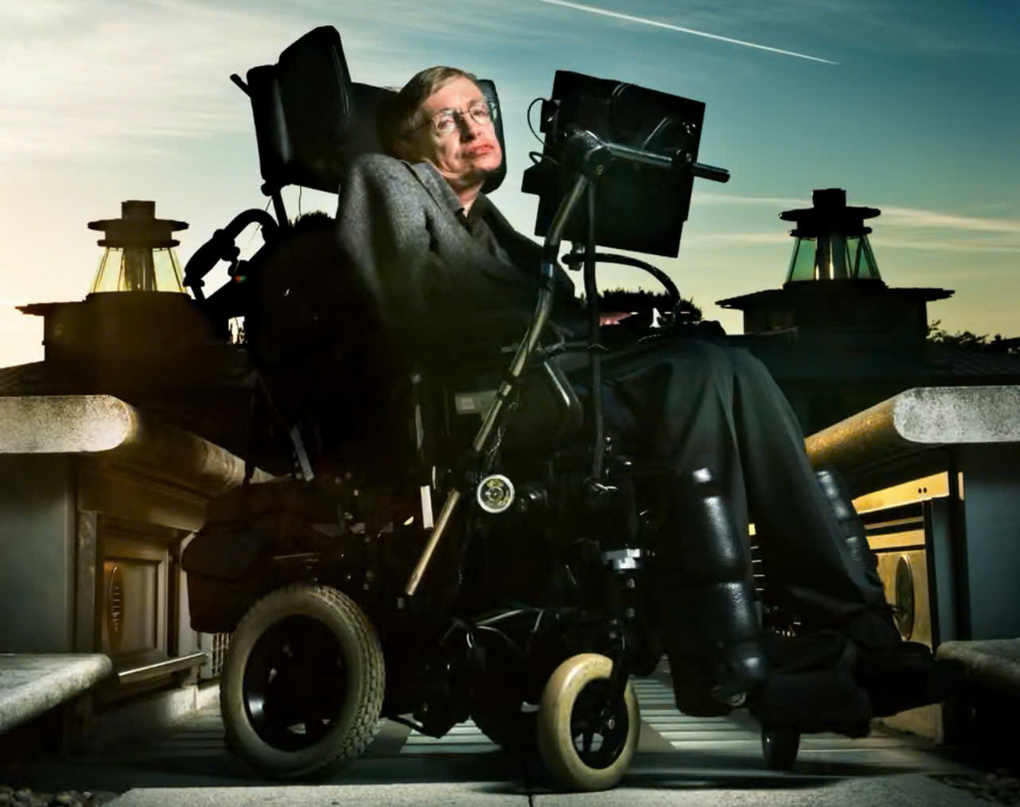
The narrative that emerges is one of a man who was, in many ways, insulated from the mundane realities of life by the very people he struggled to connect with emotionally. This raises an age-old question: does the brilliance of a scientific discovery excuse the social and emotional failures of the person who made it? For many in the scientific community, the answer is complex. There is a clear distinction between the "public Hawking"—the hero of science—and the "private Hawking," who struggled with the complexities of human intimacy.
Broader Implications and Legacy
The release of this biography serves as a reminder that icons are rarely as perfect as their public image suggests. The objective of such a study is not to diminish Hawking’s scientific achievements, which remain foundational to modern cosmology, but to provide a more accurate historical record.
In the realm of physics, Hawking’s influence remains absolute. His work on the nature of space-time continues to guide research into quantum gravity. His ability to popularize complex concepts—making the universe accessible to the layperson through works like "A Brief History of Time"—has inspired generations of scientists.
However, the "corner of the dark" alluded to in the examination of his life reminds us that great intellects often operate in a vacuum. As Graham Farmelo noted during the research process, "Writing this book was the most challenging thing I have ever done." It was a balancing act between documenting the monumental professional achievements and addressing the deeply human, and often difficult, traits of a man who had to fight for every breath while contemplating the infinite.
Ultimately, the consensus among historians of science is that Hawking’s legacy is robust enough to withstand this level of scrutiny. His contributions to science are not invalidated by his personal shortcomings, nor are his character flaws excused by his genius. By accepting the full, unfiltered portrait of Stephen Hawking, we do not lose a hero; rather, we gain a more realistic understanding of the intersection between human limitation and intellectual transcendence. The biography serves as an essential, if sobering, addition to the history of modern science, ensuring that we remember Hawking not just as a mind, but as a man.