Vietnam Stock Market Navigates Volatility and Continued Foreign Outflows in First Week Following Historic Upgrade

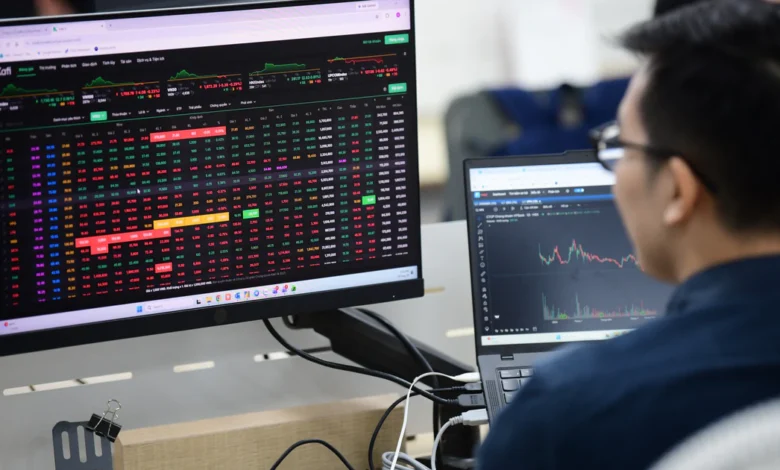
The Vietnamese stock market has officially concluded its first trading week following its long-awaited and historic market upgrade, experiencing a rollercoaster of mixed sessions, subdued overall liquidity, and persistent net selling pressure from foreign institutional investors. While the benchmark VN-Index managed a modest recovery toward the end of the week, trading activity remained notably subdued compared to the robust volumes witnessed immediately prior to the reclassification milestone.
The transition to a higher market status represents a monumental milestone for Southeast Asia’s dynamic frontier-turned-emerging economy, drawing intense global scrutiny from international funds, local brokerages, and retail participants alike. However, the immediate aftermath has underscored the complex interplay between macroeconomic optimism, foreign capital rebalancing, and domestic market sentiment.
Market Performance and Index Movements at the Weekly Close
At the final closing bell of the week, the benchmark VN-Index settled at 1,785.11 points, marking a daily increase of 10 points, or approximately 0.56%. Similarly, the blue-chip VN30-Index advanced by 6.35 points, or 0.33%, to finish at 1,938.50 points. Despite this late-week rebound, the broader market failed to erase earlier losses accumulated during the initial sessions of the post-upgrade era.
In contrast to the positive momentum on the Ho Chi Minh Stock Exchange (HoSE), secondary indices finished in negative territory. The HNX-Index, representing the Hanoi Stock Exchange, dipped by 0.56 points, or 0.21%, closing at 272.21 points. Meanwhile, the UPCoM-Index for public companies dropped 0.62 points, or 0.49%, to settle at 125.21 points.
Market breadth remained divided, reflecting cautious sentiment across diverse sectors. Across the entire HoSE exchange, only 287 stocks advanced—including 48 hitting their maximum ceiling price—while 363 counters declined, and 33 hit their floor prices. Liquidity softened slightly, with trading value on HoSE reaching approximately VND 16,235 billion, down 2.67% compared to the VND 16,681 billion recorded in the previous session.
The Role of Large-Cap Giants in Driving the Index
The late-week recovery of the VN-Index was heavily supported by a handful of large-cap heavyweights, particularly within the real estate and banking sectors. Vinhomes JSC (VHM) emerged as the single largest positive contributor, adding an impressive 6.68 points to the benchmark index. Vingroup (VIC) followed suit, contributing 3.26 points, while VPBank (VPB) provided an additional 1.54 points. Other notable contributors included VPL, which added 0.68 points, alongside Techcombank (TCB), BSR, and GEE, which contributed between 0.42 and 0.45 points each.
Conversely, heavy selling pressure in select blue chips dragged down the broader market index. Petrovietnam Gas (GAS) experienced the steepest decline, pulling the index down by 0.74 points. Additional downward pressure stemmed from Maritime Commercial Joint Stock Bank (SSB), Dairy giant Vinamilk (VNM), steel titan Hoa Phat Group (HPG), Bank for Investment and Development of Vietnam (BID), Masan Group (MSN), and technology leader FPT, which shaved off between 0.21 and 0.39 points each.
Persistent Foreign Outflows and Capital Rebalancing
One of the most closely monitored developments following the market upgrade has been the sustained net selling behavior displayed by foreign investors. During the final session of the week, foreign capital grossed approximately VND 1,576 billion in purchases against VND 1,805 billion in sales, resulting in a net outflow of VND 229 billion across the three main exchanges.
On the selling side, Techcombank (TCB) bore the brunt of foreign liquidations, registering net sales of VND 115 billion. It was followed by MSB with VND 98 billion, HPG with VND 78 billion, VIC with VND 77 billion, CTG with VND 61 billion, and VPB with VND 46 billion.
Conversely, foreign institutional buyers directed capital toward select equities, led by SBT with a net purchase value of VND 246 billion. BSR followed with VND 108 billion, alongside MSR, DCM, VHM, and FRT, which attracted net inflows ranging from VND 35 billion to VND 47 billion.
Taking a broader view across the five trading sessions since the official upgrade took effect, foreign investors have offloaded a net total of approximately VND 2,762 billion across the Vietnamese stock market. Notably, the heaviest liquidations occurred mid-week, with net sales surpassing VND 1,056 billion and VND 866 billion on consecutive days. Over the exact same five-day timeframe, the VN-Index retreated by 30.55 points, or 1.68%, sliding from an opening level of 1,815.66 points down to 1,785.11 points. Financial analysts attribute these outflows primarily to global portfolio rebalancing rather than domestic fundamentals, as international index-tracking funds adjust their weightings to accommodate Vietnam’s elevated market classification.
VPBank Shares Surge Amid Stake Acquisition Negotiations
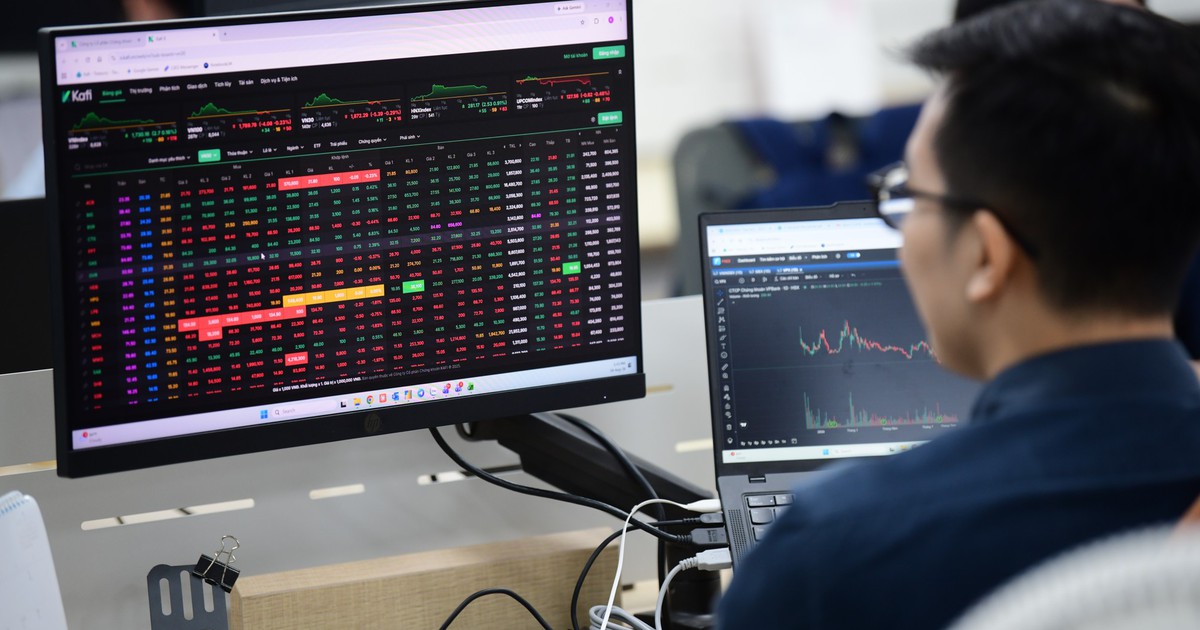
Amid the broader market’s cautious tone, shares of Vietnam Prosperity Joint Stock Commercial Bank (VPBank, stock code: VPB) captured significant market attention, surging 4% to close the session at VND 23,000 per share. During intraday trading, VPB touched a peak of VND 23,600, marking its second consecutive session of robust gains.
The rally was underpinned by heavy trading volume, with more than 46.8 million VPB shares changing hands, translating to a trading value of approximately VND 1,076 billion and propelling the bank’s market capitalization to roughly VND 230,000 billion.
The upward momentum in VPB was catalysed by widespread media reports, including coverage by international news agency Reuters, indicating that Japan’s Sumitomo Mitsui Banking Corporation (SMBC) is in advanced negotiations to increase its ownership stake in VPBank from approximately 15% to roughly 20%.
According to sources close to the matter, discussions between the two financial institutions have reached an advanced stage, with both sides aiming to finalize the transaction within the current calendar year. However, minor discrepancies regarding valuation remain the primary hurdle in sealing the agreement.
SMBC originally acquired a 15% stake in VPBank back in 2023 for approximately $1.5 billion, cementing its position as a strategic anchor investor in the Vietnamese lender. Insiders suggest that VPBank is currently seeking a valuation significantly higher than prevailing market prices. During the 2023 transaction, SMBC paid a substantial premium—roughly 40% higher than the prevailing market price at that time.
Current reports indicate that SMBC is reluctant to pay a similarly steep control premium under the present macroeconomic climate and has instead explored alternative mechanisms, such as acquiring additional shares directly through open-market transactions rather than participating in a private placement. To date, both SMBC and VPBank have declined to issue official comments regarding the ongoing negotiations.
Sector Performance: Banking and Real Estate Diverge
Beyond the stellar performance of VPB, the broader banking sector experienced a largely positive session on September 25. Techcombank (TCB) climbed 0.91%, Eximbank (EIB) rose 1.21%, HDBank (HDB) added 0.54%, and Military Commercial Joint Stock Bank (MBB) ticked up 0.25%. Conversely, a few banking counters bucked the trend, with MSB declining 1.4%, Sacombank (STB) dropping 0.52%, and TPB slipping 0.68%.
The real estate sector provided substantial ballast to the market index. Vinhomes (VHM) surged 5.66%, Vincom Retail (VRE) advanced 1.45%, Vingroup (VIC) gained 0.87%, and VPI rose 0.65%. The sole notable loser in the major real estate space was Novaland (NVL), which fell by 2.87%.
The energy and commodities sectors presented a mixed picture. BSR increased by 1.33% and PVT gained 3.59%, while PVD dropped 1.91%. Industrial bellwether Hoa Phat Group (HPG) edged down 0.72%, whereas fertilizer producer DCM rose 0.88%. Meanwhile, the retail and technology sectors saw diverging fortunes; Mobile World Investment Corporation (MWG) ticked up 0.69%, while PNJ, FRT, and technology giant FPT experienced minor losses ranging from 0.07% to 0.92%.
Macroeconomic Implications and Outlook
The transition of the Vietnamese stock market to an upgraded classification status is widely regarded by economists and financial regulators as a transformative milestone. It signals enhanced market transparency, improved regulatory frameworks, and greater alignment with international trading standards.
However, market historians and analysts note that the initial post-upgrade phase frequently introduces short-term volatility. The influx of passive global capital is often counterbalanced by profit-taking, structural fund rebalancing, and temporary liquidity adjustments as domestic investors digest new valuation paradigms.
Looking ahead, market participants will closely monitor macroeconomic indicators, corporate earnings reports for the upcoming quarter, and official updates concerning strategic foreign investments, such as the ongoing SMBC-VPBank talks. While foreign net selling has exerted downward pressure on blue-chip valuations in the short term, the fundamental growth narrative of Vietnam’s economy—underpinned by steady GDP growth, robust foreign direct investment (FDI), and an expanding middle class—continues to provide a solid foundation for long-term market confidence.