Hung Thinh Investment reports reduced debt and improved half-year results amid ongoing bond repayment challenges

Hung Thinh Investment, a notable entity within the broader real estate sector, has released its latest financial disclosure, painting a complex picture of a company navigating the turbulent waters of the Vietnamese property market. As of mid-2026, the company’s financial reports suggest a stabilization of its debt obligations and a narrowing of losses, yet significant hurdles remain regarding its outstanding bond liabilities and overall liquidity position.
A Period of Financial Recalibration
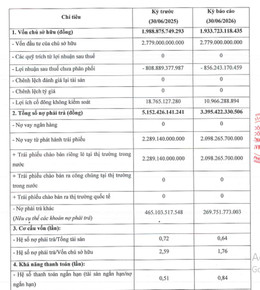
The recent filings indicate that Hung Thinh Investment has made a concerted effort to deleverage. By the end of 2025, the company’s total liabilities had been trimmed to approximately 3.417 trillion VND, representing a reduction of nearly 46% compared to the previous year. This downward trend persisted into the first half of 2026, with total liabilities further inching down to 3.395 trillion VND as of June 30, 2026.
Perhaps the most significant takeaway from the recent financial report is the composition of this debt. Notably, the company reported zero outstanding bank loans, a major shift in its capital structure. As of June 30, 2026, the remaining debt profile was dominated by bond obligations, which stood at 2.098 trillion VND, with the balance consisting of various other short-term and long-term liabilities. This shift underscores a strategy centered on reducing reliance on conventional credit facilities, likely in response to the tightening of credit standards across the banking sector.
Bond Repayment Challenges and Ongoing Negotiations
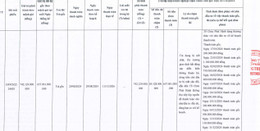
Despite the reduction in overall debt, the company continues to face acute pressure regarding specific bond tranches. On November 11, 2026, Hung Thinh Investment announced an additional payment of 100 million VND toward the principal of the H39CH2224003 bond series, following a 400 million VND payment made just one day prior.
While these payments reflect a commitment to meeting obligations, they also highlight the scale of the remaining debt. The company acknowledges that it still holds an overdue principal balance of 657 billion VND on this specific series. The H39CH2224003 bond, issued on August 29, 2022, with a fixed interest rate of 10.5% per annum, was originally scheduled to mature on August 29, 2024. The failure to clear this debt on time has been a recurring theme in the company’s disclosures since March 2023.
Management has cited the "tightening of credit" and "adverse conditions in the real estate market" as the primary drivers behind these delays. These macroeconomic headwinds have created a liquidity crunch, complicating efforts to mobilize funds for investors. Conversely, the company has shown signs of proactive management in other areas; earlier in 2025, it successfully repurchased the entirety of the H39CH2229001 bond series ahead of its 2029 maturity, a transaction valued at 2 trillion VND. This move, while demonstrating fiscal capability in specific segments, contrasts sharply with the ongoing struggle to settle the H39CH2224003 series.
Earnings Analysis: A Path Toward Profitability
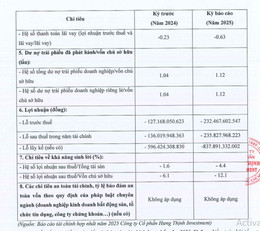
The financial performance of Hung Thinh Investment has mirrored the broader volatility of the domestic real estate market. In 2024, the company reported a post-tax loss of 136 billion VND. This figure widened significantly in 2025, with losses climbing to 235.8 billion VND, bringing the cumulative loss at the end of that year to nearly 838 billion VND.
However, the first six months of 2026 have provided a glimmer of optimism. The company reported a net loss of 17.7 billion VND for the first half of the year, a substantial improvement compared to the 207 billion VND loss recorded during the same period in 2025. While the cumulative loss as of June 30, 2026, stands at a daunting 856.2 billion VND, the drastic reduction in quarterly losses suggests that the company’s internal cost-cutting measures and restructuring efforts are beginning to take effect.
Liquidity Ratios and Financial Health Indicators
Financial analysts often look to liquidity ratios to gauge a company’s ability to cover its short-term obligations. In this regard, Hung Thinh Investment has seen some improvement. By mid-2026, the debt-to-equity ratio had declined to 1.76 times, reflecting a more balanced capital structure. Furthermore, the short-term payment ratio improved to 0.84 times.
While these ratios are trending in the right direction, they remain below the threshold of 1.0, indicating that the company is still under pressure to generate sufficient cash flow to cover its immediate liabilities without relying on the refinancing of existing debt. The current state of the balance sheet suggests that while the "financial hemorrhage" has been slowed, the company has not yet achieved a state of robust liquidity.
Contextualizing the Real Estate Climate
To understand the position of Hung Thinh Investment, one must view it within the context of the wider Vietnamese real estate landscape. Since late 2022, the sector has been grappling with a "triple threat": a freeze in the corporate bond market, the legal bottlenecks affecting project approvals, and a general decline in buyer confidence.
Many developers, including industry giants, have had to adopt similar strategies: extending bond maturities, selling off non-core assets to raise cash, and prioritizing the completion of key projects to generate revenue. Hung Thinh Investment’s decision to disclose its bond payment status consistently—even when those disclosures confirm delays—is a regulatory requirement that has become a litmus test for corporate transparency in the current market.
Future Implications and Strategic Outlook
The path forward for Hung Thinh Investment rests on three critical pillars: the successful resolution of remaining bond debt, the restoration of cash flow from real estate projects, and the ability to maintain the recent improvements in operational efficiency.
The company’s management has stated that the primary focus remains on restructuring debt to align with current cash flow realities. For bondholders, the recurring delays in the H39CH2224003 series are a point of concern, yet the company’s history of fulfilling some obligations—such as the early 2025 buyback of the 2-trillion-VND series—suggests that they are actively managing their portfolio of debt rather than defaulting entirely.
Looking ahead, the recovery of the company will be intrinsically tied to the overall health of the property market. With government initiatives aimed at easing legal hurdles for developers and lower interest rates beginning to influence the broader economy, the environment for companies like Hung Thinh Investment is expected to become more favorable. However, the legacy of the 2024-2025 losses means that the company faces a long road to deleveraging and rebuilding its equity base.
Conclusion: A Measured Recovery
Hung Thinh Investment is currently in a phase of delicate transition. The data from the first half of 2026 confirms that the company is no longer in the freefall experienced in previous years. By reducing its total debt and narrowing its losses significantly, the company has demonstrated a level of resilience.
Nevertheless, the outstanding 657 billion VND in overdue bond principal serves as a reminder that the company is not yet out of the woods. The road to financial stability will require not only sustained operational improvements but also a favorable shift in market demand that allows the company to monetize its inventory effectively. As the company continues to communicate its progress to the market, stakeholders will be watching closely to see if the positive trends seen in the first half of 2026 can be maintained through the end of the year and beyond. The transition from a "survival mode" to a "growth mode" will be the true test for the leadership in the coming fiscal periods.