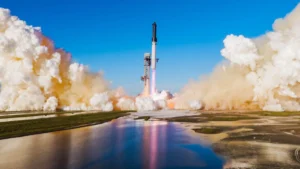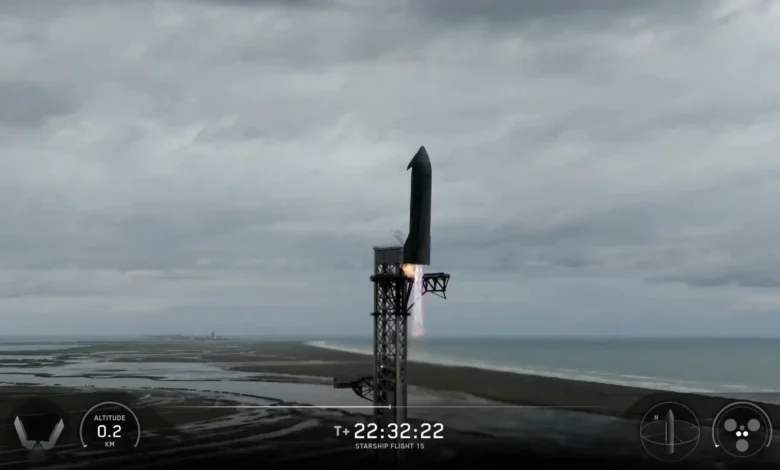
SpaceX has achieved a monumental milestone in aerospace engineering with the successful capture of the Starship upper stage, a feat that fundamentally alters the economics and operational capacity of space flight. During the 15th integrated flight test on November 13, the company successfully returned the Starship vehicle to the launch site, where it was caught by the "Mechazilla" mechanical launch tower arms. This event follows the earlier, equally dramatic success of catching the Super Heavy booster, marking a new era where full reusability of the world’s most powerful launch system is no longer a theoretical ambition but a proven reality.
The Evolution of the Starship Program
The Starship program, spearheaded by Elon Musk and SpaceX, is designed to be a fully and rapidly reusable transportation system. Unlike traditional rockets that are discarded after a single use, Starship is engineered to function more like a commercial airliner. The recent test flight, which concluded on November 14—approximately 22.5 hours after liftoff—demonstrated that both components of the two-stage vehicle can be recovered at the launch site.
While the Super Heavy booster had previously been caught by the launch tower in prior tests, this was the first time the upper-stage "Ship" successfully performed a controlled landing back at the launch site. The challenge of recovering the upper stage is significantly higher than that of the booster, as the Ship travels at much higher velocities and experiences more extreme thermal loads during atmospheric re-entry. Dan Huot, a spokesperson for SpaceX, characterized the successful capture as a "foundational moment" for the entire rocket industry, signaling that the technological hurdles to rapid reusability are effectively being dismantled.
A Chronology of Success and Refinement
The journey toward this achievement has been marked by iterative progress. SpaceX has consistently used its test flights to refine the landing profiles of the Super Heavy booster. Data shows that the company has already demonstrated the ability to refurbish and relaunch boosters. For example, Booster 14 was utilized in the seventh flight test in January 2025 and again in the ninth flight test in May 2025. Similarly, Booster 15 saw action in the eighth and eleventh flights in March and October 2025, respectively.
This rapid turnaround capability is the bedrock of Musk’s vision. The company’s goal is to transition from occasional test flights to a high-cadence launch schedule. Musk has publicly stated an ambitious target of 10,000 launches per year by 2030. Achieving this would mean that, on average, a Starship vehicle would be launching every hour, creating a bridge between Earth and space that is as reliable and frequent as modern maritime or aviation logistics.
Strategic Implications: Starlink and Starmind
The capability for high-frequency, low-cost launches is primarily driven by the need to expand SpaceX’s orbital infrastructure. The Starlink V3 constellation, currently in development, is expected to eventually consist of 100,000 satellites. This massive increase in satellite density is intended to support "Starmind," a planned AI-driven data center constellation that will require ten times the current capacity of the existing network.
Currently, the Starlink network operates with roughly 11,000 satellites in low Earth orbit. The shift to Starship as the primary launch vehicle will allow SpaceX to deploy thousands of satellites in a single mission, drastically reducing the cost-per-kilogram to orbit. By proving that the vehicle can be caught and potentially turned around for a subsequent flight within a very short window, SpaceX is moving toward a business model where the cost of the hardware is amortized over hundreds of flights, rather than just one.
The Path to Human Spaceflight and Lunar Exploration
Beyond the logistical deployment of satellites, the successful recovery of the Ship is a critical prerequisite for NASA’s Artemis program. NASA has selected a modified version of the Starship vehicle to serve as the Human Landing System (HLS) for the Artemis IV mission, currently targeted for 2028. This mission aims to place the first astronauts on the lunar surface near the south pole since the Apollo era.
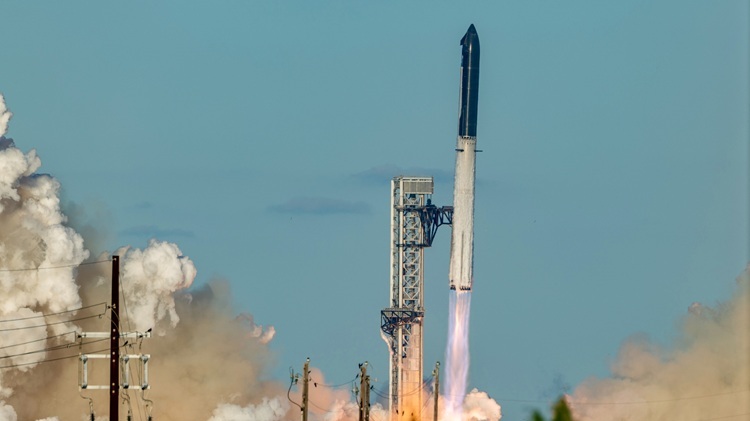
For these deep-space missions, SpaceX faces a new set of technical requirements, including the integration of crew cabins and advanced life-support systems. NASA recently confirmed that SpaceX is nearing the completion of "Cabin 1," a terrestrial prototype of the crew quarters that will reside within the Starship vehicle. This prototype is expected to undergo final testing by the end of the year, providing a blueprint for the living conditions that astronauts will experience during the transit to the Moon and beyond.
The Challenge of Orbital Refueling
Despite the success of the recent flight, the most significant hurdle remaining for long-duration deep-space missions is orbital propellant transfer. Because of the immense mass required to reach the Moon or Mars, a Starship cannot launch with a full payload and enough fuel to reach its destination simultaneously.
Instead, the vehicle must launch into Earth orbit and receive multiple "top-offs" from tanker versions of the Starship. Experts estimate that it may take anywhere from six to twenty-two separate launches to fill a single ship for a lunar mission, while Elon Musk’s internal projections suggest a more optimistic range of six to eight.
The technical complexity of this operation cannot be overstated. The engines of the Ship run on liquid oxygen and liquid methane, both of which are cryogenic propellants. Maintaining these liquids at extremely low temperatures during the extended duration of an orbital transfer process is a massive engineering challenge. Furthermore, the transfer must occur flawlessly in the vacuum of space, where any leakage or pressure instability could result in mission failure.
Analytical Perspective: The Economic Shift
The success of the "Mechazilla" catch mechanism provides a vital economic argument for the future of space exploration. By eliminating the need for complex landing legs on the vehicles and reducing the infrastructure footprint required for recovery, SpaceX is optimizing its mass-to-orbit ratio. Every kilogram saved on landing gear is a kilogram that can be dedicated to fuel, life support, or scientific instrumentation.
Furthermore, the operational data gathered from the 15th flight test will allow engineers to refine the thermal protection system and the guidance, navigation, and control algorithms for the Ship. While SpaceX has yet to demonstrate the ability to perform a rapid turnaround of the Ship, the successful recovery of the vehicle in one piece is the most significant step taken toward that goal to date.
As the industry looks toward the next phase of the Artemis program and the potential for human missions to Mars, the Starship platform stands as the most critical piece of infrastructure in the history of commercial spaceflight. The transition from "disposable" to "reusable" is the single most important factor in lowering the barrier to entry for space exploration, and with the successful catch of the upper stage, SpaceX has effectively closed the loop on a system that was once considered impossible.
The coming years will be defined by how quickly SpaceX can scale this technology. If the company can achieve the rapid turnaround times required for the Starlink V3 expansion and the fueling missions for NASA, the frequency of human activity in space is poised to increase exponentially. The 15th flight test will likely be remembered not just as a successful test, but as the moment when the logistics of space travel began to mirror those of the terrestrial world.
Related posts: