Global Precious Metals Volatility Intensifies as Spot Gold and Silver Plummet Before Pivoting Sharply Ahead of the Federal Reserve Policy Meeting

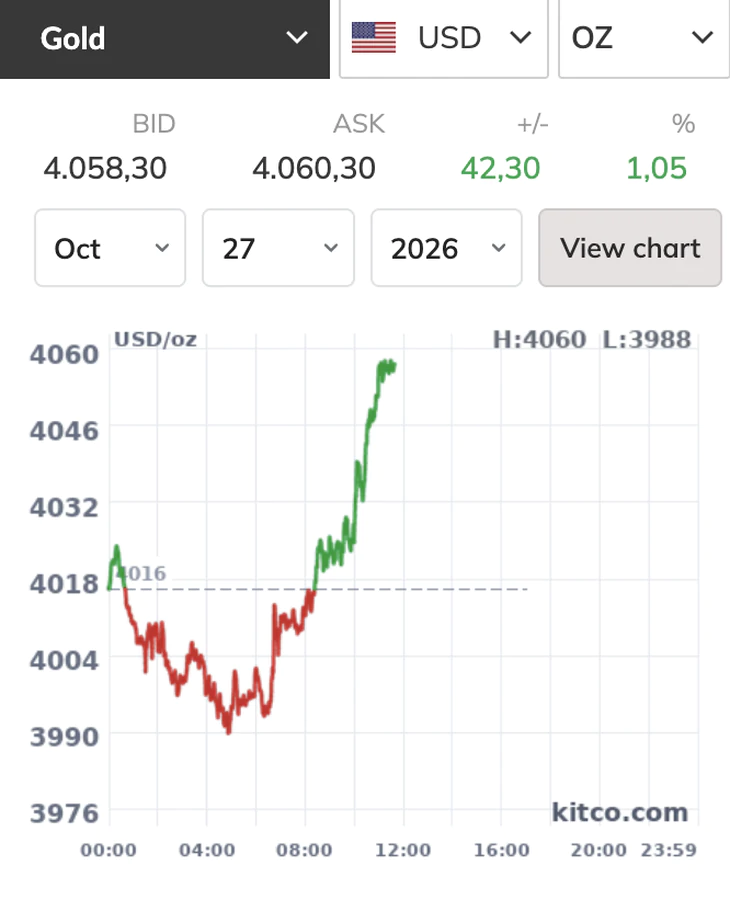
Global precious metals markets experienced an extraordinarily volatile trading session, culminating in dramatic price swings that left investors reeling and highlighted lingering macroeconomic uncertainties. On October 27, international spot gold prices plummeted precipitously to a daily low of $3,990 per ounce before staging a sharp and unexpected rebound, surging back to approximately $4,060 per ounce by late evening at 23:00. This erratic movement is merely the latest chapter in a sustained period of downward pressure on both gold and silver, which has severely tested the psychological endurance and financial resilience of retail and institutional investors alike.
When translated using standard commercial bank exchange rates, spot gold is currently valued at roughly 127.4 million VND per tael. This valuation reflects a dramatic correction from earlier in the year when precious metals scaled historic peaks. Market analysts note that spot gold has depreciated by nearly 29% compared to its all-time high recorded in January, sparking fierce debates over whether the current market cycle represents a temporary consolidation phase or the definitive end of the prolonged bull market.
Market Dynamics Preceding the Federal Reserve Meeting
The acute contraction in precious metals prices occurred directly in the shadow of the highly anticipated policy meeting of the United States Federal Reserve. In the days leading up to the central bank’s announcement, financial markets had widely priced in a near-90% probability that the Federal Open Market Committee (FOMC) would opt to keep benchmark interest rates unchanged. However, sophisticated market participants focused less on the static interest rate decision and more on the nuanced forward guidance embedded in the central bank’s official statement, particularly commentary regarding persistent inflationary pressures and the trajectory of monetary policy heading into December.
Financial strategists pointed out that the market reaction hinged heavily on the tone struck by Federal Reserve Chair Jerome Powell and his colleagues. A decision to maintain current interest rates paired with a hawkish monetary policy statement—signaling that rates could remain elevated for a prolonged period—typically bolsters the U.S. dollar and pushes Treasury yields higher. Such an environment naturally imposes severe downward pressure on non-yielding assets like gold and silver. Conversely, a dovish pivot or an acknowledgment of softening economic data could provide the necessary monetary tailwind to lift precious metal valuations out of their multi-week slump.
Despite the recent downward trend, a consensus is gradually forming among commodities analysts that the scope for additional downside correction in gold may be limited. Given that spot prices have already retreated significantly from their January apex, many experts argue that the market has thoroughly absorbed much of the negative macroeconomic sentiment, positioning gold for a potential technical rebound once the Federal Reserve concludes its deliberations.
Mounting Losses and Frustration Among Retail Investors
While institutional traders navigate complex derivatives and hedging strategies, retail investors holding physical gold and silver have borne the brunt of the recent market correction. Across various financial forums and online investment communities, sentiment has shifted markedly from optimism to exhaustion as consecutive sessions of falling prices erode portfolios.
In domestic markets, the impact has been stark. Gold bar prices, which previously scaled staggering heights of up to 192 million VND per tael, slumped significantly to 142 million VND per tael. This represents a staggering loss of approximately 50 million VND per tael, or a 26% decline from peak levels. Investors who committed capital at the absolute market zenith of 192 million VND per tael and chose to liquidate their holdings during the recent downturn face cumulative losses approaching 28%. This steep loss is heavily compounded by the widening bid-ask spreads enforced by domestic trading companies attempting to insulate themselves against extreme market volatility.
Silver investors have fared even worse, enduring disproportionately heavier losses. Those who accumulated physical silver at prices exceeding 120 million VND per tael watched in dismay as buying prices collapsed to roughly 45 million VND per tael, wiping out nearly two-thirds of their initial investment value. The sheer magnitude of these drawdowns has triggered widespread anxiety, prompting many novice investors to reevaluate their exposure to alternative asset classes.
Domestic Market Pricing and Widening Spread Discrepancies
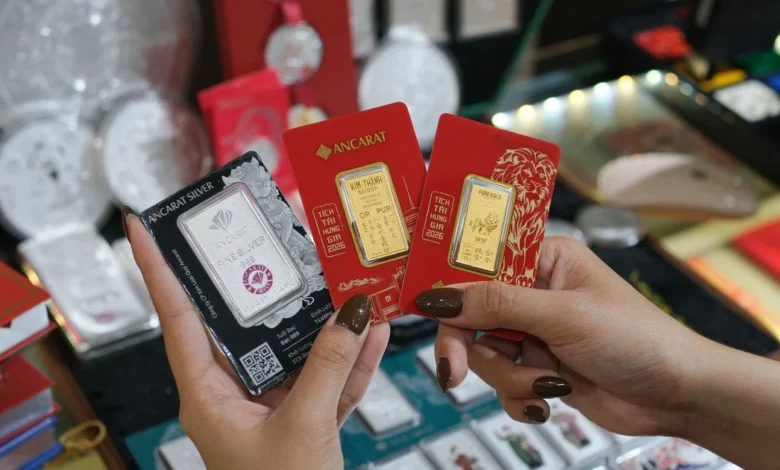
At the close of trading on October 27, domestic precious metals markets reflected the broader international turmoil. SJC gold bars were quoted widely with a selling price of 142 million VND per tael, while purchasing prices hovered around 139 million VND per tael. Meanwhile, 9999 purity gold rings traded at slightly lower brackets, with selling prices registered at 139 million VND per tael and buying prices resting at 135 million VND per tael.
The extreme velocity of the international price decline forced domestic gold companies to widen the gap between buying and selling prices to an unprecedented 3 to 4 million VND per tael—a definitive risk-mitigation measure designed to buffer businesses against sudden intraday shocks. Individual corporate pricing structures further illustrated the fragmented nature of the domestic market:
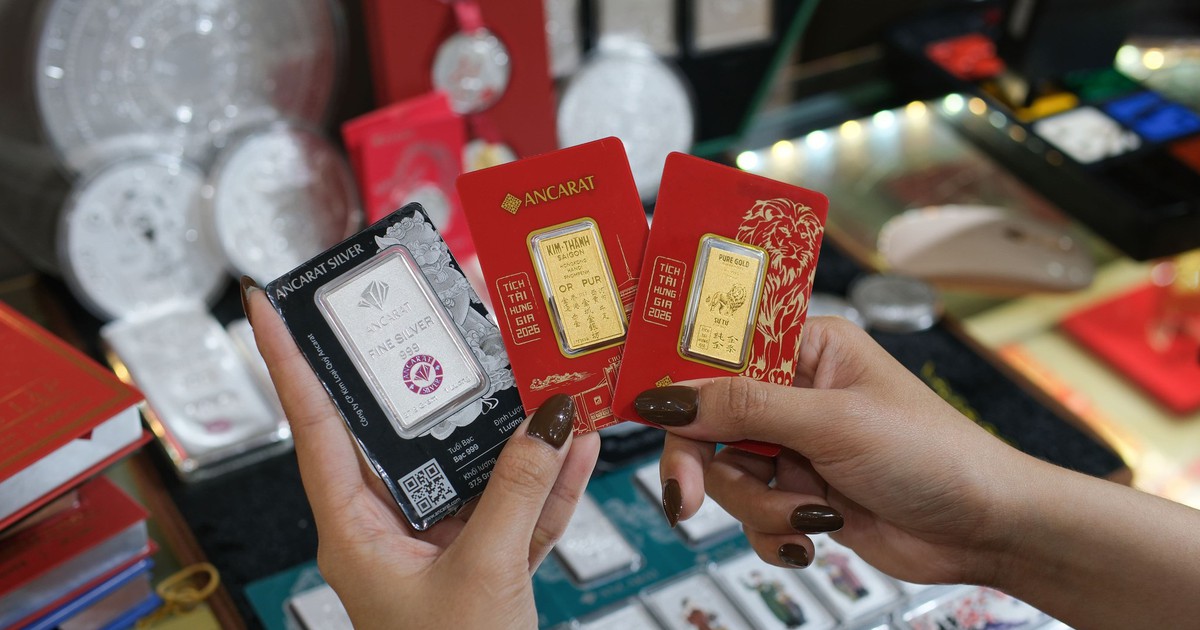
- Ancarat: Listed gold selling prices at 145.8 million VND per tael, with purchase bids accepted at 139.3 million VND per tael.
- Mi Hong: Quoted a selling price of 141.7 million VND per tael against a buying price of 140.2 million VND per tael.
When compared directly against converted international spot prices, domestic gold currently trades at a premium of roughly 14.6 million VND per tael. This domestic premium has expanded progressively in recent sessions because domestic retail prices have adjusted downward at a considerably slower pace than the rapid fluctuations observed on global bullion exchanges.
Silver Markets Hit Multi-Month Lows
Reflecting the broader downward momentum of the precious metals complex, silver prices experienced parallel contractions. International silver traded near 54.38 USD per ounce, which translates domestically to approximately 1.7 million VND per tael.
Domestically, major precious metals enterprises adjusted their silver valuations downward to multi-month lows:
- Ancarat: Listed silver selling prices at 1.771 million VND per tael and buying prices at 1.718 million VND per tael.
- SBJ: Quoted silver at 1.755 million VND per tael for sale and 1.698 million VND per tael for purchase.
- Phu Quy: Offered silver at 1.76 million VND per tael on the sell side and 1.707 million VND per tael on the buy side.
These depressed valuations mark the lowest entry and exit thresholds recorded for silver in the domestic market over several months, compounding the financial distress experienced by retail participants who entered the market during the previous year’s speculative rallies.

Economic Implications and Outlook
The recent turbulence across global bullion markets underscores the fragile interplay between macroeconomic policy and commodity pricing. As central banks worldwide grapple with sticky inflation prints, fluctuating employment data, and shifting geopolitical landscapes, precious metals remain locked in a reactive posture.
Financial economists emphasize that while short-term sentiment remains heavily dictated by the immediate outcomes of Federal Reserve policy meetings, structural drivers supporting long-term precious metals demand remain intact. Central bank reserve diversification, persistent sovereign debt expansion, and geopolitical friction continue to provide an underlying floor for gold valuations. However, the severe retail losses observed in both domestic gold and silver markets serve as a stark reminder of the inherent risks associated with high-volatility commodity investing, reinforcing the necessity for disciplined risk management and a long-term investment horizon.