Ly Canh Lam: The Wudang Sword Immortal and Modernization Pioneer Amidst China’s Turmoil

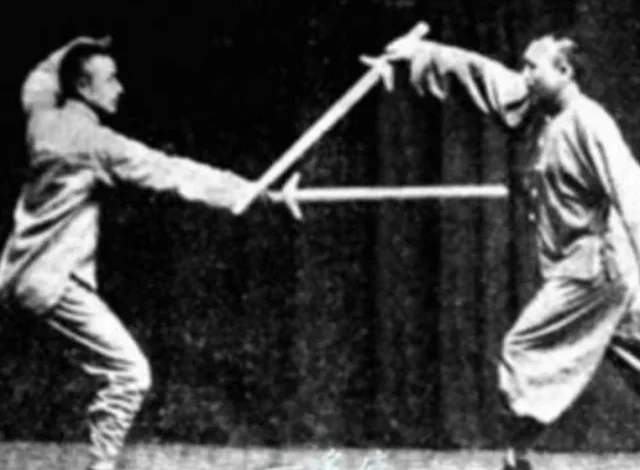
Amidst the tumultuous twilight of the Qing Dynasty and the dawn of the Republic of China, a figure emerged who was both a formidable military strategist and a legendary master of the sword: Ly Canh Lam. Revered by the martial arts community as the "Sword Immortal of Wudang," he not only elevated traditional Chinese swordplay to unparalleled heights but also spearheaded its transition into a structured discipline for the modern era. His unique synthesis of Wudang sword techniques with Tai Chi principles cemented his status as a pivotal figure, a general whose martial prowess was as renowned on the battlefield as it was in the training hall, ultimately shaping the trajectory of Chinese martial arts for generations to come.
A Life Forged in Tumult: Early Training and Dual Paths
Born in 1885 in Hebei province, a region steeped in a long and proud martial tradition, Ly Canh Lam’s destiny was intertwined with the profound political and social upheaval gripping China. The late 19th and early 20th centuries were marked by foreign encroachment, internal rebellions, and the collapse of imperial rule, creating a desperate need for both military strength and a revival of national spirit. From a young age, Ly Canh Lam delved into various forms of martial arts, including traditional boxing and weaponry. However, the pivotal turn in his martial journey came when he began to study Wudang swordplay under the tutelage of Tong Vi Di, a revered master believed to be the true inheritor of the Wudang lineage. This encounter was transformative, laying the foundation for his future mastery and the legend that would follow.
Tong Vi Di, recognizing Ly Canh Lam’s exceptional talent, unwavering dedication, and profound understanding of martial principles, accepted him as a disciple. This master-disciple relationship was crucial, as Tong Vi Di imparted the intricate techniques and profound philosophy of Wudang sword art, an internal style characterized by fluidity, precision, and the cultivation of internal energy (qi). While immersed in Wudang traditions, Ly Canh Lam also embarked on a path of military education. After completing his studies at the Baoding Military Academy, a premier institution for modern officer training at the time, he continued his pursuit of martial excellence. He traveled to Yongnian, another cradle of martial arts, where he sought out Yang Jianhou, the son of the legendary Tai Chi grandmaster Yang Luchan. Under Yang Jianhou, Ly Canh Lam delved deep into the complexities of Yang-style Tai Chi Chuan.
The Fusion of Form and Force: Wudang Sword and Tai Chi

The integration of Tai Chi into his existing Wudang sword practice proved to be a defining characteristic of Ly Canh Lam’s style. Tai Chi, with its emphasis on softness overcoming hardness, rooted stances, balanced movements, and the seamless flow of energy, provided a powerful complement to the swift and precise Wudang sword. This fusion allowed him to cultivate an exceptionally strong internal foundation, harmonize his movements, and gain unparalleled control over his body and weapon. The result was a martial art that balanced lightning speed with profound power and uncanny accuracy. His swordplay was not merely a series of techniques but an extension of his body and mind, manifesting a seamless unity between man and blade. This philosophical and practical integration was revolutionary, pushing the boundaries of traditional sword arts.
Historical accounts and contemporary martial arts theorists highlight that Wudang swordplay, rooted in Taoist philosophy, emphasizes adaptability, agility, and using an opponent’s force against them. It is characterized by swift, unpredictable movements, often appearing effortless yet possessing devastating power. Tai Chi, on the other hand, focuses on cultivating internal energy, promoting health, and developing a sophisticated understanding of balance, leverage, and timing. By combining these two distinct yet complementary disciplines, Ly Canh Lam developed a style that was both fiercely effective in combat and deeply rooted in internal cultivation. His sword was said to move with a deceptive gentleness that could instantly transform into an unstoppable torrent, making him incredibly difficult to anticipate or counter. This unique blend garnered him immense respect and established his reputation far beyond his native Hebei.
From Battlefield Commander to Martial Arts Icon
Ly Canh Lam’s military career ran parallel to his martial development, often serving as a crucible for his skills. During a period of intense civil strife and warlord conflicts, his leadership and martial prowess were frequently tested. In 1911, a year of significant national upheaval that saw the collapse of the Qing Dynasty, Ly Canh Lam distinguished himself in a crucial battle. Leading a daring charge, he navigated intense enemy fire to seize a strategic position, turning the tide of the engagement. Such repeated military successes solidified his reputation as an astute commander and a courageous fighter. His ability to move with extraordinary speed and precision, honed through years of sword training, likely gave him a distinct advantage in close-quarters combat and personal defense, inspiring his troops and demoralizing adversaries. His dedication to rigorous training extended to his soldiers, whom he subjected to strict discipline and martial arts drills, transforming his unit into an elite fighting force known for its quick reactions and efficiency in mounted combat.
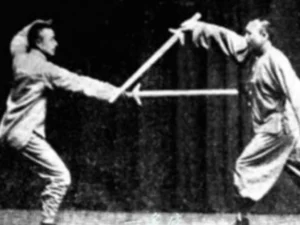
Tales of his combat effectiveness abound. It was rumored that within a range of ten paces, Ly Canh Lam’s sword was more dangerous than a gun, for an opponent would be disarmed or incapacitated before they could even draw their firearm. This speaks volumes about the speed, decisiveness, and overwhelming nature of his technique. A newspaper report from Shenbao on April 18, 1926, further attested to his extraordinary skill, praising his ability to wield a long sword with "unparalleled flexibility and precision, rarely seen, and difficult to match." Such endorsements from reputable publications of the era underline the widespread recognition of his exceptional abilities, elevating him from a mere martial artist to a public figure of awe and admiration. He was not just a general but a living embodiment of traditional Chinese martial excellence, earning him the prestigious "Yellow Jacket" imperial award, a rare honor during that era.
The "Three Grandmasters" and Public Recognition
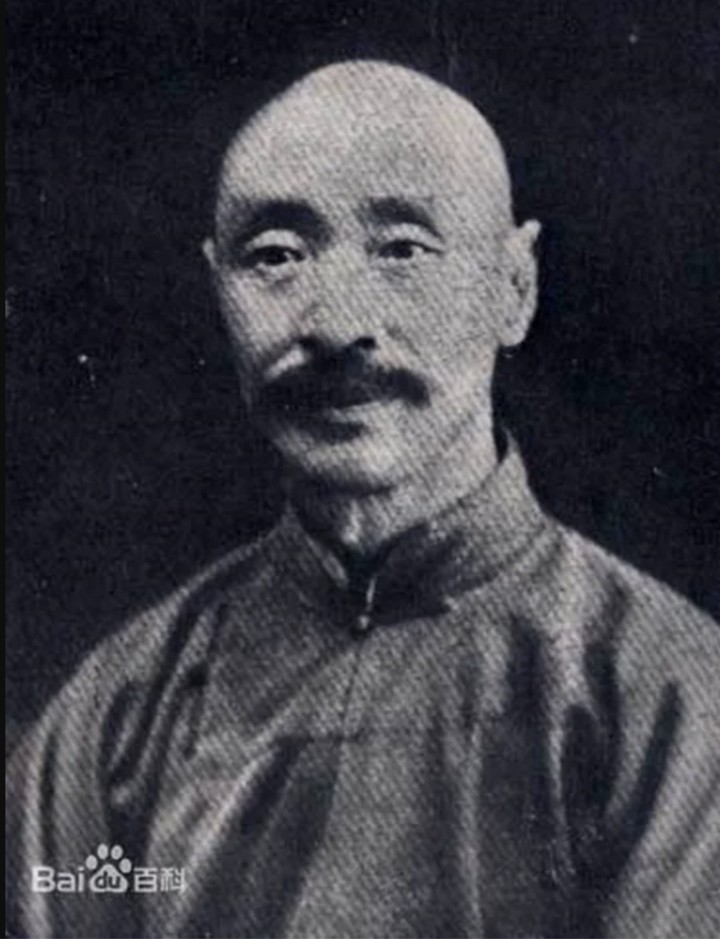
Ly Canh Lam was often counted among the "Three Grandmasters" (San Gao Shou) of Chinese martial arts during his time, alongside Sun Lu Tang (founder of Sun-style Tai Chi, Baguazhang, and Xingyiquan) and Li Cunyi (a renowned master of Xingyiquan). This esteemed trio represented the pinnacle of martial artistry, each a master of their respective internal styles, and collectively, they symbolized the rich diversity and profound depth of Chinese martial traditions. Their shared philosophy emphasized the cultivation of internal energy and the practical application of martial principles, rather than brute force. Ly Canh Lam’s inclusion in this elite group underscores his significant contributions and the high regard in which he was held by his peers and the wider martial arts community.
His fame grew not just through his military exploits but also through his willingness to share his knowledge. Unlike many masters of previous generations who kept their techniques secret, Ly Canh Lam believed in the public dissemination of martial arts. This philosophy was crucial in the early 20th century, as China sought to strengthen itself physically and spiritually. He actively participated in public demonstrations, delivered lectures, and advocated for martial arts as a means of national rejuvenation and physical well-being. He saw martial arts not just as a fighting skill but as a crucial component of personal discipline, health, and national identity.
Pioneering Modern Martial Arts Education
After a distinguished military career, Ly Canh Lam fully dedicated himself to the advancement of martial arts. A particularly significant event in his life occurred in 1922 when he reunited with his Wudang master, Tong Vi Di, in Beizhen, Liaoning. During this period, Tong Vi Di, nearing the end of his life, imparted the complete essence of Wudang swordplay to Ly Canh Lam, including closely guarded secret techniques and Daoist internal cultivation methods. This transmission solidified Ly Canh Lam’s position as the legitimate ninth-generation successor of the Wudang sword lineage, bestowing upon him the full responsibility of preserving and propagating this ancient art. It was from this point that the epithet "Wudang Sword Immortal" became synonymous with his name, spreading rapidly across China and cementing his legendary status during the Republic era.
Ly Canh Lam’s vision extended beyond personal mastery; he aimed to institutionalize martial arts. He relocated to Shanghai, which was rapidly becoming a vibrant cultural and intellectual hub, and quickly established himself as a central figure in the martial arts scene. Unlike many traditionalists, he actively promoted the open exchange of knowledge and techniques. Masters from various schools sought him out for discussions and demonstrations, and he enthusiastically engaged with the public, giving lectures and advocating for mass participation in martial arts. He firmly believed that martial arts were not merely for combat but were vital for public health and cultivating a strong national spirit.
In the late 1920s, Ly Canh Lam, along with other influential figures, played a foundational role in the establishment of the Central Guoshu Institute (中央國術館), also known as the Central Martial Arts Academy. This institution represented a monumental shift, marking the first time martial arts were integrated into a structured, organized educational system. At the grand opening of the academy, Ly Canh Lam’s sword demonstration captivated audiences and garnered extensive media coverage, further popularizing his name and the Wudang style. The establishment of the Central Guoshu Institute was a critical step in standardizing martial arts training, moving it from isolated family traditions to a recognized and accessible public discipline, thereby promoting physical culture and national pride across China.

Just one year after the institute’s founding, he spearheaded the organization of the first national martial arts tournament. This unprecedented event attracted masters and enthusiasts from across the country, igniting a widespread martial arts movement. Capitalizing on this momentum, Ly Canh Lam consistently urged the public to engage in martial arts for health and self-defense, effectively transforming what was once a specialized combat skill into a mainstream physical activity. His unwavering commitment to public education and his proactive role in creating institutional frameworks ensured that Chinese martial arts, particularly Wudang swordplay, would endure and thrive in a rapidly changing world.
Legacy and Enduring Influence
Ly Canh Lam’s impact on Chinese martial arts is profound and multifaceted. He was a bridge between the ancient traditions and the modern era, a military general who demonstrated that martial arts were not relics of the past but living, evolving disciplines vital for national strength and individual well-being. His synthesis of Wudang sword and Tai Chi principles created a unique and highly effective style, while his dedication to public instruction and institutionalization laid the groundwork for modern martial arts education in China. The "Sword Immortal of Wudang" is remembered not only for his unparalleled skill with the blade but also for his visionary leadership in ensuring that the rich heritage of Chinese martial arts would continue to inspire and empower future generations. His life stands as a testament to the enduring power of martial arts to shape individuals and nations, even amidst the greatest of uncertainties.