The Rising Pressure at Hanoi FC: Harry Kewell Faces a Defining Crisis After Disastrous V-League Start

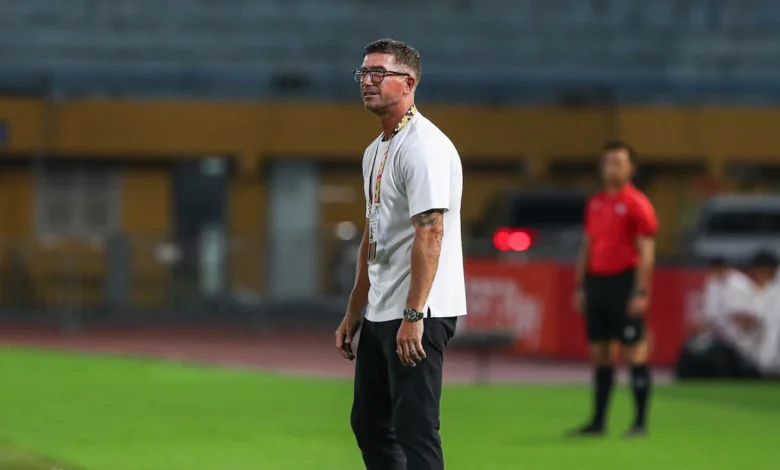
The atmosphere surrounding Hanoi FC has plummeted to a profound low, marked by acute tension, lingering doubts, and a heavy shroud of uncertainty enveloping the technical staff and squad. Just two matches into the LPBank V-League 2026–2027 season, one of Vietnamese football’s most storied and ambitious clubs finds itself in an unfamiliar and deeply concerning position. Following a heavy defeat at home, the capital city outfit is grappling not only with early-season crisis management on the pitch, but also with mounting questions regarding tactical direction, squad chemistry, and the future of head coach Harry Kewell.
The catalyst for this sudden turmoil unfolded on the evening of September 12, at the historic Hang Day Stadium. Hanoi FC hosted Song Lam Nghe An in a Week 2 fixture that was widely expected to serve as a springboard for the hosts following a disappointing opening match. Instead, the match deteriorated into a nightmare for the home supporters as Hanoi FC suffered a resounding 1-4 defeat. The scoreline reflected a comprehensive tactical and physical capitulation, leaving the players stunned, the coaching staff bewildered, and the club’s faithful demanding answers.
Post-Match Isolation: A Behind-Closed-Doors Reckoning
The gravity of the situation was underscored immediately after the final whistle. While opposing coach Van Sy Son of Song Lam Nghe An concluded his post-match media obligations relatively swiftly, emerging to address journalists around 9:30 PM, the media room at Hang Day Stadium remained empty of its primary subject for nearly another hour.
Head coach Harry Kewell was nowhere to be found. Reporters waited anxiously for close to an hour as the Australian tactician subjected his players to an extraordinary, extended inquest inside the sanctity of the home team’s dressing room. Sources indicate that Kewell locked the doors and addressed the squad for approximately 40 minutes, engaging in a intense, closed-door dialogue that laid bare the frustrations of a team underachieving its lofty expectations.
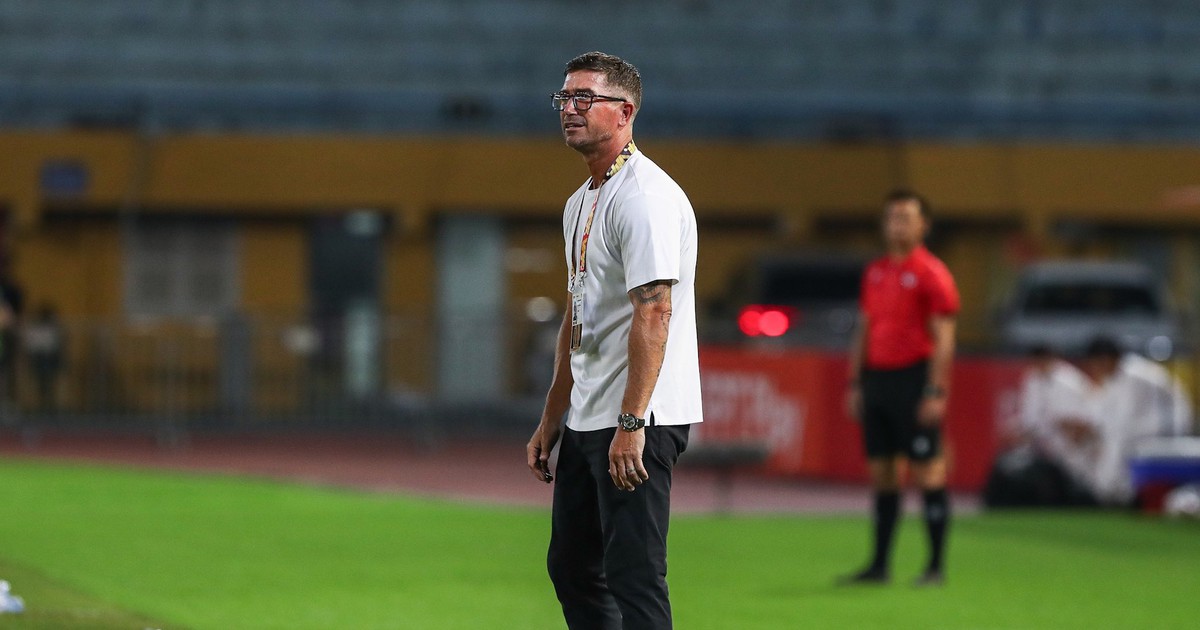
When Kewell finally stepped before the media microphones at approximately 9:40 PM, the physical toll of the evening was visibly etched on his face. Asked about the nature of the dressing room conversation and the collective mood of the squad, Kewell invoked a timeless footballing tradition, choosing to keep the specifics strictly internal.
"I cannot disclose the information from the meeting that just took place," Kewell told the assembled press corps, his tone clipped and serious. "There is a saying in English football: What happens in the dressing room stays in the dressing room. Whatever issues exist between myself and the team, I will be the one to resolve them. I will never feel comfortable or accepting when losing a home match in this manner."
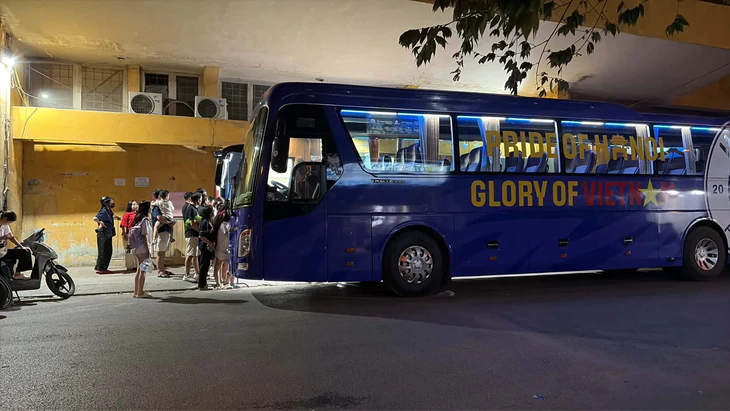
Outside the stadium, the logistical footprint of the crisis was equally palpable. The team bus for Song Lam Nghe An departed the premises smoothly at 9:30 PM. In stark contrast, the Hanoi FC team bus remained idling outside the gates for an extended period, its engine running continuously while club officials and security personnel waited patiently for Kewell and his players to emerge. It was not until 10:15 PM—more than an hour after the final whistle—that the players finally filed out of the dressing room, boarding the bus with downcast eyes, grim expressions, and forced, strained smiles for the handful of loyal supporters who had waited hours by the gates to offer encouragement.
A Disastrous Start Compounded by High Expectations
The 1-4 thrashing by Song Lam Nghe An—a side traditionally known for relying on gritty, youthful determination rather than marquee financial backing—compounded the misery of Hanoi FC’s opening weekend. In the season opener, the capital club had already stumbled against Ho Chi Minh City Police FC, falling to a 1-3 defeat away from home.
In total, across just two matches, Hanoi FC has conceded an alarming seven goals while scoring only twice. For a club backed by substantial financial investment, ambitious leadership, and a reputation for playing proactive, dominant football, this start represents an unmitigated disaster. The pre-season preparations were designed to prevent precisely this kind of sluggish takeoff. Management had opened the club’s checkbook during the transfer window, securing high-profile additions intended to make immediate impacts. Furthermore, the club invested heavily in a prolonged, intensive training camp in Thailand, aimed at fine-tuning physical conditioning, tactical cohesion, and defensive stability under Kewell’s philosophy.
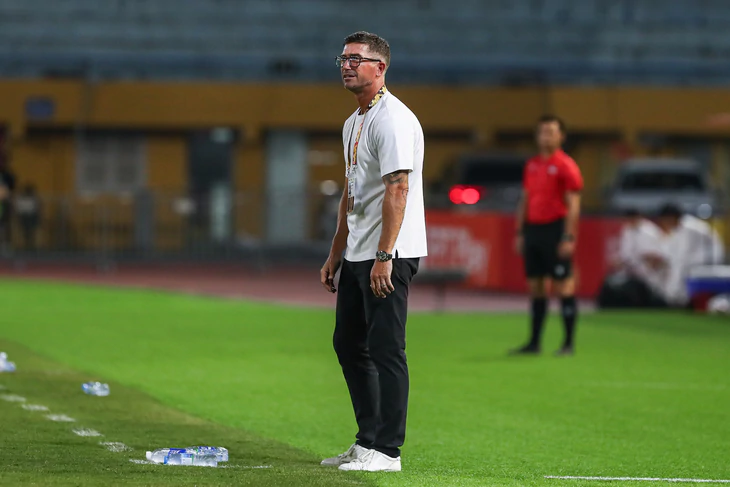
Instead of reaping the rewards of these investments, Hanoi FC appears disjointed, fragile defensively, and devoid of the characteristic attacking fluency that has historically defined the franchise. The disconnect between pre-season optimism and regular-season reality has placed intense scrutiny on the club’s leadership and technical bench.
The Fragile Nature of the V-League Coaching Seat
The position of head coach at Hanoi FC has historically been one of the most volatile and high-pressure jobs in Southeast Asian club football. The club’s board of directors maintains an uncompromising standard: anything short of competing for—and ultimately winning—the V-League championship is deemed a failure.
Harry Kewell, who took the reins with a vision to instill a distinct tactical identity and modern methodological approach, now finds himself navigating the treacherous waters of early-season underperformance. While the former Australian international and Liverpool star arrived with a wealth of professional pedigree, the realities of Asian club football, coupled with the immense expectations of the Hanoi FC fanbase, leave very little margin for error.
Football history in Vietnam—and at Hang Day Stadium in particular—demonstrates that patience is often a short-lived commodity when results turn sour. If Kewell cannot rapidly galvanize his squad, tighten a leaky defensive unit, and orchestrate an immediate turnaround in the upcoming fixtures, speculation regarding his future will inevitably intensify.
The Road Ahead: Tests of Character and Resilience
The immediate calendar offers no respite for Hanoi FC. As the squad regroups at their training base, the coaching staff faces the daunting task of repairing fractured confidence ahead of upcoming league fixtures. Psychological recovery may prove even more critical than tactical adjustments; a team visibly burdened by pressure must rediscover the collective resilience that once made them the most feared opponent in Vietnamese football.
For Kewell, the coming weeks will represent the ultimate test of his managerial tenure. The dressing room meeting behind closed doors at Hang Day Stadium was framed as a turning point, a line drawn in the sand by a manager fighting to retain control of his team’s trajectory. Whether that intense exchange serves as the catalyst for a spirited resurgence or merely signals the beginning of deeper fractures within the club remains to be seen.
What is certain, however, is that the margin for error has evaporated. In a fiercely competitive V-League where rivals are continuously strengthening, Hanoi FC can ill afford another misstep without risking a complete derailment of their championship ambitions. The spotlight remains firmly fixed on Harry Kewell and his players as they prepare to face the mounting scrutiny of fans, media, and club executives alike.