HAGL Agrico Reports Soaring Half-Year Losses and Faces Going Concern Warning Following EY Review

Hoang Anh Gia Lai Agricultural Joint Stock Company, widely known as HAGL Agrico (listed on the Ho Chi Minh Stock Exchange under the ticker code HNG), has released its reviewed consolidated semi-annual financial statements for the year 2026, revealing a stark deterioration in its financial health. Following a comprehensive review by independent auditing firm Ernst & Young Vietnam (EY Vietnam), the agricultural enterprise reported a net loss of nearly 187 billion VND for the first six months of 2026. This figure marks a dramatic increase of approximately 152 billion VND compared to the self-reported financial statements previously published by the company, raising fresh concerns among investors and industry analysts regarding the company’s long-term financial viability.
Revenue Growth Undermined by Spiraling Financial Costs
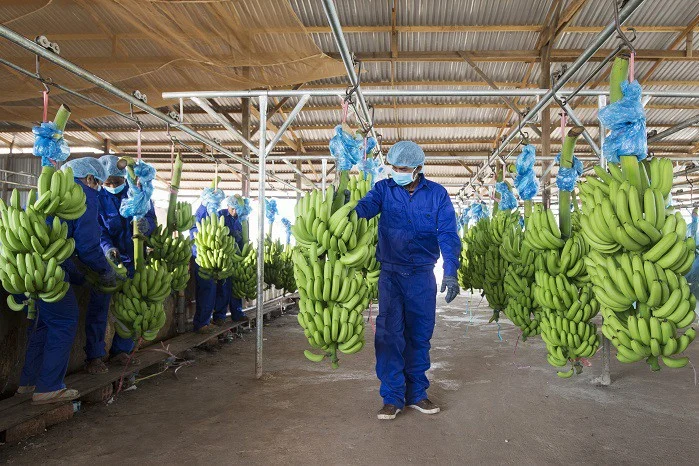
During the first half of 2026, HAGL Agrico recorded net revenue of nearly 289 billion VND, reflecting a modest year-on-year improvement of roughly 33% compared to the corresponding period in 2025. This top-line expansion was primarily driven by the ongoing commercial exploitation of its core agricultural assets, particularly its banana plantations, which continue to generate steady operational turnover.
However, the positive momentum generated by revenue growth was entirely eclipsed by mounting financial expenses, which reached nearly 228 billion VND for the six-month period. The overwhelming majority of these expenses stemmed from high borrowing costs associated with the company’s extensive debt burden. Consequently, the initial self-reported net profit of 34.8 billion VND was upended during the audit process, ballooning the net loss to 186.8 billion VND.

The primary catalyst for this massive variance was a substantial retroactive adjustment to the company’s borrowing costs mandated by EY Vietnam. Prior to the independent review, HAGL Agrico had capitalized 335 billion VND of its total 431 billion VND in borrowing costs incurred during the period, allocating them directly to long-term capital projects while expensing only 96 billion VND.
Upon closer inspection, EY Vietnam determined that the company only met the strict accounting criteria to capitalize 204 billion VND of those borrowing costs. The remaining 227 billion VND was deemed ineligible for capitalization and had to be reclassified immediately as period expenses, resulting in a direct upward adjustment of 131 billion VND to financial expenses. In addition to the borrowing cost adjustments, production costs associated with work-in-progress at banana plantations increased by 17 billion VND following the review, while corporate income tax expenses on the separate financial statements ticked upward by 4 billion VND.
Balance Sheet Pressures and Debt Structuring Challenges
As of June 30, 2026, HAGL Agrico’s total assets stood at nearly 21,795 billion VND, representing an 11% increase compared to the beginning of the year. Despite the asset expansion, the company’s capital structure remains heavily leveraged. Liabilities consumed the vast majority of the balance sheet, totaling over 20,901 billion VND, whereas owner’s equity dwindled to approximately 893 billion VND.
The company’s debt profile remains a significant vulnerability. Total outstanding loan obligations reached nearly 10,864 billion VND at the end of the second quarter. Short-term borrowings constituted the lion’s share of this debt at approximately 9,672 billion VND, while long-term debt accounted for the remaining 1,192 billion VND.

This acute structural imbalance is vividly illustrated by the company’s working capital deficit. By the end of June, HAGL Agrico’s accumulated losses climbed to an alarming 13,231 billion VND. Furthermore, short-term liabilities exceeded short-term assets by approximately 12,445 billion VND. This severe liquidity mismatch formed the core foundation for the independent auditor’s cautious stance regarding the company’s operational continuity.
The Going Concern Warning from Ernst & Young Vietnam
While EY Vietnam did not issue a formal qualified opinion on HAGL Agrico’s consolidated semi-annual financial statements, the auditing firm included a prominent "Emphasis of Matter" paragraph highlighting significant uncertainties. The auditors explicitly noted that the company’s staggering accumulated losses, combined with a short-term liabilities surplus heavily outweighing short-term assets, create material uncertainties that cast substantial doubt upon HAGL Agrico’s ability to continue as a going concern.
The inclusion of this going concern warning underscores the immense financial pressure facing the agricultural enterprise as it attempts to service its towering debt obligations while funding ongoing operational expenditures. Market observers note that while going concern flags are increasingly common among distressed enterprises undergoing corporate restructuring, the sheer scale of HAGL Agrico’s short-term deficit requires aggressive intervention to avert a liquidity crisis.
Corporate Strategy and Management’s Remediation Plan
In response to the audit findings and the ongoing financial scrutiny, HAGL Agrico’s leadership has outlined a multi-pronged recovery strategy aimed at stabilizing cash flows and restoring balance sheet health. Company representatives emphasized that borrowing costs will continue to be capitalized moving forward as the enterprise accelerates construction and agricultural development across its designated land tracts in accordance with its master development plan.

Management stated that the company is actively executing operational adjustments designed to optimize cash generation from its core business activities. This includes improving yield efficiencies across existing banana and fruit plantations, streamlining supply chain logistics, and cutting non-essential corporate overheads.
Simultaneously, HAGL Agrico is engaged in active negotiations with financial institutions and strategic creditors to secure new credit lines, restructure existing debt maturities, and inject fresh capital into the business. Company executives maintain that securing syndicated credit support and long-term financing arrangements will be vital for funding ongoing agricultural production, maintaining capital expenditures, and fulfilling long-term strategic commitments.
Broader Economic and Sector Context
The financial hurdles faced by HAGL Agrico reflect the broader structural and capital-intensive challenges inherent in large-scale agricultural investments in Southeast Asia. Developing and maintaining extensive land banks, establishing complex irrigation systems, and managing long gestation periods for perennial crops require sustained capital outlays that are highly sensitive to interest rate fluctuations and macroeconomic volatility.
As Vietnam’s agricultural sector continues to navigate shifting regulatory frameworks, tightening credit environments, and volatile global commodity markets, the trajectory of corporate restructuring at firms like HAGL Agrico serves as a critical barometer for the industry. Stakeholders, regulatory bodies, and investors will closely monitor HAGL Agrico’s operational performance and debt resolution milestones through the second half of 2026 to evaluate whether the enterprise can successfully execute its turnaround strategy and secure a sustainable financial foundation.