Debate Over Early 5% Deposit Collection for Real Estate Projects Sparks Industry Concerns and Calls for Enhanced Buyer Protection

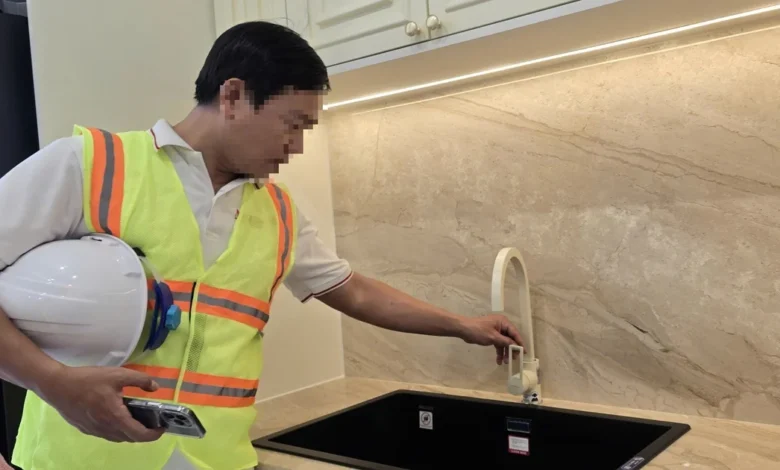
The Ho Chi Minh City Real Estate Association (HoREA) has ignited a significant debate within Vietnam’s real estate sector by proposing an amendment to current regulations, advocating for real estate project investors to be permitted to collect a maximum 5% deposit from buyers at an earlier stage of project development. This proposal, aimed at alleviating developers’ financial pressures and stimulating market activity, has met with a mixed reception, drawing strong concerns from experts and consumer advocates regarding potential risks to buyers.
Current Regulatory Framework and HoREA’s Proposal
Under existing regulations, real estate developers are typically permitted to receive a maximum deposit of 5% of the property’s value only when the residential unit or construction project has met specific legal conditions for business readiness. This condition usually implies a significant stage of completion or legal clearance, providing a degree of assurance to prospective buyers. However, HoREA argues that this current stipulation is not entirely suitable for the realities of project development and market dynamics.
According to Mr. Le Hoang Chau, Chairman of HoREA, by the time a project reaches the "ready for business" stage, developers are already legally allowed to sign purchase contracts and collect the first payment installment, which, under the Law on Real Estate Business 2023, can be up to 30% of the contract value. HoREA’s core argument is that the current 5% deposit rule is too restrictive and comes too late in the project lifecycle to be genuinely beneficial for developers needing early-stage capital.
The association has formally proposed amending Clause 5, Article 18 of the draft law (likely referring to the draft of an implementing decree or a revised Housing Law) to allow developers to collect a 5% deposit much earlier. Specifically, they suggest this should be permissible when a project has received either principal investment approval, investment approval, or when the basic design has been appraised by state agencies, provided the investor also possesses legal land use rights. This proposed change would effectively move the earliest point of deposit collection from a near-completion stage to a much earlier planning or initial approval phase.
Rationale Behind HoREA’s Advocacy
HoREA articulates several compelling reasons for its proposal. Primarily, it addresses the critical issue of capital mobilization for developers. Real estate projects, particularly large-scale ones, demand substantial initial capital for land acquisition, infrastructure development, design, and preliminary construction. Developers often rely heavily on bank loans, incurring significant interest costs, which can strain their financial capacity before any sales revenue is generated. Allowing a 5% deposit at an earlier stage would provide a crucial injection of non-bank capital, helping to ease liquidity constraints and reduce reliance on high-interest financing.
"By this point," Mr. Chau explains, "the investor has already invested a very large amount of capital to establish the project’s land fund. Businesses have also had to borrow credit to invest in building the project’s structures but have not yet been able to mobilize capital or sell real estate products – future-formed housing – because they do not yet meet the conditions." This highlights the gap between significant initial investment and the ability to generate sales revenue under current rules.

Furthermore, HoREA believes that early deposit collection would serve as a valuable market-testing mechanism. By observing buyer interest and commitment at an earlier stage, developers can gauge market demand, assess product viability, and make necessary adjustments to their project design, pricing strategies, and development plans to better align with customer preferences. This proactive approach could lead to more successful projects and reduce the risk of mismatch between supply and demand.
From a buyer’s perspective, HoREA suggests this change could offer an advantage. By placing an early deposit, customers might secure properties at "original" or "early-bird" prices, potentially avoiding price escalations that often occur as a project progresses and nears completion. This could be seen as an opportunity for more affordable entry into the market, especially for premium or highly anticipated developments.
The association also points to historical precedents. In early 2023, during the drafting of the Housing Law, the Ministry of Construction itself had proposed an option to allow investors to collect a deposit not exceeding 10% when a project had an approved basic design and the investor possessed land use rights. This earlier suggestion, though not adopted in its original form, indicates that the concept of earlier deposit collection has been under consideration at various levels of government.
Expert Concerns and Potential Risks to Buyers
Despite HoREA’s optimistic framing, the proposal has triggered significant apprehension among real estate experts and consumer protection advocates, who warn of substantial risks for buyers. Mr. Dinh Minh Tuan, Director of Batdongsan.com.vn for the Southern region, strongly asserts that allowing deposit collection at the "investment principal approval" stage is "unreasonable." He emphasizes that this stage represents merely an initial governmental endorsement and is far from guaranteeing project viability or legal readiness for sale.
"Even with a construction permit," Mr. Tuan notes, "many developers still fail to lay the foundation or face legal entanglements, causing project progress to stall." This observation draws from years of market experience where buyers have been left in limbo, their invested capital tied up in unfinished or legally challenged projects. He recounts numerous instances over the past years where developers collected money from customers under various euphemisms like "reservation fees" or "expression of interest" agreements, only for the projects to be abandoned or face insurmountable legal hurdles, preventing the signing of formal purchase contracts.
In such scenarios, buyers frequently find themselves in a precarious position, spending "countless hours pursuing and complaining" but struggling to recover their funds. This difficulty often arises because the developer may have lost the financial capacity to refund or misused the collected capital for other purposes, deviating from the project’s intended development.
The sheer scale of potential funds involved further exacerbates these concerns. Mr. Tuan highlights that even a 5% deposit, when applied to large-scale projects, can amount to "hundreds of billions of dong." Critically, buyers have "absolutely no ability to control the project’s progress, legal status, or management." This lack of transparency and oversight leaves individual buyers highly vulnerable, as their significant financial commitment is placed entirely at the discretion of the developer, without adequate safeguards.
The historical context of Vietnam’s real estate market lends weight to these worries. The market has witnessed periods of rapid growth followed by downturns, exposing vulnerabilities in regulatory oversight and developer practices. Many projects have been initiated with insufficient capital, relying heavily on early buyer payments, which can quickly turn into a financial quagmire if sales slow or legal issues arise. The image of high-end apartment projects in Ho Chi Minh City, approved for investment and even having foundations laid, only to be "frozen" for years due to legal issues, underscores the tangible risks consumers face.

Calls for Robust Safeguards and Alternative Perspectives
In light of these risks, another real estate development expert, speaking to Tuoi Tre Online, stressed that if regulations are indeed loosened to permit earlier deposit collection, it is "imperative to include accompanying ‘layers of protection’." This expert specifically proposed mechanisms such as bank guarantees or escrow accounts, where buyers’ deposits would be held by a neutral third party (a bank) until certain project milestones or legal conditions are met. Such measures would safeguard buyers’ funds in the event of project failure or developer default.
Furthermore, the expert emphasized the need for absolute transparency. Buyers must be "protected with the right to know," meaning comprehensive and clear information regarding the project’s legal status, progress, and financial health must be publicly available and regularly updated. This would ensure that decisions to place early deposits are made on an informed basis, with a clear understanding of the associated risks and timelines.
An alternative perspective suggests that the focus should be on strengthening the financial capacity and transparency of real estate developers themselves, rather than creating new avenues for early capital mobilization that could increase buyer risk. This viewpoint argues that the market needs "truly financially capable and highly transparent investors," who can fund projects through legitimate means and maintain robust financial health throughout the development cycle. Allowing earlier fundraising, especially when projects are still largely "on paper," might inadvertently encourage less scrupulous or undercapitalized developers, further destabilizing the market and jeopardizing consumer interests.
Broader Implications and Future Outlook
The debate surrounding HoREA’s proposal highlights a fundamental tension within Vietnam’s real estate market: balancing the capital needs of developers with the imperative of consumer protection. For developers, particularly after recent market challenges characterized by liquidity crunches and stalled projects, earlier access to funds could be a lifeline, potentially accelerating project completion and boosting supply in a recovering market. It could also reduce the cost of capital, as developers rely less on expensive bank loans, which might, in turn, translate into more competitive property prices.
However, the risks to buyers are undeniable. Without stringent safeguards, an earlier deposit collection window could expose consumers to speculative practices, protracted delays, and the potential loss of their savings in uncompleted or legally problematic projects. It could also foster an environment where developers launch projects prematurely, using buyer funds to finance initial stages without fully securing all necessary permits or having robust financial backing.
The government and regulatory bodies, primarily the Ministry of Construction, face the complex task of carefully weighing these arguments. Any amendment to deposit regulations would require meticulous consideration of its potential impacts on market stability, investor confidence, and consumer welfare. The ongoing reforms under the Law on Real Estate Business 2023 and the Housing Law underscore a commitment to creating a more transparent and sustainable real estate environment. The decision on early deposit collection will be a critical indicator of how Vietnam intends to navigate the delicate balance between fostering development and safeguarding its citizens’ investments in the housing market. Ultimately, a robust legal framework, coupled with rigorous oversight and mandatory protection mechanisms, will be essential to ensure that any changes benefit all stakeholders and contribute to a healthier, more mature real estate sector.
Related posts: